
Desserts
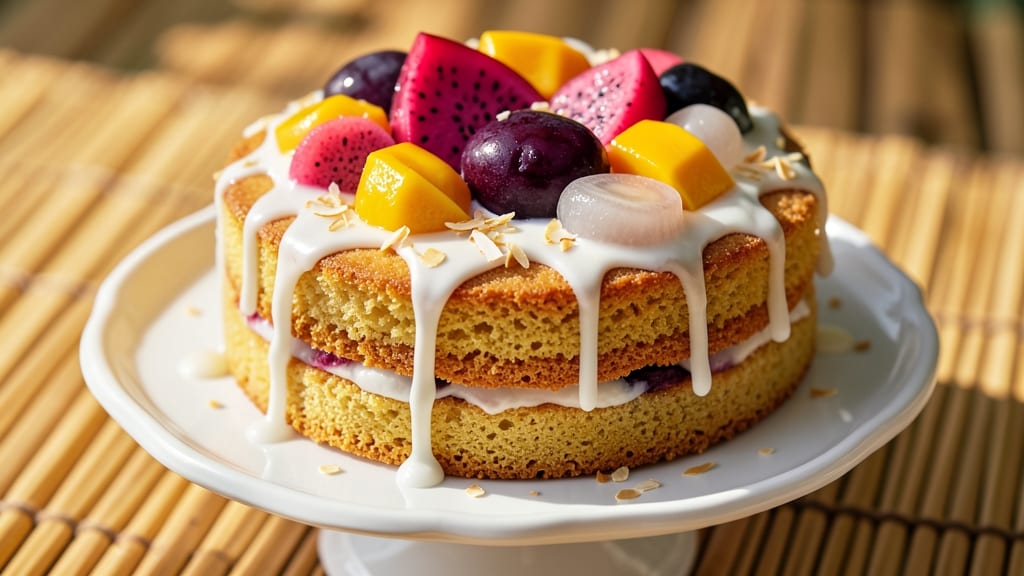
This Asian fresh fruit cake delivers layers of tropical flavor and a secret moisture trick that keeps every slice tender for days. 💛 The magic lies in blending fresh pineapple, mango, and lychee with a delicate vanilla sponge, creating a dessert that's light yet rich—perfect for celebrations or spontaneous treats.
The recipe balances traditional Asian cake techniques with modern simplicity: no heavy frosting needed, just a light dusting of powdered sugar to highlight the vibrant fruit.
Fresh fruit is folded into the batter at the last moment to preserve its juiciness, while a touch of coconut milk ensures that signature moist texture. What makes this stand out is how the flavors develop—each bite reveals layers of sweet-tart tropical notes.
What you'll achieve is a cake that's elegant enough for special occasions but simple enough for weeknight baking. The moist crumb stays fresh for up to a week when stored properly, making it ideal for gifting or meal prep.
The tropical fruit adds natural sweetness that reduces the need for excess sugar, keeping the cake light yet satisfying.
This version includes optional decorative touches like toasted coconut flakes or edible flowers for presentation, but the cake shines even without them. Let's create a dessert that tastes like sunshine in every slice—without the fuss of traditional fruitcakes.
Ingredients for asian fresh fruit cake
Tropical fruit meets delicate vanilla sponge for a cake that stays moist for days.
| Ingredient | Amount | Notes |
|---|---|---|
| All-Purpose Flour 🌾 | 2 cups | Sifted for light texture |
| Granulated Sugar 🍚 | 1 ½ cups | Light brown preferred |
| Unsalted Butter 🧈 | 1 cup | Room temperature, full-fat |
| Large Eggs 🥚 | 2 whole | Room temperature for blending |
| Pure Vanilla Extract 🌿 | 1 tbsp | High-quality, pure vanilla |
| Baking Powder 🧂 | 1 tsp | Aluminum-free preferred |
| Salt 🧂 | ½ tsp | Fine sea salt |
| Coconut Milk 🥥 | ½ cup | Full-fat for moisture |
| Fresh Pineapple 🍍 | 1 ½ cups | Diced, juices reserved |
| Fresh Mango 🥭 | 1 ½ cups | Diced, ripe and juicy |
| Canned Lychees 🍈 | 1 cup | Drained, whole fruit |
| Powdered Sugar 🍚 | ¼ cup | For dusting only |
| Toasted Coconut Flakes 🥥 | ¼ cup | Optional garnish |
The tropical fruit selection is key—fresh pineapple and mango should be ripe but firm, with vibrant color. Trader Joe's often carries pre-cut fruit in the produce section, saving time. For lychees, canned in light syrup works best—drain and rinse thoroughly. The coconut milk adds richness without overpowering the fruit flavors. If you can't find full-fat coconut milk, light coconut milk plus 1 tbsp coconut cream mimics the texture. For the butter, Plugrá or Land O'Lakes are reliable brands, but any full-fat butter works. The vanilla extract should be pure—Nielsen-Massey is a trusted name in baking.
No fresh pineapple? Canned pineapple in juice (drained) works in a pinch, but add 1 tsp lemon juice to mimic fresh tartness. Mango substitutes include peaches or papaya, though flavor will shift. For lychees, fresh longan or kiwi can stand in, but texture will differ. The baking powder must be fresh—if your recipe fails to rise, it's likely expired. For extra moisture, add 1 tbsp coconut oil to the butter mixture. The powdered sugar is just for dusting, but if you prefer a glaze, whisk 1/4 cup powdered sugar with 1 tbsp coconut milk for a light finish. Toast the coconut flakes in a dry pan for 2-3 minutes until golden for best flavor.
This cake keeps beautifully—3-4 days at room temperature covered loosely, or 1 week refrigerated in an airtight container. For longer storage, wrap tightly and freeze for up to 3 months. The fruit will soften further after baking, so plan to serve within 2 days of making for peak texture. If gifting, package individual slices in parchment-lined boxes with a dusting of powdered sugar. The cake reheats well—warm slices for 10 seconds in the microwave to revive moisture, or bake at 300°F for 5 minutes to refresh.
Why You'll Love This Recipe
- No-Mix Magic: I swear by this cake—just cream butter and sugar until light, fold in eggs one at a time, and let the vanilla whisper its magic. The dough comes together faster than I can say "no mixer required," and honestly, that’s half the battle won.
- Fruit’s Secret Weapon: Between us, the real star isn’t the cake itself—it’s the fresh fruit folded in last. Mango, lychee, or even dragon fruit? That burst cuts through the buttery richness like a cool breeze. (Yes, even on a Tuesday night.)
- Party in a Box: This cake begs to be made ahead—it keeps beautifully for days, so I bake it once and celebrate twice. Gift it wrapped in tissue paper, or slice it for potlucks where everyone assumes you’re a baking genius. (Spoiler: You are.)
- Budget Baking Win: Butter and eggs make it feel special, but the rest? Pantry staples. No fancy extracts, no specialty flours—just sugar, flour, and whatever fruit’s on sale. My wallet and my guests thank me every time.
Step-by-step instructions for tropical fruit cake with moisture secrets
Here's how to build layers of tropical flavor while keeping this cake perfectly moist.
👨🍳 Step 1: Prepare the Fruit Mixture for Maximum Flavor
In a medium bowl, combine the 1.5 cups fresh pineapple and 1.5 cups fresh mango with the 1 cup canned lychees (drained). Gently fold in 0.5 cup coconut milk—this helps preserve the fruit's natural juices and prevents them from drying out during baking.
I like to leave the fruit in 1-inch chunks for texture contrast rather than mincing it. Save any released fruit juices in a small bowl—you'll use these later to keep the cake moist. The fruit should look vibrant and fresh, not mushy, which means your cake will have bright tropical flavors.
👨🍳 Step 2: Cream Butter and Sugar for Light Texture
In a stand mixer fitted with the paddle attachment, beat the 1 cup unsalted butter (room temperature) and 1.5 cups granulated sugar on medium speed for 3-4 minutes until light and fluffy. You're looking for a pale color and nearly doubled volume—this incorporates air that will make your cake tender.
Here's the secret: don't rush this step. The butter should look like whipped cream when you lift the paddle. I press the mixture down with a spatula—if it springs back slowly, it's ready. This ensures your cake will have that perfect airy crumb we're after.
🍳 Step 3: Combine Wet Ingredients for Moisture Boost
Add the 2 whole large eggs one at a time, mixing on low speed for 30 seconds after each addition. Then stir in the 1 tbsp pure vanilla extract and 0.5 cup coconut milk reserved from the fruit mixture. The coconut milk adds extra moisture that keeps this cake tender for days.
This is where the magic happens for moisture. The coconut milk doesn't just add flavor—it creates steam during baking that keeps the cake soft. I always use full-fat coconut milk for maximum richness. The mixture should be smooth with no streaks of egg white remaining.
🥘 Step 4: Fold in Dry Ingredients and Fruit Gently
In a separate bowl, whisk together the 2 cups all-purpose flour, 1 tsp baking powder, and 0.5 tsp salt. Gradually add this to the wet mixture, mixing on low speed just until combined—you should still see small flour streaks. This prevents overdevelopment of gluten that would make the cake tough.
Fold in the prepared fruit mixture using a silicone spatula, being careful not to overmix. The fruit should be evenly distributed throughout the batter. I like to give it a final gentle fold to ensure no pockets of dry flour remain. The batter will be thick but still pourable—this is perfect for our layered approach.
🔥 Step 5: Bake in Layers for Even Cooking
Preheat your oven to 350°F. Pour half the batter into a greased 8-inch round cake pan (I use a parchment-lined pan for easy removal). Bake for 25-30 minutes until the top springs back when gently pressed and a toothpick comes out clean.
Remove from oven and immediately pour the remaining batter over the first layer. Return to the oven and bake for another 25-30 minutes. This layering technique creates a beautiful texture with juicy fruit pockets throughout. The cake should be golden brown with a slightly domed top—signs of perfect baking.
⏰ Step 6: Cool and Finish with Moisture Seal
Let the cake cool in the pan for 15 minutes, then transfer to a wire rack. While still warm, dust the top generously with 0.25 cup powdered sugar and sprinkle with 0.25 cup toasted coconut flakes for that tropical finish.
The powdered sugar creates a moisture seal that keeps the cake fresh longer. I wrap the cooled cake tightly in plastic wrap and store it at room temperature for up to 5 days—it actually tastes better the next day as the flavors meld. Slice with a serrated knife for clean pieces that show off those beautiful fruit layers.
Pro Tips For Making Asian Fresh Fruit Cake
- Cream Butter Properly: Beat the butter and sugar until it’s light and fluffy—no streaks allowed. I used to rush this, and the cake turned out dense. Take the extra 3 minutes; your crumb will thank you.
- Weigh Your Eggs: Use room-temperature eggs straight from the fridge, but weigh them for accuracy—large eggs vary by 15-20g. My first batch was too dry because I eyeballed them; now I use a scale.
- Don’t Overmix the Batter: Mix the flour and wet ingredients just until combined—lumps are fine. Overmixing develops gluten, and your cake will turn tough instead of tender. Stop when it’s almost smooth.
- Steam the Cake: Bake in a water bath (pan of boiling water underneath) for the first 20 minutes—this keeps the center moist. After that, finish uncovered. I learned this after my first cake came out dry.
Flavor customization for this dish
Tropical Fruit Swaps
Swap the original fruit trio for seasonal favorites while keeping the same moisture technique. Try 1.5 cups papaya and 1 cup passion fruit for a tangy twist, or use 1.5 cups guava and 1 cup dragon fruit for a milder profile.
I once used kiwi and starfruit—the kiwi's acidity brightened the whole cake. Always keep fruit chunks 1-inch or smaller to prevent sinking during baking. 🍍
Spice Infusions
Add warmth with ½ tsp ground cardamom or ¼ tsp cinnamon to the dry ingredients for a Thai-inspired touch. For a Filipino-inspired version, fold in 1 tbsp ube (purple yam) jam with the fruit mixture.
I find ½ tsp pandan extract (available at Asian markets) elevates the coconut flavor beautifully—use it in place of vanilla. Start with ¼ tsp and adjust to taste.
Frosting Alternatives
Skip the powdered sugar dusting for a light coconut cream frosting: whip ½ cup chilled coconut cream with 2 tbsp powdered sugar until fluffy. For a modern touch, try a passion fruit glaze—blend ½ cup passion fruit pulp with 2 tbsp honey and strain.
Drizzle over slices just before serving. The key is keeping frosting minimal to preserve the fruit's natural sweetness.
Texture Variations
For a denser texture, replace ½ cup flour with ½ cup almond flour—it adds nutty depth. Need extra moisture? Fold in ¼ cup Greek yogurt with the wet ingredients. I've also experimented with ½ cup crushed macadamia nuts in the batter for crunch.
For a gluten-free version, use a 1:1 gluten-free flour blend—increase coconut milk by 2 tbsp to compensate for dryness.
Regional Twists
For a Singaporean-style version, add 1 tbsp kaffir lime zest to the batter and top with toasted pandan-infused coconut flakes. In Malaysia, many use jackfruit—its mild sweetness works perfectly.
For a Japanese-inspired take, substitute ½ cup matcha powder for ½ cup flour and use white chocolate chunks instead of fruit. Each regional twist keeps the same moist baking technique while changing flavor profiles. 🌏
Nutrition facts
Frequently asked questions
Can I use canned fruit instead of fresh?
Yes, but with adjustments! For pineapple and mango, use 15 oz canned pieces in juice (drained) and add 1 tsp lemon juice to mimic fresh tartness. For lychees, stick with canned—fresh lychees are hard to find and their texture changes dramatically when baked. The key is to drain well and pat dry to prevent excess moisture in your batter.
Why does my cake sink in the middle? This usually happens from overmixing or opening the oven too early.
How do I make this cake gluten-free?
Replace the 2 cups all-purpose flour with a 1:1 gluten-free flour blend and increase the coconut milk by 2 tbsp (total 0.75 cup) to compensate for dryness. Also add ½ tsp xanthan gum if your blend doesn't contain it. The layering technique still works—just be extra gentle when folding to avoid developing gluten. Test batches first to adjust moisture levels.
Can I bake this in a different pan shape?
For a 9-inch round pan, reduce baking time by 5-7 minutes per layer. For a loaf pan (9x5 inches), bake at 325°F for 50-55 minutes total (no layering needed). The key is to use the same oven temperature and check doneness with a toothpick. Just adjust your expectations for texture—round pans give more even baking than loaves.
How do I store leftovers to keep them moist?
Wrap individual slices tightly in plastic wrap and store at room temperature for 3 days. For longer storage, keep the whole cake in an airtight container with a slice of bread on top to absorb excess moisture. Refrigerate for up to 1 week or freeze for 3 months. To revive stale slices, warm at 300°F for 5 minutes or microwave for 10 seconds with a damp paper towel.