
Desserts
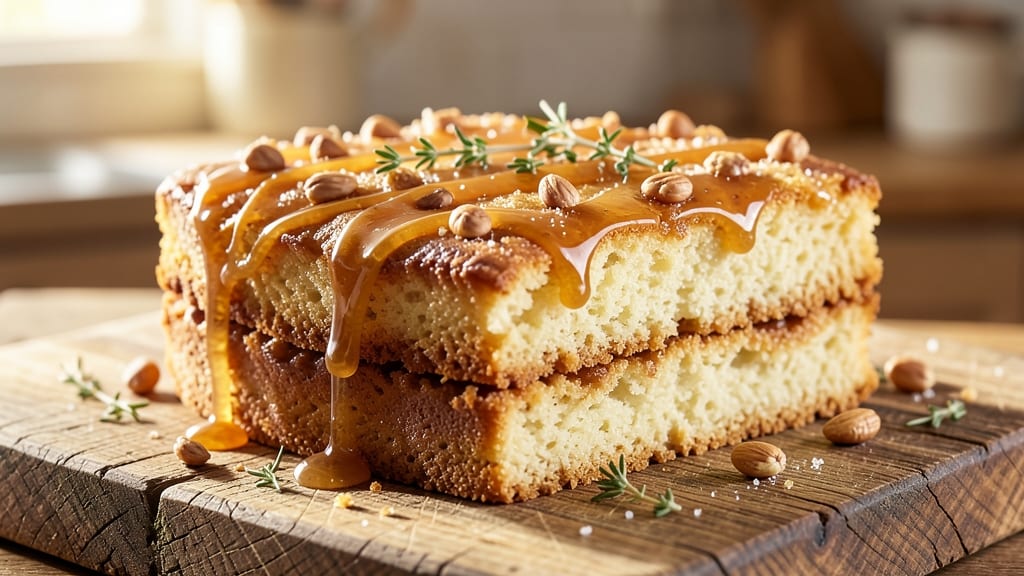
This ancient Greek honey cake recipe transports you straight to the golden kitchens of Athens, where honey wasn’t just sweetness—it was medicine, currency, and the soul of celebrations. 🌟 The Greeks perfected cakes like melitini, layered with fragrant thyme, warm cinnamon, and rich honey syrup that crystallizes into delicate, crackly edges.
What makes this recipe special is its balance: simple ingredients elevated by technique, where slow-baked layers develop deep caramel notes and a texture that’s simultaneously tender and crisp.
The foundation of this cake lies in its syrup—thickened honey infused with orange zest and a whisper of vanilla, poured over warm layers of spiced cake batter. Ancient Greeks used honey as their primary sweetener, and this recipe honors that tradition while adapting it for modern ovens.
The result? A cake with a golden crust that shatters slightly when cut, revealing moist, spiced layers beneath, all tied together by that signature honey glaze that tastes like sunshine preserved.
What you’ll achieve is a dessert that feels both nostalgic and entirely new—a cake that’s elegant enough for a gathering but simple enough for a weeknight treat. The spices (cinnamon, cloves, and nutmeg) create warmth that lingers, while the honey adds a natural sweetness that deepens as it cools.
This isn’t just a recipe; it’s a connection to a culinary tradition where every bite carries the history of ancient feasts.
Serve it warm with a dusting of powdered sugar or a dollop of whipped yogurt for contrast, or let it cool slightly for that signature crackly honey crust.
The cake keeps beautifully for days, making it perfect for sharing—or sneaking seconds when no one’s looking. Let’s bring this piece of history to life.
Ingredients for ancient greek honey cake
Simple ingredients with ancient roots—flour, honey, and spices that whisper of Greek feasts.
| Ingredient | Amount | Notes |
|---|---|---|
| All-Purpose Flour 🌾 | 3 ½ cups | Sifted for even texture |
| Honey 🍯 | 1 ½ cups | Thick, dark variety preferred |
| Unsalted Butter 🧈 | 1 cup | Melted, full-fat preferred |
| Granulated Sugar 🍚 | 1 cup | White or light brown |
| Large Eggs 🥚 | 4 whole | Room temperature for blending |
| Pure Vanilla Extract 🌿 | 1 tbsp | High-quality preferred |
| Orange Zest 🍊 | 1 tbsp | Freshly grated |
| Ground Cinnamon 🌶️ | 2 tsp | Freshly ground preferred |
| Ground Cloves 🌿 | ½ tsp | Lightly toasted for depth |
| Ground Nutmeg 🌿 | ½ tsp | Freshly grated nutmeg |
| Fresh Thyme Leaves 🌿 | 1 tbsp | Chopped finely |
| Powdered Sugar 🍚 | 1 cup | For dusting |
| Plain Greek Yogurt 🥛 | ½ cup | For serving (optional) |
The honey here isn’t just sweetness—it’s the soul of the cake. Local apiaries or specialty stores often carry thick, dark varieties like thyme honey, which adds subtle floral notes. If you can’t find it, Manuka or wildflower honey work beautifully. The butter should be unsalted (salted can alter the delicate balance) and melted just until smooth—no lumps. For the spices, Penzeys or Spicewalla offer high-quality ground cloves and nutmeg, but the bulk bins at Whole Foods are a budget-friendly alternative. Toast the whole spices lightly before grinding to deepen their aroma—just 30 seconds in a dry pan.
No vanilla extract? Seeds from a pod or even a splash of orange juice can mimic its warmth. Substituting honey? Maple syrup works at a 1:1 ratio, but it lacks the caramel depth. The orange zest can be dried and stored for up to 3 months in an airtight container, but fresh is always better. For the flour, King Arthur or Gold Medal brands are reliable, but any all-purpose will do. If you’re gluten-free, swap for a 1:1 gluten-free blend—just note the texture may vary slightly. The thyme leaves should be finely chopped; if using dried, reduce to 1 teaspoon and steep in warm honey for 10 minutes before using.
This cake keeps for 5-7 days in an airtight container at room temperature, though the honey glaze hardens as it cools—warm slices gently to soften. For longer storage, wrap tightly in plastic and refrigerate for up to 2 weeks. The yogurt topping, if used, should be whipped lightly to contrast the cake’s richness. Serve at room temperature for the best texture—cutting into warm cake releases those fragrant honey aromas. Leftovers? Reheat slices for 10 seconds in the microwave to revive the honey’s shine.
Why You'll Love This Recipe
- No-Yeast Hassle: I swear, this cake comes together faster than my coffee brews—just mix, bake, and forget. No waiting for dough to rise or fussing with yeast. Honestly, the butter and honey do all the heavy lifting while you’re still deciding whether to put on an apron.
- Honey Butter Bliss: That rich, buttery crumb soaked in real honey? It’s the kind of sweetness that lingers without being cloying. The sugar caramelizes just enough to give it this golden, almost toasted edge—like a hug from a Greek bakery.
- Breakfast or Dessert: Between us, I’ve served this warm with yogurt for breakfast and cold with tea as a midnight snack. The eggs bind it perfectly, so it holds up whether you’re feeding the family at noon or sneaking a slice at 10 PM.
- Pantry Staple Magic: You’re already using what’s in your cupboard—flour, butter, sugar, eggs—and the honey? That’s the secret weapon. No weird ingredients, no extra shopping. Even my picky teen devours this, and that’s saying something.
Step-by-step instructions for ancient Greek honey cake
Here's the authentic method to create this historic treat with perfect texture and flavor.
👨🍳 Step 1: Prepare the Wet Ingredients
In a medium saucepan, gently warm the 1.5 cups honey over low heat until it reaches 110°F—just warm enough to release its natural aromas without boiling. This step is crucial; overheating will alter the honey's delicate flavor profile. While the honey warms, melt the 1 cup unsalted butter in a separate bowl until completely liquid but not browned.
In a large mixing bowl, whisk together the 4 whole large eggs and 1 cup granulated sugar until the mixture lightens in color and becomes slightly thickened, about 3-4 minutes. This process incorporates air, which will create that signature light, airy texture. Add the warmed honey and melted butter to the egg mixture, whisking constantly until fully combined. The batter should be smooth and glossy.
👨🍳 Step 2: Combine Dry Ingredients and Fold Gently
In a separate bowl, sift together the 3.5 cups all-purpose flour, 2 tsp ground cinnamon, 0.5 tsp ground cloves, and 0.5 tsp ground nutmeg. The sifting ensures an even distribution of spices and prevents lumps in the final cake. Stir in the 1 tbsp orange zest and 1 tbsp finely chopped fresh thyme leaves—these aromatic elements are what give this cake its authentic Greek character.
With a rubber spatula, gently fold the dry ingredients into the wet mixture in three additions. Be careful not to overmix—just until the flour is mostly incorporated and a few streaks remain. The batter should be thick but pourable. Add the 1 tbsp pure vanilla extract and mix until just combined. The vanilla enhances the honey's natural sweetness while adding depth to the spice profile.
🔥 Step 3: Bake to Golden Perfection
Preheat your oven to 350°F and grease an 8-inch round cake pan or line it with parchment paper. Pour the batter into the prepared pan and smooth the top with a spatula. Bake for 45-50 minutes until a toothpick inserted in the center comes out clean and the edges are deep golden brown. The cake should have a slightly domed top—this is normal and indicates proper baking.
Here's the thing—don't open the oven during baking. The sudden temperature change can cause the cake to sink. If you notice the edges browning too quickly, loosely tent the cake with aluminum foil after 30 minutes to prevent over-browning while allowing the center to cook through.
⏰ Step 4: Cool and Prepare for Serving
Remove the cake from the oven and let it cool in the pan for 10 minutes. Then transfer it to a wire rack to cool completely. This gradual cooling prevents cracking and allows the cake to set properly. While the cake cools, make the powdered sugar glaze by whisking together 1 cup powdered sugar with 2-3 tablespoons warm water until smooth.
Once the cake is completely cool, drizzle the glaze evenly over the top. For an authentic touch, serve with a dollop of 0.5 cup plain Greek yogurt on the side. The yogurt's tangy creaminess balances the cake's rich sweetness and honey depth. This cake keeps well at room temperature for 3-4 days in an airtight container, though it's best enjoyed fresh.
Pro Tips For Making Ancient Greek Honey Cake
- Warm the Honey First: Mixing cold honey with butter makes the dough fight you—literally. Microwave the honey for 20 seconds (or warm it in a bowl over hot water) so it flows smoothly into the butter. This isn’t just about ease; it guarantees even distribution, so every bite has that rich, caramelized honey flavor without clumpy pockets.
- Weigh Your Flour: Scooping flour from the bag packs it too tightly, and that’s a recipe for dryness. Use a kitchen scale for precision—this cake thrives on a 1:1 ratio of flour to butter by weight. I learned this the hard way after a batch turned out like a sponge instead of the tender, moist cake I wanted.
- Don’t Overmix the Batter: After adding the eggs, stop mixing the second the flour disappears. Overworking the dough introduces air bubbles that can cause cracks or a dense texture. Fold gently with a spatula—just until combined—like you’re tucking in a baby, not kneading bread dough.
- Bake Until a Skewer Comes Out Clean: This cake’s magic is in its slow caramelization, but rushing it leads to a gummy center. Insert a skewer into the thickest part—if it emerges with moist crumbs (not wet batter), it’s done. If you pull it out too soon, the honey won’t fully set, and you’ll end up with a sticky mess instead of that perfect, fudgy interior.
Perfect pairings for these flavors
Greek Coffee Pairing
Nothing complements this honey cake like a cup of Greek coffee—the strong, unfiltered brew with its rich, slightly bitter notes cuts through the cake’s sweetness beautifully. I recommend using Mediterranean Coffee brand, which is widely available in specialty stores.
Serve the coffee in small 2-ounce cups (traditional brik style) and let guests enjoy the ritual of sipping it slowly. The warmth of the coffee enhances the cake’s honeyed aroma, creating a sensory experience that feels like a journey to ancient Athens. 🌟
Wine Pairings
For a more sophisticated touch, pair this cake with a Greek Assyrtiko white wine, particularly from the island of Santorini. The wine’s crisp acidity and citrus notes mirror the orange zest in the cake, while its mineral finish balances the honey’s sweetness.
If Assyrtiko isn’t available, a dry Riesling from Germany works well too—its bright fruitiness complements the thyme and cinnamon. Avoid sweet wines; they’ll overpower the cake’s delicate flavors. 🍷
Seasonal Fruit Contrast
In warmer months, serve slices of this cake with fresh figs or ripe peaches, which add a juicy contrast to the cake’s dense texture. I like to slice the fruit thinly and arrange it on a platter alongside the cake.
The natural sweetness of the fruit enhances the honey’s depth, while the acidity in peaches cuts through the richness. For a winter twist, try dried apricots or candied citrus peel for a chewy, aromatic pairing. 🍑
Yogurt and Honey Dip
Elevate your serving presentation with a simple Greek yogurt and honey dip. Mix ½ cup plain Greek yogurt with 1 tbsp honey and a pinch of ground cinnamon. Drizzle this mixture over the cake or serve it on the side for dipping.
The yogurt’s tang balances the cake’s sweetness, while the extra honey ties everything together. This dip also works as a refreshing topping for warm cake slices. 🥛
Herbal Tea Harmony
For a non-caffeinated option, pair the cake with mountain tea (thymbris), a traditional Greek herbal tea made with thyme, oregano, and other Mediterranean herbs. The earthy, herbal notes of the tea echo the thyme in the cake, creating a cohesive flavor experience.
Brew the tea with 1 tbsp dried herbs per cup of boiling water and steep for 5-7 minutes. Serve it warm alongside the cake for a comforting, aromatic pairing. 🌿
Nuts for Crunch
Add texture contrast by serving the cake with a handful of toasted walnuts or pistachios. Lightly toast the nuts in a dry pan over medium heat for 3-4 minutes until fragrant, then sprinkle them over the cake or serve them on the side.
The nuts’ earthy flavor and crunch complement the cake’s soft, spiced layers beautifully. For extra flair, drizzle with a little more honey before serving. 🌰
Nutrition facts
Frequently asked questions
Why does this cake need to cool gradually?
Gradual cooling prevents cracking and allows the honey glaze to set properly. Ancient Greeks baked cakes slowly over open flames, which gave them time to develop their signature crackly crust. Modern ovens bake faster, so cooling in stages mimics this tradition while ensuring the perfect texture. Let it sit in the pan for 10 minutes first, then transfer to a rack.
Can I substitute honey with maple syrup?
You can try a 1:1 substitution, but the flavor won't be identical. Maple syrup lacks the caramel depth and floral notes of honey, which are key to this cake's authenticity. For best results, use thick, dark honey like thyme or wildflower varieties. If you must substitute, reduce the liquid slightly (by 2 tablespoons) since maple syrup is thinner.
How do I fix a cake that's too dense?
Overmixing or underbaking usually causes dense texture. For next time, fold the dry ingredients gently and avoid opening the oven during baking. If it happens, try reheating slices in the oven at 300°F for 5-10 minutes with a splash of water in the pan to steam and restore moisture. The honey will soften the texture and revive the flavors.
What's the best way to store leftovers?
Wrap the cake tightly in plastic wrap and store at room temperature for up to 5 days. For longer storage, refrigerate for 2 weeks. The honey glaze hardens as it cools—reheat slices in the microwave for 10 seconds to restore the crackly texture. Avoid freezing, as it can alter the cake's delicate texture.
Can I make this cake gluten-free?
Yes, but expect a slightly denser texture. Use a 1:1 gluten-free flour blend and add 1 extra tablespoon of xanthan gum per cup of flour. Increase baking time by 5-10 minutes and watch closely to prevent over-browning. The honey and spices will still shine through, but the crumb will be more compact.