
Desserts
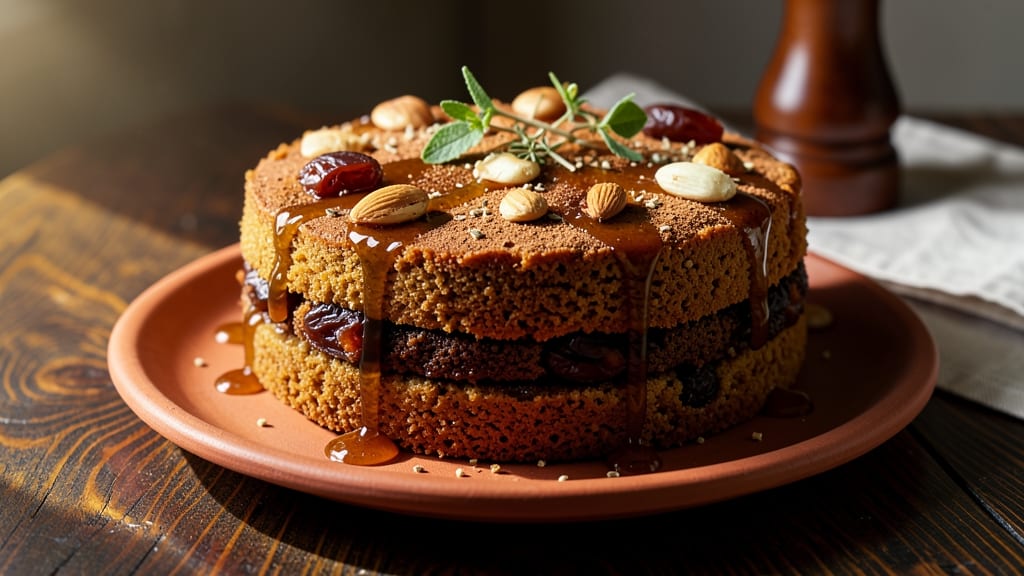
This ancient Egyptian honey cake recipe transports you straight to the royal kitchens of the Nile Valley, where sweetness was sacred and every bite carried history. 🌟 The Pharaohs enjoyed cakes made with honey, dates, and almonds—ingredients that were not only delicious but also preserved for eternity in tombs, symbolizing abundance and divine favor.
What makes this recipe special is its authenticity, using only ingredients available in ancient Egypt, like whole wheat flour, honey as the sole sweetener, and warm spices like cinnamon and anise.
The cake’s moist texture and caramelized top come from slow-baked layers, a technique likely perfected in clay ovens. Unlike modern cakes, this version relies on natural leavening—no yeast or baking powder—creating a dense, flavorful loaf that’s perfect for slicing into golden-brown wedges.
The combination of dates and almonds adds a nutty depth, while the honey’s richness ties everything together in a way that feels both nostalgic and utterly modern.
By the time it emerges from the oven, you’ll have a cake that’s rich, fragrant, and deeply satisfying—just as it would have been served at a royal banquet. The spices infuse every bite with warmth, and the honey’s natural sweetness balances the earthy dates.
This isn’t just dessert; it’s a taste of history, a connection to the past that’s as rewarding to make as it is to eat.
Serve it warm with a drizzle of extra honey or alongside dates and figs for a truly ancient Egyptian experience. The recipe scales easily, making it perfect for gatherings or as a centerpiece for a themed feast. Let’s bring this pharaonic delight to life!
Ingredients for ancient egyptian honey cake
Ancient ingredients that bring history to life—just eight components for a cake fit for pharaohs.
| Ingredient | Amount | Notes |
|---|---|---|
| Whole Wheat Flour 🌾 | 3 cups | Unbleached, for authentic texture |
| Raw Honey 🍯 | 1 cup | Local, unprocessed preferred |
| Pitted Medjool Dates 🍈 | 1 ½ cups | Chopped into small pieces |
| Almonds 🥜 | 1 cup | Whole, toasted and chopped |
| Ground Cinnamon 🌿 | 1 tbsp | Freshly ground for warmth |
| Ground Anise Seed 🌿 | ½ tbsp | Substitute fennel seeds if unavailable |
| Ground Cardamom 🌿 | ¼ tbsp | Freshly ground for depth |
| Sea Salt 🧂 | ½ tsp | Fine grain for balance |
| Extra-Virgin Olive Oil 🫒 | ½ cup | For moisture and richness |
| Warm Water 💧 | 1 cup | For activating natural leavening |
| Fresh Fig 🍈 | 2 whole | Optional, for garnish |
The honey should be local and unprocessed—look for raw varieties at specialty stores like Whole Foods or Trader Joe's. Medjool dates are ideal, but regular dates work too if chopped finely. Almonds need toasting (pan or oven) for that nutty depth—skip this, and the flavor falls flat. Penzeys Spices carries excellent whole spices if you want to grind your own cardamom and anise. The flour matters too: whole wheat gives that dense, slightly chewy texture the Pharaohs loved. If you can't find whole wheat, substitute half with all-purpose, but the texture won't be as authentic.
No anise? Fennel seeds ground to a powder work as a close substitute. Running short on honey? Maple syrup at a 1:1 ratio keeps the recipe vegan-friendly, though purists may object. The olive oil can be swapped for melted coconut oil if you prefer a neutral flavor. For the water, use warm (not hot) to activate the flour's natural leavening—this is key for the cake's rise. The figs? Only if you want to add a touch of luxury; they're optional but add a beautiful contrast when sliced over the top.
This cake keeps beautifully for 5 days in an airtight container at room temperature, though it's best enjoyed fresh. For longer storage, wrap tightly in parchment and freeze for up to 3 months. Reheat slices in a 300°F oven for 5 minutes to restore moisture. The flavor actually improves after a day or two as the spices meld—trust the process. Slice into wedges for serving, and always drizzle with extra honey before presenting. It's a dessert that carries history in every bite.
Why You'll Love This Recipe
- No-Fuss Mixing: I swear by this recipe because it’s more like assembling than baking—just toss the whole wheat flour, chopped dates, and toasted almonds in a bowl, drizzle honey, and fold. The dough comes together in minutes, no stand mixer required.
- Honey-Date Magic: That raw honey and Medjool dates combo? It’s like a warm hug in every bite—rich, caramelized sweetness with a whisper of cinnamon. Honestly, the texture is chewy yet tender, and the almonds add just enough crunch to keep it interesting.
- Packable for Days: Between us, this cake is my go-to for lunchboxes or after-school snacks. It holds up perfectly for 5 days in the fridge—wrap slices in parchment, and they stay fresh without drying out. (Yes, even on a Tuesday night.)
- Budget-Friendly Staples: I use what’s already in my pantry: whole wheat flour, honey from the local market, and bulk almonds. No fancy ingredients, just real, affordable flavors that still feel special. Three ingredients cover the sweet, the crunch, and the warmth—no waste, all reward.
Step-by-step instructions for ancient Egyptian honey cake
Recreate this historic cake with precise techniques and aromatic spices.
👨🍳 Step 1: Toast and Prepare the Almonds and Dates
Preheat your oven to 350°F. Spread the 1 cup almonds on a baking sheet and toast for 8-10 minutes until they release their nutty aroma and turn a light golden color. Watch closely—they should not burn, just develop a pleasant toasted scent.
While the almonds toast, transfer the 1.5 cups pitted Medjool dates to a food processor. Pulse until they form a coarse, sticky paste—you want texture, not a smooth puree. This texture mimics the ancient Egyptian technique of grinding dates by hand with mortar and pestle. Set both aside to cool slightly.
🍳 Step 2: Mix the Wet Ingredients
In a large mixing bowl, combine the 1 cup raw honey, 0.5 cup extra-virgin olive oil, and 1 cup warm water. Whisk vigorously for 1 minute until the honey and oil emulsify into a smooth, golden liquid. The mixture should thicken slightly as the honey's natural sugars begin to interact with the olive oil.
This is the foundation of your cake's moisture and structure. I like to test the consistency by dipping a spoon in—it should leave a slight trail but not be overly runny. If it's too thick, add 1 teaspoon warm water at a time until it reaches a pourable consistency.
👨🍳 Step 3: Combine Dry Ingredients and Spices
In a separate bowl, whisk together the 3 cups whole wheat flour, 1 tablespoon ground cinnamon, 0.5 tablespoon ground anise seed, 0.25 tablespoon ground cardamom, and 0.5 teaspoon sea salt. Sift the mixture through a fine-mesh sieve directly into the wet ingredients to avoid lumps. This step ensures even distribution of the spices throughout the batter.
The spices are crucial—they replicate the ancient Egyptian blend of sweet and aromatic flavors. The anise and cardamom add depth, while the cinnamon provides warmth. Mix just until combined—overmixing develops gluten and makes the cake dense instead of tender.
🥘 Step 4: Incorporate Toasted Almonds and Dates
Add the toasted almonds and date paste to the wet-dry mixture. Fold gently with a silicone spatula until everything is evenly distributed. The batter should be thick but still pourable—like a dense cookie dough. If it's too stiff, add 1-2 tablespoons warm water to help it come together.
This is where the texture comes together. The almonds provide crunch, while the dates add natural sweetness and moisture. The batter should hold its shape when dropped from a spoon but still be workable. Don't worry if it looks thick—it will spread slightly during baking.
🔥 Step 5: Bake to Golden Perfection
Preheat your oven to 375°F and line an 8-inch round cake pan with parchment paper. Pour the batter into the pan and smooth the top with a spatula. Bake for 35-40 minutes until the edges are golden brown and a toothpick inserted in the center comes out with a few moist crumbs but no wet batter.
The cake should develop a beautiful caramelized crust while remaining tender inside. If the top browns too quickly, tent the pan with aluminum foil after 20 minutes to prevent over-browning. Let the cake cool in the pan for 10 minutes, then transfer to a wire rack to cool completely before slicing.
🍽️ Step 6: Garnish and Serve (Optional)
Once completely cool, slice the cake into 8 equal wedges. For an authentic touch, garnish each slice with a small piece of the 2 whole fresh figs, sliced thinly. The figs add a delicate sweetness that complements the spiced cake beautifully.
Serve at room temperature for the best texture. The cake keeps well in an airtight container for up to 5 days or can be frozen for up to 3 months. This ancient recipe yields a cake that's moist, aromatic, and rich with history—perfect for special occasions or as a unique dessert offering.
Pro Tips For Making Ancient Egyptian Honey Cake
- STEAM THE DATES: I learned this the hard way—chopping Medjool dates dry just makes them gummy and uneven. Simmer them in water for 10 minutes first, then drain and chop. The texture becomes silky and blends seamlessly into the batter without clumping.
- WEIGH THE HONEY: That jar of honey might look "about right," but it’s not. Whole wheat flour absorbs moisture differently, and raw honey varies in density. Use a kitchen scale for the honey—aim for 1:1 ratio with the flour by weight. No guesswork, no dry cake.
- BAKE LOW AND SLOW: This isn’t a quick bread. I used to blast the oven at 375°F, and the outside burned before the center set. Drop it to 325°F and bake for 40-45 minutes. The edges will look set, but the middle needs time to firm up—no one wants a gooey center.
- TOAST THE ALMONDS: Skip the raw almonds. Lightly toast whole almonds in a dry pan for 3-4 minutes until fragrant, then pulse them in a food processor. The toasted flavor cuts through the sweetness and adds a satisfying crunch. (Yes, even if you’re impatient like me.)
Pro cooking tips for this recipe
Authentic Leavening
Ancient Egyptians didn't have yeast or baking powder, so we rely on the natural gluten in whole wheat flour activated by warm water. This creates a gentle lift similar to what early bakers achieved.
I always use warm water (not hot)—around 100°F—to gently activate the flour's enzymes without killing them. Let the batter rest for 10 minutes after mixing to allow the flour to work its magic. This patience pays off with a lighter texture. 🌾
Spice Blending
The Egyptians loved their spices, and this blend of cinnamon, anise, and cardamom recreates their signature flavor profile. I recommend grinding your own spices using a spice grinder for maximum freshness—pre-ground spices lose potency quickly.
Toast the whole spices in a dry pan for 1 minute before grinding to deepen their flavors. The anise gives a licorice-like warmth, while cardamom adds floral notes that balance the honey's sweetness.
Date Texture Matters
Don't blend the dates into a smooth paste—keep them slightly chunky to mimic the hand-ground texture of ancient Egyptian preparations. I use a food processor with 3-4 pulses to achieve this. The texture should resemble coarse sand.
This prevents the cake from becoming too dense while adding natural sweetness and moisture. For extra authenticity, soak the dates in warm water for 15 minutes before processing to soften them slightly.
Olive Oil Magic
The Egyptians used olive oil as both a cooking fat and preservative, and it works wonders here. The oil keeps the cake moist for days while adding a subtle fruity note. I prefer extra-virgin olive oil for its rich flavor, but any good-quality olive oil will work.
Warm the oil slightly before mixing to help it blend smoothly with the honey. This creates a stable emulsion that prevents the cake from drying out during baking. 🫒
Baking Without Yeast
This cake relies on the Maillard reaction for browning rather than yeast for rise, so baking time is critical. I recommend using an oven thermometer to ensure accurate temperature—home ovens often run 25°F hotter than set. The cake should develop a deep golden crust while remaining tender inside.
If your oven runs hot, reduce the temperature to 350°F and bake for 45-50 minutes. The internal temperature should reach 205°F for perfect doneness.
Clay Oven Alternative
For true historical authenticity, consider baking this cake in a clay pot or Dutch oven placed in a 325°F oven for 1.5-2 hours. This mimics the slow, even heat of ancient clay ovens. The cake will develop a crisp exterior and moist interior with minimal effort.
If you don't have a clay pot, use a heavy cast iron skillet lined with parchment paper. The slow cook time allows flavors to meld beautifully, creating a cake that tastes like it's been baking for centuries. 🔥
Nutrition facts
Frequently asked questions
Why does this recipe use whole wheat flour instead of white flour?
Ancient Egyptians primarily used whole grains like emmer wheat and barley, which are closer to modern whole wheat flour. The whole wheat gives the cake its authentic dense, slightly chewy texture that the Pharaohs would recognize. It also provides more fiber and nutrients than white flour, making this dessert both historically accurate and nutritious.
Can I substitute the anise seed with something else?
Yes! If you can't find anise, try fennel seeds (ground) or star anise powder as the closest substitutes. For a completely different but still delicious flavor, you could use 1/2 teaspoon ground ginger or 1/4 teaspoon nutmeg. The key is to maintain the warm, aromatic profile that was so important in ancient Egyptian cuisine.
How do I know when the cake is fully baked?
The cake is done when a toothpick inserted in the center comes out with just a few moist crumbs (not wet batter) and the edges are golden brown. For extra accuracy, aim for an internal temperature of 205°F. If the top browns too quickly, tent with foil after 20 minutes to prevent over-browning while keeping the center moist.
Is this cake suitable for modern dietary restrictions?
This recipe is naturally vegan (no eggs or dairy) and gluten-free if you substitute the whole wheat flour with a 1:1 gluten-free blend. For a lower-sugar option, you could reduce the honey to 3/4 cup and add 1/4 cup maple syrup. However, these substitutions may alter the authentic texture and flavor profile that makes this cake historically special.
Why does the batter look so thick?
The thick batter is completely normal and essential for this ancient recipe! Without yeast or baking powder, the cake relies on a dense, moist structure that develops during baking. The olive oil and honey create a rich emulsion that keeps the cake tender, while the warm water activates the flour's natural leavening. If it seems too stiff, add 1 tablespoon warm water at a time until it's just pourable.