
Desserts
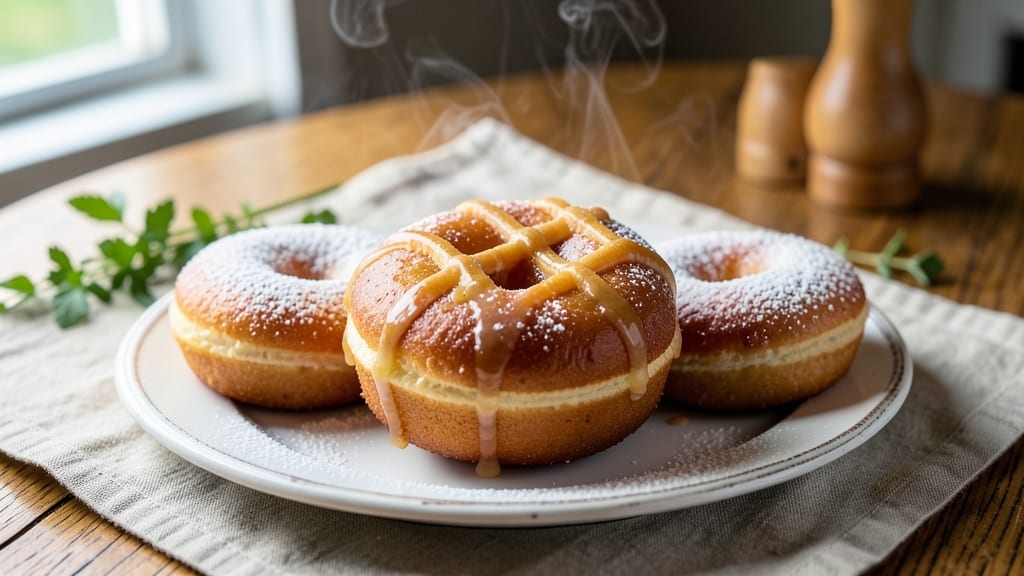
This Amish cake donut recipe brings back the comforting flavors of homestyle baking with its tender crumb and warm vanilla-spice aroma. 🌟 The secret lies in traditional ingredients like lard or butter, which create that signature melt-in-your-mouth texture Amish communities have cherished for generations.
What makes these donuts special is their simplicity—no fancy equipment needed, just a few basic ingredients and patience for the perfect rise.
Unlike many modern recipes, these donuts rely on time-honored techniques that ensure a light, fluffy interior with just the right amount of crispness on the outside.
The dough requires a brief rest, allowing the gluten to relax and the flavors to meld, resulting in donuts that are rich and satisfying without being overly sweet. Whether you fry or bake them, the key is maintaining a gentle heat to avoid browning too quickly.
Once you've shaped and cooked the donuts, the real magic happens with the glaze—a smooth vanilla or cinnamon-sugar coating that seals in all that warm, spiced goodness. The contrast between the tender cake and the sweet glaze makes every bite irresistible.
These donuts are perfect for family gatherings, church potlucks, or simply treating yourself to a taste of tradition.
With just a handful of ingredients and a little time, you'll have homestyle donuts that taste like they came straight from an Amish kitchen. Let's get started on creating these beloved treats that bring comfort and nostalgia to every bite.
Ingredients for amish cake donut
These traditional ingredients create Amish-style donuts with tender crumb and warm spice aroma.
| Ingredient | Amount | Notes |
|---|---|---|
| All-Purpose Flour 🌾 | 4 cups | Sifted for light texture |
| Granulated Sugar 🍚 | ¾ cup | White or light brown |
| Unsalted Butter 🧈 | ½ cup | Cold, cubed for dough |
| Lard 🧈 | ½ cup | Traditional for melt-in-mouth texture |
| Large Eggs 🥚 | 2 whole | Room temperature |
| Milk 🥛 | 1 cup | Whole milk preferred |
| Active Dry Yeast 🍞 | 2 ¼ tsp | 1 packet or 7g |
| Vanilla Extract 🌿 | 1 tbsp | Pure vanilla preferred |
| Ground Cinnamon 🌶️ | 1 ½ tsp | Freshly ground preferred |
| Ground Nutmeg 🌶️ | ½ tsp | Freshly grated for warmth |
| Salt 🧂 | 1 tsp | Kosher salt preferred |
| Powdered Sugar 🍚 | 2 cups | For glaze |
| Milk 🥛 | ¼ cup | For glaze |
| Vanilla Extract 🌿 | ½ tbsp | For glaze |
The butter and lard combination is key—lard gives that signature melt-in-your-mouth texture while butter adds richness. Store-bought lard works fine, but if you're feeling ambitious, render your own from pork fat. For the flour, King Arthur or Gold Medal brands work best—they're finely milled for that light, airy crumb. The yeast should be fresh; if it's past its prime, your donuts might not rise properly. Check the expiration date on the package—it's worth the extra 50 cents to get good yeast. Store your flour in an airtight container to keep it fresh longer.
No lard? Substitute with an extra 0.25 cup of butter, though the texture will be slightly denser. Short on powdered sugar? Blend granulated sugar in a blender with 1 tsp cornstarch to make a quick substitute. For the glaze, vanilla bean paste adds extra depth if you want to splurge, but pure extract works perfectly fine. The milk in the dough should be warm (about 110°F) to help activate the yeast—microwave it for 30 seconds if it's cold straight from the fridge. If you're baking instead of frying, reduce the sugar slightly (by 1 tbsp) to prevent burning.
The dough keeps best in the fridge for 24 hours if you're not using it all at once—just let it sit at room temperature for 30 minutes before shaping. For the glaze, mix it up fresh before serving; it sets quickly. Store baked donuts in an airtight container with parchment paper between layers to prevent sogginess. They'll stay fresh for 3 days at room temperature or 1 month in the freezer. The glaze can be made ahead and reheated gently with a splash of milk if it thickens too much.
Why You'll Love This Recipe
- No Mixer Needed: I swear by this—just a bowl and a fork. The dough comes together in minutes, no stand mixer required, and the lard gives it that signature tender crunch without fuss.
- Buttery-Sweet Magic: That perfect balance of butter and sugar? It’s like biting into a cloud with a golden crust. The eggs bind it just right, so every donut stays moist but never greasy.
- Breakfast or Dessert: Serve them plain with coffee for a hearty breakfast or dust with powdered sugar for an instant treat. My kids grab them straight from the pan—no judgment here.
- Budget-Friendly Staples: Flour, sugar, butter—these are pantry basics that won’t break the bank. Plus, the dough keeps well, so I make a batch and freeze extras for lazy mornings. Efficiency at its best.
Step-by-step instructions for Amish cake donuts
Here's the classic method for tender, spiced donuts with a perfect glaze—every step matters.
👨🍳 Step 1: Activate the Yeast and Mix the Dough
In a large bowl, combine the 1 cup milk with the 2.25 tsp active dry yeast and 0.75 cup granulated sugar. Let this sit for 5-10 minutes until frothy—this confirms the yeast is alive and ready to work. The mixture should bubble gently and smell slightly sweet.
In a separate bowl, whisk together the 4 cups all-purpose flour, 1.5 tsp ground cinnamon, 0.5 tsp ground nutmeg, and 1 tsp salt. Sift the flour mixture directly over the yeast mixture to avoid clumps. Using a wooden spoon, gently stir until a shaggy dough forms.
🍳 Step 2: Incorporate Fats and Eggs
Cut the 0.5 cup cold unsalted butter and 0.5 cup lard into small cubes. Add them to the dough along with the 2 whole large eggs and 1 tbsp vanilla extract. Mix gently with a wooden spoon until the fats are fully incorporated and the dough begins to come together.
Here's the thing—don't overmix. You want a slightly sticky, soft dough that pulls away from the sides of the bowl. If it's too dry, add 1-2 teaspoons of milk at a time until it reaches the right consistency. The dough should be smooth but still slightly tacky to the touch.
🥘 Step 3: Knead and Let Rise
Turn the dough onto a lightly floured surface and knead for 5-7 minutes until smooth and elastic. You'll know it's ready when it springs back slowly when poked. If the dough feels too sticky, add 1 tablespoon of flour at a time until it's just right.
Place the dough in a lightly greased bowl, cover with a clean kitchen towel, and let it rise in a warm place for 1-2 hours until it doubles in size. I like to place the bowl in a slightly warm oven (70-75°F) with a cup of hot water on the bottom shelf to create the perfect rising environment.
🔥 Step 4: Shape and Fry the Donuts
Once the dough has risen, punch it down to release air, then turn it out onto a lightly floured surface. Roll the dough to 1/2-inch thickness and cut out 2-inch rounds using a donut cutter or glass. Place the cut donuts on a floured baking sheet and cover with a towel while you prepare the oil.
Heat 3-4 inches of oil in a deep pot or Dutch oven to 360-370°F. Fry the donuts 2-3 at a time, turning occasionally, until golden brown on all sides (2-3 minutes per side). Don't overcrowd the pot or the oil temperature will drop, leading to greasy donuts. Drain on a wire rack or paper towels.
🍽️ Step 5: Glaze and Serve
While the donuts are still warm, whisk together the 2 cups powdered sugar, 0.25 cup milk, and 0.5 tbsp vanilla extract in a bowl until smooth. Dip the tops of the donuts in the glaze or drizzle generously over the top. Let the glaze set for 5-10 minutes before serving.
Serve immediately while the donuts are still warm and the glaze is glossy. These donuts are best enjoyed fresh—they'll keep for 2-3 days in an airtight container, but nothing beats them warm from the fryer with that perfect balance of tender crumb and sweet-spiced flavor.
Pro Tips For Making Amish Cake Donut
- CHILL THE DOUGH: Amish cake donuts are all about that tender crumb, and warm dough fights you every step of the way. After mixing, pop the dough in the fridge for at least 30 minutes—yes, even if you’re eager to fry. I learned this the hard way when my first batch turned out dense and greasy; the rest makes the dough easier to handle and gives you lighter donuts.
- USE COLD FAT: That lard and butter combo isn’t just for flavor—it’s for texture. Cut the cold fat into the flour using a pastry cutter or your fingers until you get pea-sized pieces, no bigger. Warm fat melts too fast in the fryer, and you’ll end up with soggy donuts instead of that perfect golden crust. Trust me, your donuts will thank you.
- DON’T OVERMIX: Once you add the eggs, stop stirring the second everything comes together. Overmixing develops the gluten, and that’s how you get tough, chewy donuts instead of the light, cake-like ones you’re after. Two or three turns of the spoon is all you need—just enough to bind the dough.
- FRY IN BATCHES OF 3: Crowding the fryer lowers the oil temperature, and that’s how you get greasy, uneven donuts. Three at a time is the sweet spot—enough to keep things moving without drowning your pan. Use a slotted spoon to turn them once, and resist the urge to peek too early; they’re done when the crust is deep golden, not when they float. (Yes, even if you’re impatient like me.)
Troubleshooting perfect results
Dough Too Sticky?
If your dough feels too sticky after mixing, don't panic—this is normal with lard and butter. Add 1 tablespoon of flour at a time until the dough is just workable.
Over-kneading can make it tough, so keep it gentle. For extra insurance, chill the dough for 15 minutes before rolling to firm it up slightly. 💫
Dough Not Rising?
Cold kitchen? Yeast needs warmth to activate. Place your dough bowl in a 70-75°F oven with a cup of hot water on the bottom shelf. If your yeast is old, replace it—fresh yeast (like Red Star Active Dry) is worth the investment.
Also, check your sugar; ½ cup granulated sugar should be enough to feed the yeast.
Greasy Donuts?
Oil too cool? Use a deep-fry thermometer to maintain 360-370°F. Overcrowding the pot drops the temperature, leading to greasy results. Fry 2-3 donuts at a time and keep a wire rack ready for draining. If your donuts brown too fast, lower the heat by 10°F.
Glaze Too Thick?
Add 1 teaspoon of milk at a time until the glaze reaches a smooth, drizzling consistency. For extra shine, whisk in ½ teaspoon vanilla bean paste. If it sets too quickly, brush donuts with a tiny bit of oil before glazing to create a barrier.
Store glaze in an airtight container for up to 3 days—just thin with milk before use.
Donuts Too Dense?
Overmixing develops gluten, making donuts tough. Mix just until combined, then let the dough rest for 10 minutes before kneading. If your donuts still feel dense, reduce the flour by ¼ cup next time. For extra tenderness, use King Arthur flour—its fine grind creates a lighter crumb.
Uneven Cooking?
Turn donuts gently with tongs to avoid breaking them. If one side browns faster, adjust your oil temperature or flip more frequently. For baked donuts, spread them on a parchment-lined sheet and rotate the pan halfway through baking. A light-colored baking dish helps distribute heat evenly.
Nutrition facts
Frequently asked questions
Can I make these donuts without lard?
Yes! Replace the 0.5 cup lard with an extra 0.25 cup cold butter—just know the texture will be slightly denser. For a lighter result, try 1/4 cup vegetable shortening instead, but the traditional melt-in-your-mouth quality comes from the lard. The butter-lard combo creates that signature Amish cake donut tenderness.
How do I store leftover donuts?
Keep them fresh by storing in an airtight container with parchment paper between layers. They'll stay good for 2-3 days at room temperature. For longer storage, freeze glazed donuts for up to 1 month—thaw at room temperature before enjoying. The glaze may need reheating with a splash of milk if it thickens.
Can I bake these donuts instead of frying?
Brush the shaped donuts with melted butter, then bake at 350°F for 12-15 minutes until golden. For extra crispness, broil for 1-2 minutes at the end. Reduce the sugar by 1 tbsp to prevent burning. Baked donuts will be slightly less rich but still delicious—perfect for a healthier option.
Why does my dough smell like yeast but not rise?
Cold kitchen? Yeast needs warmth (70-75°F) to activate. Try placing your dough bowl in a turned-off oven with a cup of hot water on the bottom shelf. Also check your yeast—it should be fresh (within 4 months) and bubbly when mixed with warm milk. If it's old, replace it for proper rising.
What's the secret to the perfect glaze?
The glaze should be thin enough to drizzle but coat the donuts well. Mix 2 cups powdered sugar with 0.25 cup milk and 0.5 tbsp vanilla until smooth. For extra shine, whisk in ½ tsp vanilla bean paste. Apply while donuts are still warm—the glaze sets best when the donuts are fresh from frying or baking.