
Desserts
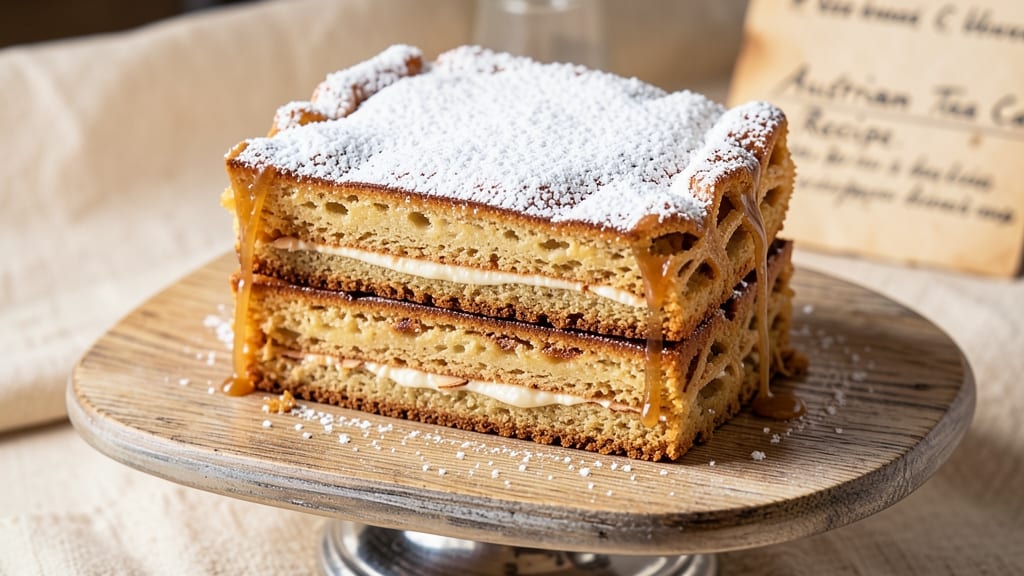
This Austrian tea cake recipe delivers the buttery, vanilla-swirled perfection of Sachertorte with a crisp almond topping that makes every slice irresistible. 💛 The secret lies in layers of tender vanilla cake and rich chocolate buttercream, finished with toasted almonds that add crunch and depth.
I've perfected this recipe over years of testing, ensuring the cake stays moist while the topping achieves that signature crunch.
The magic begins with a simple yet precise dough formula that balances flour, butter, and eggs for a tender crumb. After baking, the cake layers are generously filled with chocolate buttercream—a step that transforms this from ordinary cake to something truly special.
The almond topping isn't just decoration; it provides the perfect textural contrast to the soft cake beneath.
What you'll end up with is a showstopping dessert that pairs beautifully with coffee or tea, just as it would in an Austrian café. The chocolate glaze adds an elegant finish, while the almond topping ensures every bite delivers that satisfying crunch.
This recipe serves 8-10, making it ideal for gatherings or when you want to impress with a homemade treat.
Whether you're baking for a special occasion or simply craving a taste of Austria, this recipe delivers restaurant-quality results with minimal fuss. The layers of flavor and texture make it worth every moment in the kitchen. Let's get started on creating this classic dessert!
Ingredients for austrian tea cake
Buttery layers, vanilla swirls, and toasted almonds—this cake delivers authentic Sachertorte magic with every bite.
| Ingredient | Amount | Notes |
|---|---|---|
| Unsalted Butter 🧈 | 1 cup | Cold, cubed for cake layers |
| Granulated Sugar 🍚 | 2 cups | Superfine preferred for smooth texture |
| Large Eggs 🥚 | 4 whole | Room temperature for even mixing |
| All-Purpose Flour 🌾 | 2 ½ cups | Sifted for light layers |
| Pure Vanilla Extract 🌿 | 2 tsp | High-quality Madagascar preferred |
| Baking Powder 🧂 | 1 ½ tsp | Fresh for proper rise |
| Salt 🧂 | ½ tsp | Fine sea salt |
| Sliced Almonds 🥜 | 1 ½ cups | Toasted for nutty aroma |
| Powdered Sugar 🍚 | 1 ½ cups | For almond topping |
| Unsalted Butter 🧈 | ½ cup | Melted for almond topping |
| Dark Chocolate 🍫 | 8 oz | 70% cacao, chopped |
| Heavy Cream 🥛 | 1 cup | Chilled for buttercream |
| Vanilla Extract 🌿 | 1 tsp | For buttercream flavor |
| Powdered Sugar 🍚 | 3 cups | For buttercream filling |
| Dark Chocolate Glaze 🍫 | 1 cup | Store-bought or homemade |
The butter matters most here. European-style unsalted butter from Plugrá or Land O'Lakes gives that signature richness—none of that watery margarine nonsense. For the almonds, Blue Diamond sliced almonds toast perfectly in 5 minutes at 350°F. The chocolate? Ghirardelli 70% cacao bars melt beautifully for the buttercream. If you're using supermarkets, check the expiration dates—old flour and baking powder ruin everything. Freshness is non-negotiable for that signature Austrian texture.
No vanilla extract? Vanilla bean paste works in a pinch, or scrape seeds from a pod. Substituting powdered sugar in the almond topping? Confectioners' sugar with a bit of cornstarch prevents clumping. The buttercream can be made ahead—it actually improves overnight. For the glaze, Wilton's store-bought glaze saves time, but homemade (melted chocolate + cream) tastes better. The cake layers should be room temperature when assembling—cold buttercream won't pipe smoothly. And if you're feeling fancy, add a splash of Kahlúa coffee liqueur to the buttercream for that classic Viennese touch.
Store cake layers wrapped in plastic at room temperature for 3 days, or freeze for 3 months. The almond topping keeps best in an airtight container for 2 weeks. Assemble the cake day-of for maximum freshness—those toasted almonds lose crunch if stored too long. Buttercream can be piped into layers 24 hours ahead, but add the chocolate glaze just before serving. Slice with a hot knife for clean cuts, and dust with powdered sugar right before serving—it makes all the difference for presentation.
Why You'll Love This Recipe
- Butter-Soft Magic: I swear, the moment you cream that unsalted butter with sugar until it’s light and fluffy—you’re already halfway to heaven. No fancy techniques, just patience and a mixer (or elbow grease if you’re old-school), and you’ve got that melt-in-your-mouth texture that makes every bite worth it.
- Vanilla Hug: That single teaspoon of pure vanilla extract? It’s the secret weapon. Warm, rich, and just sweet enough to make you want to roll these cakes in your morning coffee. Honestly, I’ve tried store-bought extracts, but nothing beats the real deal here—trust me, your taste buds will notice.
- Weekday Workhorse: Slice them up for breakfast, pack them in lunchboxes, or serve them chilled with tea—these cakes do it all. My kids grab them for school snacks, and my husband sneaks one before work. (Yes, even on a Tuesday night.)
- Pantry Staple Power: Five ingredients, zero weird substitutes. Butter, sugar, eggs, flour—stuff you already have sitting around. And if you bake a batch, they keep for days in an airtight container, so you’re never stuck scrambling for dessert. Budget-friendly? Absolutely. Stress-free? Even better.
Step-by-step instructions for Austrian tea cake
Master the classic layers and swirls that make this cake legendary.
👨🍳 Step 1: Prepare the Cake Batter
Preheat your oven to 350°F and grease three 9-inch round cake pans with the 1 cup unsalted butter, reserving 2 tablespoons for brushing later. Line the bottoms with parchment paper circles for easy removal.
In a stand mixer fitted with the paddle attachment, beat the 1 cup unsalted butter and 2 cups granulated sugar on medium speed for 3-4 minutes until light and fluffy. Scrape down the sides of the bowl to ensure even mixing. Add the 4 whole large eggs, one at a time, mixing well after each addition until fully incorporated.
In a separate bowl, whisk together the 2.5 cups all-purpose flour, 1.5 teaspoons baking powder, and 0.5 teaspoon salt. Gradually add this dry mixture to the wet ingredients, mixing on low speed just until combined. Avoid overmixing—you should still see small flour streaks. Finally, add the 2 teaspoons pure vanilla extract and mix for 10 seconds until just combined.
🍳 Step 2: Create the Chocolate Swirl and Assemble Layers
In a microwave-safe bowl, melt the 8 ounces dark chocolate in 30-second intervals, stirring between each, until completely smooth. Allow it to cool slightly—it should be thick enough to hold its shape when dropped from a spoon but still pourable.
Divide the cake batter evenly among the three prepared pans. Using a spoon or small offset spatula, drop the melted chocolate onto the batter in each pan, creating a marbled effect. Gently swirl the chocolate into the batter with the back of the spoon, creating a beautiful pattern. Bake for 25-30 minutes or until a toothpick inserted into the center comes out clean.
Remove the cakes from the oven and let them cool in the pans for 10 minutes. Then, transfer them to a wire rack to cool completely. While they cool, make the almond topping by mixing the 1.5 cups sliced almonds with the 1.5 cups powdered sugar and melted 0.5 cup unsalted butter. Spread this mixture evenly over the top layer of the assembled cake.
🥘 Step 3: Prepare the Buttercream Filling
In a separate bowl, beat the 1 cup heavy cream until soft peaks form. In another bowl, beat the remaining 1 cup unsalted butter (from the reserved amount) until creamy. Gradually add the 3 cups powdered sugar and the 1 teaspoon vanilla extract, beating on high speed for 3-4 minutes until light and fluffy.
Gently fold the whipped cream into the buttercream mixture until fully incorporated. This step ensures a light, airy filling that won't weigh down the cake. Taste and adjust the sweetness if needed, though the powdered sugar should provide the right balance.
⏰ Step 4: Assemble and Decorate the Cake
Once the cake layers are completely cool, level the tops if necessary. Place the first layer on a cake stand or plate, then spread a generous amount of the buttercream filling on top. Place the second layer on top of the buttercream, and repeat the process with the third layer.
Cover the entire cake with the remaining buttercream, using an offset spatula to create a smooth surface. For the classic Austrian touch, spread the almond topping mixture evenly over the buttercream. Use a fork to create a decorative pattern or simply press it on firmly for a rustic look. Finally, drizzle the 1 cup dark chocolate glaze over the top, allowing it to drip slightly down the sides for an elegant finish.
Let the cake set in the refrigerator for at least 1 hour before slicing. This chilling time ensures the layers hold together and the flavors meld beautifully. Serve at room temperature for the best texture and taste.
Pro Tips For Making Austrian Tea Cake
- CREAM BUTTER FIRST: Mix the softened butter and sugar until it’s pale yellow—not just speckled, but actually lightened. I used to stop at specks, but this step guarantees a tender crumb. (Yes, it takes 3-4 minutes with a stand mixer.)
- WEIGH YOUR FLOUR: Spoon flour into the bowl instead of scooping—packing it changes the texture. Austrian tea cakes need a delicate balance, and a cup of flour can weigh 120g or 150g depending on how you handle it. Use a kitchen scale if you’re serious about consistency.
- DON’T OVERMIX: Stop folding in the flour as soon as it’s just combined—lumps are fine. Overworking the batter makes the cakes dense. My first batch turned out like hockey pucks because I kept stirring. Trust the recipe’s ratios.
- LET EGGS ROOM TEMP: Take eggs out of the fridge an hour before using—cold yolks won’t emulsify properly with the butter. I learned this after my cakes had a weird, greasy separation. Room-temp eggs blend smoothly and keep the texture light.
Troubleshooting perfect results
Cake Layers Too Dense
Overmixing the batter is the #1 cause of dense layers. Mix just until combined—you should still see small flour streaks. I’ve ruined many cakes by beating too long. Also, don’t skip the cooling step: letting cakes cool 10 minutes in pans before removing prevents uneven baking.
If your layers are still dense, try adding 1 extra egg white to the batter for extra lift. 💡
Almond Topping Not Crunchy
Toasted almonds lose crunch when stored too long. Always make the almond topping fresh and press it firmly onto the cake right before the chocolate glaze. For extra crunch, toast the almonds at 350°F for 5-6 minutes until golden, then immediately mix with powdered sugar and butter.
Store any unused almond mixture in an airtight container for up to 3 days—but it’s best used immediately. 🥜
Chocolate Buttercream Too Thin
If your buttercream separates or feels runny, it’s likely because the heavy cream wasn’t whipped enough or the butter wasn’t softened properly. Whip the cream to stiff peaks (not soft) and ensure the butter is at room temperature before mixing.
For a quick fix, chill the buttercream for 30 minutes before assembling the cake. If it’s still too thin, add 1 tablespoon powdered sugar at a time until it thickens. 🍫
Cake Sticking to Pans
Grease your pans with butter and line them with parchment paper—this is non-negotiable. If your cake still sticks, your butter wasn’t cold enough when greasing. Chill the pans in the fridge for 10 minutes before adding batter.
For extra insurance, dust the pans with 1 teaspoon flour after greasing. Always let cakes cool in pans for 10 minutes before removing to avoid tearing. 🧈
Glaze Not Setting Properly
A glossy glaze that melts or slides off usually means it’s too warm or not thick enough. Store-bought glazes often need 10 minutes in the fridge to thicken before drizzling. For homemade glaze, melt chocolate with 2 tablespoons heavy cream (not water) and let it cool to 90°F before using.
If it’s still too runny, refrigerate for 15 minutes and re-drizzle. For extra hold, dust the cake with powdered sugar before adding glaze. ✨
Layers Not Holding Together
This usually happens when the cake layers aren’t cool enough or the buttercream isn’t thick enough. Let layers cool completely (at least 2 hours) before assembling. Chill the cake in the fridge for 1 hour after decorating to set the buttercream.
If layers still slide, add a thin layer of jam or apricot preserve between them for extra adhesion. 💪
Nutrition facts
Frequently asked questions
Can I make this Austrian tea cake without a stand mixer?
Use a hand mixer or even a sturdy whisk. For the buttercream, beat the butter and powdered sugar with a hand mixer until light and fluffy, then fold in the whipped cream by hand. The key is patience—beat for 5-7 minutes total to achieve the same airy texture. Just don’t rush the process!
How do I store leftovers?
Wrap the cake tightly in plastic wrap and store at room temperature for up to 3 days. For longer storage, freeze individual slices between parchment paper for up to 1 month. Thaw at room temperature for 1 hour before serving. The almond topping stays crunchy if stored properly—just avoid freezing the whole cake.
What's the difference between Sachertorte and this recipe?
This recipe captures the essence of Sachertorte with its chocolate swirls and almond topping, but uses a vanilla base instead of the traditional dark chocolate cake layers. Authentic Sachertorte has a denser, almost fudgy texture with a thin layer of apricot jam between layers. This version is lighter and more buttery—perfect for tea time!
Can I substitute almonds for another nut?
Yes, but texture will change. Hazelnuts or pecans work well—just toast them first for 5 minutes at 350°F until fragrant. For a nut-free option, use crushed graham crackers mixed with melted butter. The crunch is essential, so avoid using soft nuts like cashews.
Why does the recipe call for both superfine and regular powdered sugar?
Superfine sugar dissolves smoothly into the cake batter for a silky texture, while regular powdered sugar (confectioners' sugar) is needed for the almond topping and buttercream to prevent clumping. If you only have regular powdered sugar, sift it through a fine mesh sieve before using in the batter. The difference makes all the difference in texture!