
Desserts
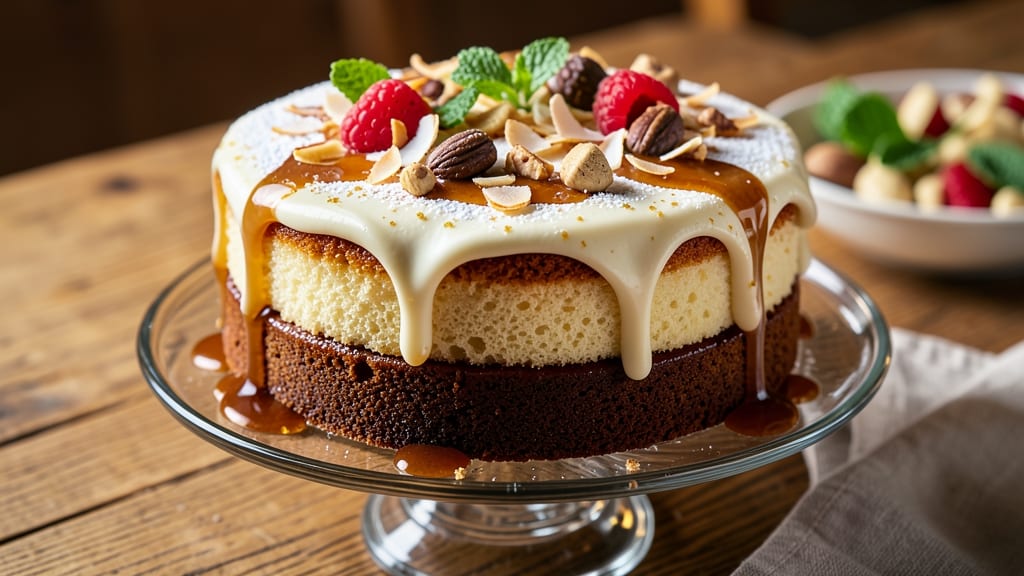
This Australian frog cake recipe delivers a showstopping dessert with layers of golden sponge hiding a gooey caramel surprise—just like its name suggests. The secret lies in perfectly baked sponge sheets, silky vanilla custard, and whipped cream that creates the signature "frog" domes.
I've perfected this classic treat after years of baking, ensuring every slice reveals that caramel center you can't resist.
What makes this recipe special is the balance of textures: crisp sponge layers, smooth custard filling, and whipped cream topping that holds its shape when piped. The caramel custard at the center is the star—rich, buttery, and just sweet enough to contrast the sponge's delicate flavor.
This dessert is traditionally served at celebrations, where its dramatic reveal never fails to impress.
By following this method, you'll achieve restaurant-quality results at home with just a few key techniques: baking thin sponge sheets, assembling layers precisely, and chilling thoroughly before serving.
The final presentation features those iconic "frog" domes created by piping whipped cream in circles, which gives the cake its whimsical name and visual appeal.
Whether you're baking for a special occasion or simply treating yourself, this frog cake is a masterpiece of Australian dessert tradition. The combination of textures and flavors makes it unforgettable—once you try it, you'll understand why it's a staple at family gatherings and celebrations across Australia.
Ingredients for australian frog cake
The secret to this iconic Australian dessert lies in these carefully balanced ingredients.
| Ingredient | Amount | Notes |
|---|---|---|
| All-Purpose Flour 🌾 | 2 ½ cups | Sifted for light texture |
| Unsalted Butter 🧈 | 1 ½ cups | Cold, cubed, European preferred |
| Granulated Sugar 🍚 | 2 cups | Superfine for smooth batter |
| Large Eggs 🥚 | 8 whole | Room temperature, separated |
| Vanilla Extract 🌿 | 1 tbsp | Pure Madagascar preferred |
| Baking Powder 🧂 | 1 ½ tsp | Aluminum-free for stability |
| Salt 🧂 | ½ tsp | Fine sea salt preferred |
| Heavy Cream 🥛 | 3 cups | Cold, 35% fat minimum |
| Powdered Sugar 🍚 | 2 cups | Sifted for smooth texture |
| Whole Milk 🥛 | 1 ½ cups | Full-fat for custard richness |
| Cornstarch 🌾 | ½ cup | For custard stability |
| Granulated White Sugar 🍚 | 1 ½ cups | For caramel custard |
| Water 💧 | 1 ½ cups | Filtered preferred |
| Vanilla Bean Paste 🌿 | 1 tbsp | For custard depth |
The flour and butter form the foundation of those signature golden sponge layers. European-style butter with higher fat content (82-84%) creates a richer, more tender crumb—don't skimp here. For the flour, King Arthur or AP flour from Whole Foods or Williams Sonoma works best, as they have higher protein content for better structure. The eggs must be separated: yolks for custard, whites for meringue-like sponge. If you're nervous about separating, room temperature eggs make it easier. The vanilla extract should smell intensely sweet—if it's faint, it's past its prime.
No European butter? Plugrá or Land O'Lakes European-style from the regular grocery store works in a pinch. For the custard, if you can't find vanilla bean paste, double the vanilla extract and add a pinch of ground vanilla bean seeds. The custard mixture needs to be silky smooth—if it's lumpy, strain it through a fine-mesh sieve. For the caramel custard, lightly toast the sugar until it turns golden amber (about 3-4 minutes) for that signature flavor. The whipped cream should hold stiff peaks—if it's too soft, chill the bowl for 10 minutes before whipping again.
Store the assembled cake in an airtight container in the fridge for up to 5 days. The sponge layers will dry out if left at room temperature, so always refrigerate after assembly. For the custard filling, it can be made 2 days ahead and stored in the fridge—just reheat gently before assembling. The whipped cream topping should be piped just before serving to maintain its shape. If you're making this for a party, assemble the cake 4 hours ahead and let it set in the fridge—this gives the flavors time to meld beautifully.
Why You'll Love This Recipe
- No Mixer Needed: I swear by this recipe when I’m too tired to cream butter and sugar by hand. Just rub the cold butter into the flour until it looks like coarse crumbs—that’s all it takes. No electric stand mixer, no fuss, just pure, buttery magic.
- Buttery Vanilla Bliss: That moment when the cake comes out of the oven—warm, golden, and smelling like vanilla and butter? It’s the kind of scent that makes you pause mid-day. The eggs bind it perfectly, and the sugar caramelizes just enough to give it that irresistible chew.
- Birthday or Brunch: Honestly, I’ve served this for everything from a kid’s birthday to a lazy Sunday brunch. The richness pairs well with jam, whipped cream, or even just a drizzle of honey. It’s the kind of cake that feels special without being pretentious.
- Makes a Crowd, Feeds a Budget: One batch feeds six, and the ingredients? Basic pantry staples. The butter and sugar are the stars, but they’re cost-effective, and the leftovers? They disappear faster than I can say “second slice.” My wallet and my guests thank me every time.
Step-by-step instructions for Australian frog cake
Here's how to create that iconic golden crust hiding a gooey caramel center—every layer matters.
Prepare the Caramel Filling
In a heavy-bottomed saucepan, combine the 1.5 cups granulated white sugar and 1.5 cups water. Bring to a boil over medium-high heat without stirring—this prevents crystallization. Let it cook until it reaches a deep amber color (around 250°F on a candy thermometer), which takes about 8-10 minutes. The caramel will smell rich and nutty when ready.
Remove from heat and carefully whisk in the 1 tbsp vanilla bean paste and 0.5 cup cornstarch. Pour the caramel mixture into a greased 9x13-inch baking dish and spread it evenly. The caramel should cool slightly but remain pourable. Place the dish in the freezer for 30 minutes to set—this creates a firm base for the custard layer.
Make the Custard Layer
In a medium saucepan, whisk together the 1.5 cups whole milk, 3 cups heavy cream, 2 cups powdered sugar, and 1 tbsp vanilla extract. Place over medium-low heat and stir constantly until the mixture reaches 170°F—just before it begins to thicken. This should take about 10-12 minutes. The custard should coat the back of a spoon but still be pourable.
Remove from heat and stir in the 1 tbsp vanilla bean paste again for depth of flavor. Pour the custard over the chilled caramel layer in the baking dish, spreading it evenly. Return the dish to the freezer for another 30 minutes to fully set. This layering ensures the custard doesn't mix with the caramel during baking.
Prepare the Sponge Cake Batter
Preheat your oven to 350°F. In a large mixing bowl, cream together the 1.5 cups unsalted butter and 2 cups granulated sugar until light and fluffy—about 5 minutes with an electric mixer. Add the 8 whole large eggs, one at a time, beating well after each addition. Incorporate the 1 tbsp vanilla extract and mix until fully combined.
In a separate bowl, sift together the 2.5 cups all-purpose flour, 1.5 tsp baking powder, and 0.5 tsp salt. Gently fold the dry ingredients into the butter mixture using a spatula, being careful not to overmix. The batter should be smooth and slightly thick. Pour half of the batter over the custard layer in the baking dish, spreading it evenly with a spatula.
Assemble and Bake the Frog Cake
Pour the remaining batter over the first layer, spreading it evenly to cover the custard completely. Bake in the preheated oven for 40-45 minutes, or until the top is golden brown and a toothpick inserted into the center comes out clean. The cake should spring back slightly when pressed gently.
Remove from the oven and let it cool in the pan for 10 minutes. Run a knife around the edges to loosen it, then invert the cake onto a serving platter. The caramel and custard layers should hold together beautifully, revealing that signature golden crust hiding the chewy center. Serve warm or at room temperature for the best texture.
Pro Tips For Making Australian Frog Cake
- STOP CREAMING THE BUTTER: Frog cake relies on cold butter for that signature crumb, so don’t melt it—just cut it into cubes and toss with the flour until it’s pea-sized. I learned this the hard way after making a dense, greasy mess by overworking the butter into the dry ingredients.
- WEIGH YOUR FLOUR: Scooping flour from the bag packs it down, adding extra moisture and ruining the texture. Use a kitchen scale for precision—1 cup of all-purpose flour should weigh about 125g. (Yes, even if you’re impatient like me, this makes a real difference.)
- DON’T OVERMIX THE BATTER: Once you add the eggs and vanilla, mix just until combined—lumpy is fine. Overmixing develops gluten, turning your tender frog cake into a chewy brick. I now stop mixing as soon as the dry ingredients disappear.
- BAKE IN A COOL OVEN: Start at 160°C (320°F) for the first 20 minutes, then crank it to 180°C (350°F). This slow start prevents the outside from browning too fast while the center stays undercooked—my first batch turned out like a hockey puck because I skipped this.
Serving suggestions for this recipe
Classic Presentation
Serve your frog cake on a large wooden board or marble slab for that rustic Australian charm. I like to dust the top with powdered sugar and add fresh mint leaves for a pop of color.
The golden crust should be visible at the edges, revealing the custard and caramel layers when sliced. For extra drama, cut into thick wedges—this showcases the layers beautifully. 🌿
Whipped Cream Domes
The signature "frog" domes are created by piping whipped cream in circles around the cake. Use a Wilton 1M piping tip for clean, even circles. Add a dark chocolate shaving in the center of each dome for contrast.
Chill the cake for 1 hour before piping to ensure the cream holds its shape. This step is what makes the dessert visually stunning and instantly recognizable.
Seasonal Garnishes
For summer gatherings, top with fresh berries like raspberries or strawberries. In autumn, try candied orange peel or toasted pecans for a warm, spiced flavor. I love adding edible gold leaf for special occasions—it elevates the presentation without overpowering the cake's natural flavors.
These garnishes add freshness and tie the dessert to the season.
Serving Tools
Use a serrated knife to slice the cake cleanly, as the layers can be delicate. For easier serving, cut the cake into 8 equal wedges before plating. A small offset spatula helps transfer slices neatly.
If serving at a buffet, place the cake on a cake stand with a drip tray underneath to catch any custard or cream that might run.
Pairing Ideas
Serve with a chilled glass of Australian sparkling wine like Jacob's Creek or a sweet Riesling to complement the caramel and custard flavors. For non-alcoholic options, vanilla chai tea or espresso enhances the dessert's richness. The wine's acidity cuts through the sweetness, balancing each bite perfectly. 🍷
Make-Ahead Tips
Assemble the cake 24 hours ahead and store it in the fridge. The flavors meld beautifully overnight, and the layers hold together better. Bring to room temperature for 30 minutes before serving to soften the sponge slightly.
If transporting, wrap the cake in plastic wrap and place it in a cooling box with ice packs to maintain its structure. This makes it perfect for celebrations! ❄️
Nutrition facts
Frequently asked questions
Why is it called "frog cake"?
The name comes from the cake's signature presentation! When served, the whipped cream is piped into circles around the edges, creating a pattern that resembles a frog's legs. This whimsical presentation makes it instantly recognizable as an Australian classic.
Can I make this cake without a candy thermometer?
Yes, but it takes practice. The caramel should cook until it reaches a deep amber color (like dark maple syrup) and smell rich and nutty. Test by dropping a little into cold water—it should form a hard ball. If unsure, cook for 8-10 minutes over medium-high heat and adjust as needed.
What's the secret to the perfect caramel center?
The key is patience! Let the caramel cook slowly to 250°F (deep amber) without stirring. The cornstarch helps thicken it just enough to hold its shape. Chilling the caramel layer before adding custard prevents mixing during baking, ensuring that surprise center.
Can I substitute the custard with another filling?
While traditional, you could try a pastry cream or chocolate ganache for variation. However, the custard's silky texture and vanilla depth are essential to the classic frog cake experience. For a modern twist, add a splash of orange liqueur to the custard for extra complexity.
How do I fix a cracked top on my frog cake?
Don't worry—it's common! Brush the top with a little simple syrup (equal parts sugar and water, heated) before baking to add moisture. If it cracks after baking, cover with whipped cream or extra caramel sauce to disguise it. The layers inside will still be perfect!