
Desserts
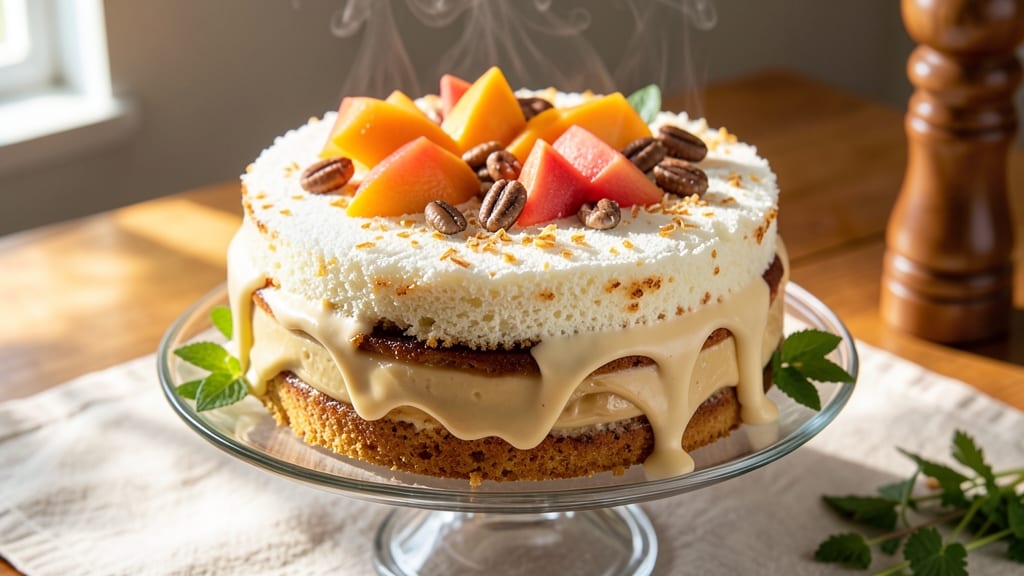
This Asian coconut cake recipe delivers layers of moist, fragrant coconut cake wrapped in a velvety coconut cream filling—perfect for tropical celebrations. 🌺 The secret lies in using ripe coconut milk and a touch of baking powder for that signature fluffy texture, while toasted coconut flakes on top add irresistible crunch.
What makes this version special is the balance between tender cake layers and rich filling that stays creamy even after baking.
The recipe combines traditional Asian baking techniques with a modern twist, ensuring a cake that's light yet substantial.
You'll work with simple ingredients like all-purpose flour, granulated sugar, and eggs, but the magic happens in the coconut cream filling—where coconut milk, condensed milk, and a pinch of salt create a luxurious center. This cake is ideal for birthdays, luncheons, or simply indulging in a slice of tropical comfort.
By the time you pull it from the oven, you'll have a cake with golden layers and a glossy coconut cream filling that practically oozes with flavor.
The aroma alone will transport you to a sunny beachside café, while the texture delivers that perfect contrast between soft cake and creamy filling. Whether you're baking for a special occasion or treating yourself, this recipe promises a dessert that's both impressive and deeply satisfying.
For extra flair, garnish with fresh mango slices or a drizzle of caramel before serving. The cake keeps well at room temperature for 2-3 days, making it perfect for meal prep or gifting. Let's get baking!
Ingredients for asian coconut cake
Tropical flavors start with these simple yet essential ingredients for your Asian coconut cake.
| Ingredient | Amount | Notes |
|---|---|---|
| All-Purpose Flour 🌾 | 2 ½ cups | Sifted for fluffy texture |
| Granulated Sugar 🍚 | 2 cups | White or light brown |
| Large Eggs 🥚 | 6 whole | Room temperature preferred |
| Ripe Coconut Milk 🥥 | 13 ½ oz | Full-fat, canned variety |
| Sweetened Condensed Milk 🥛 | 14 oz | Standard can size |
| Unsalted Butter 🧈 | 1 cup | Softened, not melted |
| Baking Powder 🍞 | 2 tsp | Double-acting preferred |
| Salt 🧂 | ½ tsp | Fine sea salt |
| Vanilla Extract 🌿 | 1 tbsp | Pure vanilla preferred |
| Toasted Coconut Flakes 🥥 | 1 cup | Unsweetened, lightly toasted |
| All-Purpose Flour 🌾 | ½ cup | For dusting layers |
| Mango Slices 🍈 | 1 cup | Fresh, for garnish |
The coconut milk is non-negotiable—Thai Kitchen or Goya brands are my go-to for that perfect balance of creaminess. Grab a can at any Asian market or the international aisle at Walmart or Target. For the condensed milk, Dutch-processed brands like Carnation work best—they caramelize beautifully. Toast your coconut flakes in a dry pan for 2-3 minutes until golden (don't walk away—they burn fast!). The eggs should be room temp, so pull them out 20 minutes before baking. Flour matters too—King Arthur or Gold Medal are my top picks for that tender crumb.
No ripe coconut milk? Substitute with a mix of 1 cup heavy cream + 1/2 cup coconut cream, but it won't be quite the same. Short on condensed milk? Equal parts powdered milk + sugar, but add 2 tbsp water to thin it out. For the vanilla, imitation is a no-go—Nielsen-Massey or McCormick pure extract make all the difference. The baking powder must be fresh—if it's over a year old, toss it. And if you're feeling fancy, swap half the granulated sugar for coconut sugar for deeper caramel notes. The mango garnish? Any ripe variety works—just slice it thin so it doesn't get mushy.
Store the cake in an airtight container at room temperature for up to 3 days. For longer storage, slice and freeze portions for up to 2 months. The filling stays creamy if you keep it sealed tight—just let it sit at room temp for 10 minutes before serving. Pro tip: Wrap individual slices in parchment paper for easy transport. The toasted coconut flakes? Keep them in a sealed jar for up to 2 weeks—they add that irresistible crunch every time.
Why You'll Love This Recipe
- No Mixer Needed: I swear by this one—just whisk the eggs with sugar until fluffy, then fold in the dry ingredients. The coconut milk and condensed milk blend so smoothly, you won’t even need to sift. Honestly, I’ve made it in a bowl that’s seen better days, and it still comes out perfect.
- Rich Without Effort: That combo of ripe coconut milk and sweetened condensed milk? It’s like dessert hugged cake. The texture is moist but not dense, with just enough chew from the flour to hold its shape. My kids call it "the cake that doesn’t taste like cake" because it’s so naturally sweet and creamy.
- Party or Snack: Between us, this is my go-to for birthdays, potlucks, or when I just want cake at 3 PM. The flavor’s bold enough for a celebration but simple enough that no one questions why I didn’t bake from scratch. (Spoiler: They won’t care.)
- Leftovers? Better Than New: The best part? It stays fresh for days—no weird dry edges or crumbs. I’ve reheated slices in the microwave and they’re still tender. And if you’re worried about cost, the ingredients are cheap, especially if you use canned coconut milk. It’s my budget-friendly secret weapon.
Step-by-step instructions for tropical layers with coconut cream filling
This cake delivers rich, moist layers and a luscious coconut cream filling—every bite is pure tropical bliss.
👨🍳 Step 1: Whisk Dry Ingredients and Cream Butter
In a large bowl, sift together the 2.5 cups all-purpose flour, 2 tsp baking powder, and 0.5 tsp salt. Set aside. In a separate large bowl, beat the 1 cup softened unsalted butter and 2 cups granulated sugar on medium speed for 3-4 minutes until light and fluffy. This step is crucial—it incorporates air for that perfect rise and tender crumb.
Add the 6 whole large eggs one at a time, mixing well after each addition. Stir in the 1 tbsp vanilla extract until fully combined. The mixture should be thick and pale yellow, almost like a batter. If it looks too thin, let it sit for 5 minutes—this helps thicken it naturally.
👨🍳 Step 2: Combine Wet and Dry Ingredients
Gradually add the dry ingredients to the wet mixture, mixing on low speed until just combined. Avoid overmixing—you should still see a few flour streaks. Fold in the 1 cup toasted coconut flakes by hand with a spatula, ensuring they're evenly distributed. The coconut adds texture and that signature tropical flavor.
Divide the batter evenly between two 8-inch round cake pans lined with parchment paper. Smooth the tops with a spatula. Here's the thing—don't tap the pans on the counter to remove air bubbles. Instead, gently run a knife around the edges to release any trapped air. This ensures even baking and a smooth rise.
🔥 Step 3: Bake the Layers to Perfection
Preheat your oven to 350°F. Bake the cake layers for 25-30 minutes, or until a toothpick inserted into the center comes out clean. The edges should be golden brown, but the tops might look slightly underdone—this is normal and will fix itself as it cools.
Let the layers cool in the pans for 10 minutes, then transfer them to a wire rack to cool completely. This cooling step is non-negotiable—it prevents the filling from making the cake soggy. While the layers cool, prepare the coconut cream filling by mixing the 13.5 oz ripe coconut milk and 14 oz sweetened condensed milk in a bowl until smooth.
🥘 Step 4: Assemble the Cake Layers
Place the first cake layer on a serving plate. Dust the top lightly with 0.5 cup all-purpose flour to help the filling adhere. Spread half of the coconut cream filling evenly over the layer, then place the second layer on top. Dust the top of this layer with more flour and spread the remaining filling.
Press down gently on the top layer to ensure the filling spreads evenly. This step is where the magic happens—you want the filling to peek out slightly at the edges for that classic layered look. Top with the 1 cup mango slices, arranging them in a circular pattern for a stunning presentation.
⏰ Step 5: Chill and Serve
Refrigerate the cake for at least 4 hours, or overnight, to let the filling set and the flavors meld. The longer it chills, the creamier the texture becomes. Before serving, dust the top with a little extra toasted coconut flakes for added texture and a pop of color.
Slice into wedges and serve at room temperature. The contrast of the warm mango, cool coconut filling, and tender cake layers makes this dessert unforgettable. Trust me, the first bite will have you dreaming of tropical vacations!
Pro Tips For Making Asian Coconut Cake
- Whisk Eggs Until Ribbon Stage: I learned this the hard way—underwhisked eggs mean a dense, gummy cake. Beat those yolks and whites separately until they hold stiff ribbons when the whisk is lifted. The extra air lightens the texture, balancing the richness of the coconut milk. (Yes, even if you're impatient like me.)
- Shake Coconut Milk First: Canned coconut milk splits into thick cream and water when stored. Shake the can vigorously for 30 seconds before measuring—this ensures you’re using the full-fat cream, not watery sediment. The cake’s moisture and flavor depend on it, and you’ll taste the difference.
- Avoid Overmixing the Batter: Once you fold in the dry ingredients, stop after 10 strokes. Overmixing develops gluten, turning your tender coconut cake into a chewy brick. The batter should look streaked, not smooth—like marbled cake dough. Trust the process.
- Bake at 325°F, Not Higher: I was skeptical until I tried it: 350°F makes the outside set too fast, trapping steam and leaving a dense center. 325°F lets the cake rise evenly and bake through without cracking. Insert a toothpick at 40 minutes—it should come out with one moist crumb, not wet batter.
Pro cooking tips for asian coconut cake
Coconut Cream Magic
The secret to that irresistible creamy filling lies in the ratio of 13.5 oz ripe coconut milk to 14 oz sweetened condensed milk. I always use Thai Kitchen brand coconut milk—it's richer and less watery than some store brands.
For extra decadence, warm the coconut milk slightly (just until steaming) before mixing with the condensed milk. This creates a smoother, more velvety texture that sets beautifully between layers. 🥥
Baking Powder Precision
Never skip sifting your 2 tsp baking powder—it's the difference between a cake that rises properly and one that's dense. I test mine by mixing it with a little water: if it bubbles vigorously, it's fresh.
For even more lift, I like to add ½ tsp cornstarch to the baking powder to prevent any metallic aftertaste. The 350°F oven temperature is crucial—too hot and the layers burn before setting, too cool and they won't rise enough.
Layering Like a Pro
When assembling, I use a bench scraper to spread the coconut filling evenly—it gives you clean, straight edges. Dust each layer with ½ cup flour (not powdered sugar!) to create a barrier that prevents sogginess.
Press the top layer gently but firmly to encourage the filling to ooze out slightly at the edges. This is what makes the cake look restaurant-quality and taste even better. The 10-minute cooling period in pans is non-negotiable—it prevents the filling from making the cake gummy.
Toasted Coconut Trick
For the coconut flakes, I toast them in a nonstick skillet over medium-low heat for exactly 2-3 minutes, stirring constantly. They're done when they're golden and smell heavenly—don't walk away! Sprinkle them on top just before serving to maintain their crunch.
Pro tip: If you're making this ahead, store the cake layers separately in airtight containers and assemble just before serving to keep everything fresh. 💫
Temperature Control
Your oven might run hot or cold—mine does! To compensate, I always bake with an oven thermometer placed near the center rack. If it reads 365°F, I lower my target to 340°F for the cake layers.
For the filling to set properly, the cake should be completely cool before assembly. If you're in a hurry, chill the assembled cake for 2 hours in the fridge—it'll still be delicious, just slightly softer.
Mango Garnish Hack
For the 1 cup mango slices, I use a mandoline set to ¼-inch thickness for even slices. Toss them in 1 tsp lemon juice to prevent browning, then arrange them in a circular pattern on top.
The acidity also brightens the coconut flavors. If you can't find ripe mangoes, pineapple tidbits work in a pinch—just pat them dry first to avoid soggy cake layers. 🍈
Nutrition facts
Frequently asked questions
Can I make this coconut cake without eggs?
Yes! For an egg-free version, replace the 6 eggs with 1 cup unsweetened applesauce or ½ cup melted coconut oil + ½ cup water. The cake will be slightly denser but still moist. Chill the assembled cake for 6 hours to help the filling set properly.
Why did my cake layers sink in the middle?
This usually happens from overmixing the batter or opening the oven door too early. Always mix just until combined (you should see flour streaks) and avoid tapping the pans to remove air bubbles. Let the layers cool completely before assembling to prevent sogginess.
How do I store leftovers?
Keep the cake in an airtight container at room temperature for 2-3 days. For longer storage, slice and freeze portions for up to 2 months. The filling stays creamy if you wrap slices individually in plastic wrap before freezing.
Can I substitute regular milk for the coconut milk in the filling?
Not recommended—the coconut milk is essential for that authentic tropical flavor and creamy texture. If you must substitute, use 1 cup heavy cream + ½ cup coconut cream, but the filling won't be as rich. For a vegan option, use full-fat coconut cream instead of coconut milk.
What's the best way to make this cake extra moist?
Add ¼ cup sour cream or yogurt to the batter, or brush the cooled layers with 2 tbsp coconut milk before assembling. Also, don't overbake—pull the cake when a toothpick comes out with moist crumbs, not completely clean.