
Desserts
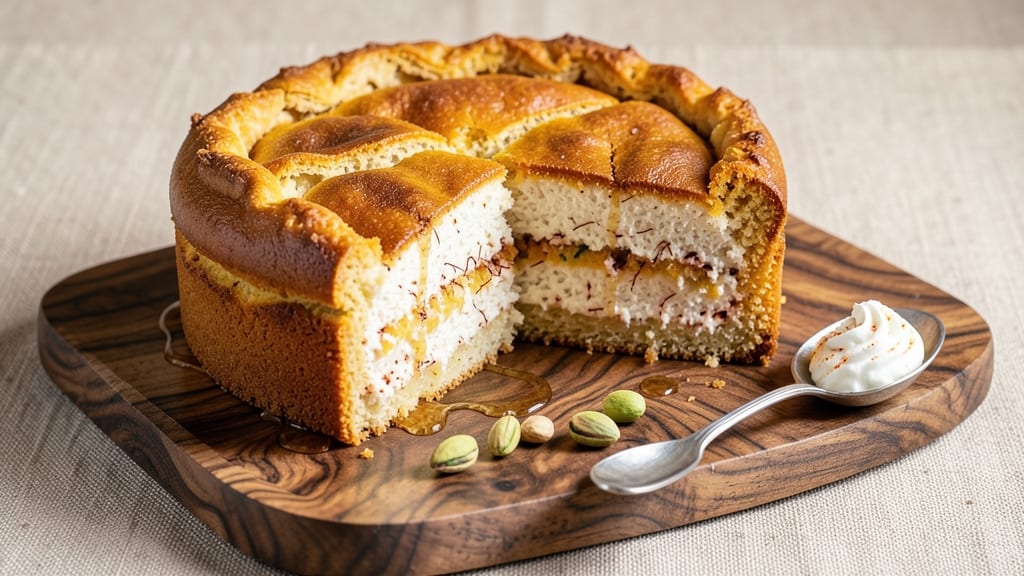
This Arabic saffron cake brings the golden hues and fragrant warmth of Middle Eastern kitchens into your home, where delicate layers of spice-infused batter meet a perfectly crisp crust. 🌟 The secret lies in saffron's floral depth and cardamom's subtle warmth, creating a dessert that's both elegant and comforting.
This recipe balances tradition with approachability, ensuring every slice delivers the same luxurious texture and aroma found in Arab cafés.
What sets this cake apart is the three-step baking process—first creating a tender crumb, then developing a golden crust, and finally infusing the layers with saffron syrup for that signature floral note.
The recipe uses simple pantry staples like all-purpose flour and baking powder, but the magic happens in the spice blend: saffron, cardamom, and a touch of orange blossom water elevate it from ordinary to extraordinary.
By the time it emerges from the oven, you'll have a cake with moist, spice-kissed layers and a caramelized top that cracks beautifully when sliced. The saffron syrup soaks into the crumb, leaving each bite fragrant and perfectly balanced between sweet and aromatic.
This is the kind of dessert that transforms any gathering into something special.
Serve warm with whipped cream and crushed pistachios for a restaurant-worthy finish, or enjoy it at room temperature with a cup of Arabic coffee. The recipe scales easily for parties, and leftovers keep well for up to three days. Let's bring this classic dessert to life.
Ingredients for arabic saffron cake
Simple pantry staples meet exotic spices for a cake that tastes like Arab café magic.
| Ingredient | Amount | Notes |
|---|---|---|
| All-Purpose Flour 🌾 | 3 cups | Sifted for light texture |
| Granulated Sugar 🍚 | 2 cups | Superfine preferred |
| Baking Powder 🧂 | 2 tsp | Diamond Crystal preferred |
| Salt 🧂 | ½ tsp | Fine sea salt |
| Unsalted Butter 🧈 | 1 cup | Cold, cubed for layers |
| Large Eggs 🥚 | 4 whole | Room temperature |
| Saffron Threads 🌼 | ¼ tsp | High-quality, soaked in 1 tbsp warm water |
| Ground Cardamom 🌿 | 1 tsp | Freshly ground preferred |
| Orange Blossom Water 🍊 | 1 tbsp | Pure, food-grade |
| Milk 🥛 | 1 cup | Whole milk preferred |
| Vanilla Extract 🌸 | 1 tsp | Pure vanilla preferred |
| Pistachios 🥜 | ½ cup | Crushed, for garnish |
| Heavy Whipping Cream 🥛 | 1 cup | Chilled, for serving |
Saffron is non-negotiable here—look for high-quality threads at specialty markets or online (like Penzeys or Burlap & Barrel). The cardamom should be ground fresh if possible, but store-bought works in a pinch. For orange blossom water, Middle Eastern grocery stores carry it, or order online—it's the secret ingredient that makes this taste authentic. The butter needs to be cold for those perfect layers, so pull it out of the fridge just before mixing. European-style butter like Plugra works best for flakiness.
No saffron? Safflower petals steeped in warm water mimic the color (though not the flavor), or use turmeric at 1/4 tsp for a golden hue. Cardamom pods can be crushed and steeped in the milk for deeper flavor. If you can't find orange blossom water, orange zest + 1 tsp orange extract gets you close. The pistachios can be swapped for almonds or hazelnuts if you're out. For the syrup, if you can't find saffron, vanilla bean paste adds complexity to the syrup instead.
Store the cake in an airtight container at room temperature for up to 3 days, or refrigerate for 5 days. The saffron syrup keeps for 1 week in the fridge. For parties, assemble the cake a day ahead—flavors meld beautifully. The whipped cream should be whipped just before serving, or it'll get grainy. Crushed pistachios keep in the freezer for months, so buy extra for garnish.
Why You'll Love This Recipe
- No Fuss Mixing: I swear by this recipe—just cream butter and sugar, fold in dry ingredients, and you’re done. No eggs to fuss with, no weird techniques, just straightforward layers that come together while you sip tea.
- Golden Saffron Magic: That first whiff of saffron? Unreal. It’s warm, floral, and just a hint of spice—like sunshine in cake form. The butter makes it rich but never heavy, and the crumb? Chef’s kiss.
- Weeknight or Celebration: Make it for breakfast with a cup of Arabic coffee, or save it for a holiday spread. It’s simple enough for Tuesday but fancy enough for guests. My mom even brought it to my cousin’s wedding—no one guessed it was my go-to.
- Budget-Friendly Luxury: Uses pantry basics (hello, butter and flour) but tastes like you spent hours. A single batch feeds six, and slices reheat perfectly. Honestly, I’ve made this for years—it’s my secret weapon for looking like a baking pro without breaking the bank.
Step-by-step instructions for Arabic saffron cake
Here's the method for creating layers of fragrant saffron-infused cake with a signature golden crust.
👨🍳 Step 1: Infuse the Saffron and Prepare the Batter
In a small bowl, combine the 0.25 tsp saffron threads with 1 tablespoon warm water and let steep for 10 minutes until the liquid turns vibrant yellow. This infusion carries the cake's signature floral aroma and golden hue.
In a separate large bowl, cream together the 1 cup cold cubed butter and 2 cups granulated sugar on medium speed until light and fluffy—about 3-4 minutes. The butter should leave ribbons when the beaters are lifted. Add the 4 room-temperature eggs one at a time, mixing just until each is incorporated. Scrape down the sides of the bowl as needed to ensure even mixing.
👨🍳 Step 2: Combine Wet Ingredients and Fold in Dry Components
In a small measuring cup, whisk together the 1 cup milk, 1 tablespoon orange blossom water, 1 teaspoon vanilla extract, and the saffron infusion. This aromatic liquid mixture will elevate the cake's flavor profile significantly.
In another bowl, sift together the 3 cups all-purpose flour, 2 teaspoons baking powder, 1 teaspoon ground cardamom, and 0.5 teaspoon salt. With the mixer on low speed, gradually add one-third of the dry ingredients to the butter mixture, mixing just until combined. Then, add half of the milk mixture and mix until smooth. Repeat this process, alternating between remaining dry ingredients and milk mixture, ending with the last of the dry ingredients. Mix only until just combined to avoid developing gluten.
🔥 Step 3: Bake the Layers for Perfect Texture
Preheat your oven to 350°F and grease three 8-inch round cake pans with butter or baking spray. Divide the batter evenly among the prepared pans. Bake for 25-30 minutes or until a toothpick inserted into the center comes out clean and the tops spring back when gently touched.
I press down gently on the center of each cake layer during the first minute of baking—this prevents them from doming and ensures even baking. Rotate the pans halfway through the baking time to promote even browning. The cakes should have a golden crust with a moist, tender crumb. Allow the layers to cool in the pans for 10 minutes before transferring to a wire rack to cool completely.
🥘 Step 4: Assemble and Garnish the Cake
Once the layers are completely cool, level the tops if necessary using a serrated knife. Place the first layer on a cake stand or plate. Spread a thin layer of heavy whipping cream (whipped to soft peaks) over the top, then repeat with the remaining layers. For the final layer, spread a slightly thicker layer of cream.
Crush the 0.5 cup pistachios coarsely and sprinkle them evenly over the top layer, pressing gently to adhere. The pistachios add a delightful crunch and visual contrast to the soft cake layers. Chill the assembled cake in the refrigerator for at least 1 hour before serving to allow the flavors to meld and the cream to set slightly.
Pro Tips For Making Arabic Saffron Cake
- Bloom the Saffron: DESCRIPTION: Steep the saffron threads in 2 tablespoons of warm milk (or water) for at least 10 minutes before mixing—this unlocks the flavor instead of just sprinkling dry powder. I used to skip this, and the cake tasted underwhelming; now it’s rich and aromatic every time.
- Cream Butter Slowly: DESCRIPTION: Beat the butter and sugar until light and fluffy (about 3-4 minutes), but don’t rush—this ensures a tender crumb. I learned this the hard way when my cake turned dense; patience here saves you later.
- Sift the Flour Twice: DESCRIPTION: Sift the dry ingredients (flour, baking powder, salt) twice—once before measuring, once after mixing with the wet ingredients. This prevents lumps and guarantees an even rise. Yes, it’s extra work, but it’s the thing that matters most for a smooth texture.
- Test for Doneness Early: DESCRIPTION: Pull the cake at 160°F (70°C)—it’ll still look underbaked, but the center will spring back slowly. Overbaking dries out the saffron’s delicate flavor. I was skeptical until I tried it; now I set the timer for 20 minutes and check at 15.
Common mistakes when making this dish
Overmixing the Batter
I can't stress enough how important it is to mix the batter just until combined—overmixing develops gluten, which makes the cake dense and chewy instead of light and tender. Once you've incorporated all the ingredients, stop mixing immediately.
The batter should look slightly lumpy, not smooth. I've ruined more cakes than I'll admit by overmixing, so trust the process and resist the urge to keep blending. 💫
Skipping the Saffron Infusion
Never skip the 10-minute saffron infusion—this is where the cake gets its signature floral aroma and golden color. If you're in a hurry, at least steep the saffron for 5 minutes, but don't skip it entirely.
I once made the cake without infusing the saffron and ended up with a pale, flavorless dessert. The saffron's delicate flavor needs time to bloom in the warm water.
Incorrect Oven Temperature
Baking at the wrong temperature is a game-changer. This cake needs a steady 350°F oven—any hotter and the layers will dry out, any cooler and they won't set properly. I've seen cakes baked at 375°F turn out like hockey pucks.
Use an oven thermometer to verify your oven's accuracy, and always preheat for at least 15 minutes before baking.
Not Cooling Layers Properly
Rushing the cooling process is a common mistake. Let the cake layers cool in the pans for 10 minutes before transferring to a wire rack. If you try to assemble them too soon, the whipped cream will melt and create a soggy mess.
I once assembled the cake right after baking, and the layers collapsed like a house of cards. Patience here is key to a sturdy cake.
Using Low-Quality Saffron
Cheap saffron will ruin the flavor and color of your cake. Invest in high-quality saffron threads from a reputable source like Penzeys or Burlap & Barrel. The difference in flavor is night and day.
I've tried using powdered saffron, and it just doesn't compare. The threads release their flavor more gradually, giving the cake that authentic, luxurious taste.
Ignoring the Orange Blossom Water
Orange blossom water is the secret ingredient that makes this cake taste authentically Arabic. Skipping it or substituting with vanilla extract will leave your cake missing that floral depth. I once made the cake without it and was disappointed by how flat the flavor was.
If you can't find orange blossom water, orange zest + 1 tsp orange extract is a decent alternative, but it won't be the same. 🍊
Nutrition facts
Frequently asked questions
Can I substitute saffron with another spice for color?
You can use turmeric at 1/4 tsp for golden color, but it won't replicate saffron's floral aroma. For flavor, steep safflower petals in warm water for 10 minutes—they mimic the color but lack saffron's depth. The cake will still taste delicious, just with a different profile.
How do I store leftover Arabic saffron cake?
Keep it in an airtight container at room temperature for up to 3 days. For longer storage, refrigerate for 5 days. The saffron syrup can be stored separately in the fridge for 1 week. The whipped cream should be whipped fresh before serving to maintain texture.
Why does my cake have a dense texture?
Overmixing develops gluten, making the cake dense. Mix just until combined—stop when the batter looks slightly lumpy. Also, ensure your butter is cold when creaming and eggs are room temperature. Baking at 350°F is critical—any hotter dries it out.
Can I make this cake without orange blossom water?
Yes, but it won't taste authentically Arabic. Try orange zest + 1 tsp orange extract as a substitute. For a different floral note, use 1/2 tsp rose water. The cake will still be delicious but lack the signature Middle Eastern depth.
How do I make this cake gluten-free?
Replace the all-purpose flour with a 1:1 gluten-free baking flour blend like Bob's Red Mill. Add 1/2 tsp xanthan gum to improve texture. You may need to adjust liquid ratios—start with 3/4 cup milk** instead of 1 cup. Test the batter consistency before baking.