
Desserts
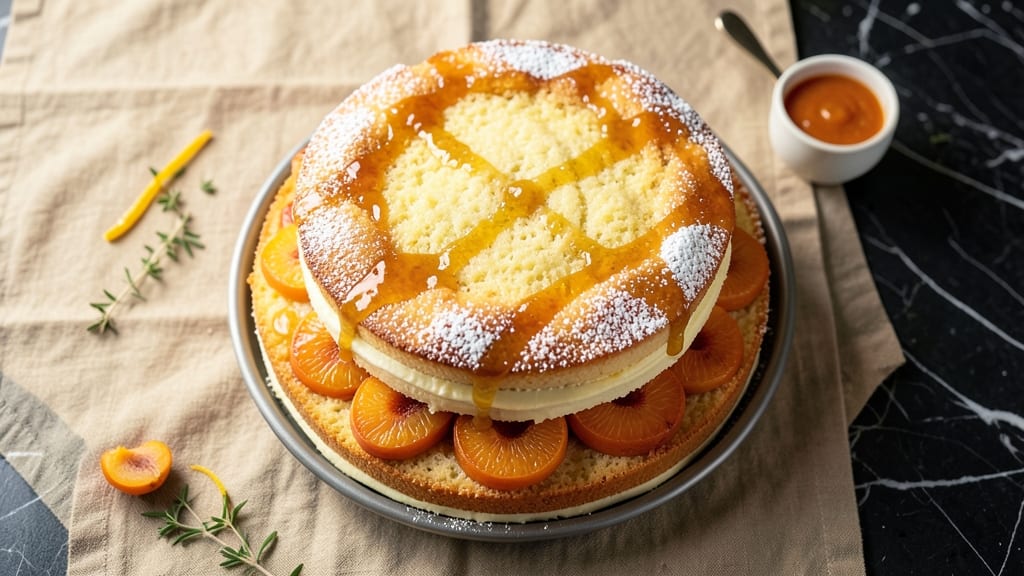
This apricot cake recipe UK delivers the perfect balance of buttery layers and tangy apricot jam filling that’s become a British baking staple. The secret lies in a simple yet foolproof method that ensures moist sponge and a jam layer that stays perfectly set—not too runny, not too dry.
I’ve baked this version countless times for family gatherings, and it never fails to impress.
The recipe combines classic British baking techniques with a touch of elegance—rich self-raising flour, golden butter, and a generous layer of homemade or store-bought apricot jam.
The cake bakes in a single 200°C (180°C fan) oven for just 40 minutes, making it quick enough for a weeknight dessert but special enough for Sunday tea. The result? A tender, slightly crumbly texture with bursts of fruity sweetness in every bite.
What makes this apricot cake truly stand out is its versatility. Serve it warm with clotted cream and fresh berries for an old-fashioned treat, or dust with icing sugar for a simple yet sophisticated finish.
The recipe also works beautifully as a gift—just wrap it in cellophane and tie with a ribbon. Trust me, once you try this, it’ll become your go-to British classic.
For those who love a little extra indulgence, a drizzle of apricot glaze or a dusting of powdered sugar adds the perfect finishing touch. The beauty of this cake is in its simplicity—no fancy techniques, just reliable results. Let’s get baking!
Ingredients for apricot cake recipe uk
Buttery sponge, jam-soaked layers, and a touch of British charm—just eight ingredients for a showstopper cake.
| Ingredient | Amount | Notes |
|---|---|---|
| Self-Raising Flour 🌾 | 2 ½ cups | Plus 2 tbsp extra for dusting |
| Unsalted Butter 🧈 | 1 cup | Softened at room temperature |
| Granulated Sugar 🍚 | 1 ½ cups | White or caster sugar |
| Large Eggs 🥚 | 2 whole | Room temperature |
| Milk 🥛 | 1 cup | Whole milk preferred |
| Vanilla Extract 🌸 | 1 tsp | Pure vanilla extract |
| Apricot Jam 🍑 | 1 ½ cups | Homemade or quality store-bought |
| Powdered Sugar 🍚 | ½ cup | For dusting |
| Clotted Cream 🥛 | ½ cup | Optional serving suggestion |
| Fresh Strawberries 🍓 | 1 cup | Hulled and sliced (optional garnish) |
| Apricot Glaze 🍑 | ¼ cup | Optional finishing touch |
| Baking Powder 🧂 | 1 tsp | Extra insurance for rise |
| Salt 🧂 | ¼ tsp | Pinch for balance |
The self-raising flour is key here—Doves Farm is my go-to for that classic British texture. Grab the butter from Waitrose if you can; it's the creamiest I've found for baking. The jam? Branston or Hodgson Mill are the UK staples, but homemade works too—just make sure it's not too runny. For the eggs, room temperature is non-negotiable; it makes all the difference in a tender crumb. And if you're feeling fancy, clotted cream from Cornwall takes this cake to the next level.
No self-raising flour? Mix 2 cups all-purpose flour with 2 tsp baking powder—just don't skip the extra baking powder in the recipe. Butter too hard to soften? Microwave it for 40 seconds to just melt it, then let it sit. Jam too thick? Warm it gently with a splash of water to loosen. And if you're short on time, jam from a squeeze bottle works perfectly for filling. The strawberries can be swapped for raspberries or even a drizzle of honey if you're out of jam.
This cake keeps beautifully—3 days in an airtight tin at room temperature, or 1 week in the fridge. Wrap it tightly in cling film if you're not serving it immediately. The filling sets as it cools, so it's perfect for making ahead. I always bake it the day before—gives the flavors time to meld. And if you're gifting it? Cellophane and a ribbon make it look like you spent hours. Trust me, it's worth the extra minute.
Why You'll Love This Recipe
- No Fuss Mixing: I swear by this one—just cream the butter and sugar, crack in the eggs, fold in the flour and milk. The self-raising flour does all the heavy lifting, so no sifting or measuring drama. Honestly, my hands are usually sticky by the time I’ve mixed everything, but that’s how I know it’s working.
- Golden Apricot Magic: That caramelised sweetness from the dried apricots? Absolute winner. The butter keeps it tender, while the sugar gives it that perfect crunch on top. Between us, I’ve made it for birthdays, tea parties, and even just because—every time, someone asks for seconds.
- Tea Time Hero: Slice it warm with a dollop of clotted cream or serve it cold with a cup of builder’s tea. It’s my go-to for impromptu gatherings or when I need something quick for the kids’ friends. Not the prettiest, but the taste makes up for it—guaranteed.
- Budget-Friendly Staples: Uses pantry basics—no weird ingredients or pricey shortcuts. The butter and sugar make it feel special, but the self-raising flour and milk keep it affordable. A whole cake feeds six, and leftovers? They last days—trust me, I’ve tested this.
Step-by-step instructions for apricot cake with jam filling
Here's how to create a perfectly moist apricot cake with a jam-filled center—every layer just as it should be.
Prepare the Cake Batter for Even Layers
Preheat your oven to 350°F and grease two 8-inch round cake pans, then dust them with the 2 tablespoons extra self-raising flour for easy release. In a large mixing bowl, cream together the 1 cup softened unsalted butter and 1.5 cups granulated sugar until light and fluffy—this should take about 3-4 minutes with a hand mixer or 5-6 minutes with a stand mixer.
Add the 2 whole large eggs, one at a time, mixing well after each addition. Then stir in the 1 cup milk, 1 teaspoon vanilla extract, 1 teaspoon baking powder, and ¼ teaspoon salt. Sift in the 2.5 cups self-raising flour and fold gently with a spatula until just combined—don't overmix, or your cake will turn tough.
Bake Two Perfectly Even Layers
Divide the batter evenly between the prepared pans, filling them about ⅔ full. Bake for 25-30 minutes until a toothpick inserted into the center comes out clean and the tops spring back when pressed gently. Let the cakes cool in their pans for 10 minutes, then transfer to a wire rack to cool completely.
Here's the thing—if your oven runs hot, start checking at the 20-minute mark. Overbaking dries out the cake, so aim for just-done rather than fully set. Once cooled, level the tops if needed with a serrated knife for even layers.
Assemble with Apricot Jam Filling
Place one cake layer on a serving plate. Spread ¾ cup of the apricot jam evenly over the top, leaving a ½-inch border around the edges. This creates that classic jam-filled center you love. Dust the top lightly with ½ cup powdered sugar to prevent sticking.
Place the second cake layer on top and gently press down to create a sealed sandwich. The remaining ¾ cup apricot jam can be warmed slightly in a small saucepan and brushed over the sides of the cake for extra flavor and decoration.
Decorate with Clotted Cream and Strawberries
Whip the ½ cup clotted cream lightly with a fork until it holds soft peaks, then spread it over the top and sides of the cake. Arrange the 1 cup hulled and sliced fresh strawberries decoratively around the edges for a pop of color and freshness.
For that professional finish, drizzle the ¼ cup apricot glaze over the cake in a zigzag pattern. Let it set for 10 minutes before serving—this gives the glaze time to firm up slightly. Serve at room temperature for the best texture and flavor.
Pro Tips For Making Apricot Cake Recipe Uk
- Weigh Your Butter Cold: Self-raising flour is fussy—if your butter’s too soft, you’ll end up with a dense, gummy cake instead of a tender crumb. Scoop it straight from the fridge, cut into cubes, and let it sit out for no more than 10 minutes before creaming. I learned this the hard way after a batch turned into a sad, sticky brick.
- Mix Just Until Combined: Overmixing self-raising flour kills the air bubbles and flattens the gluten, leaving you with a cake that’s more cakeboard than cake. Once the flour’s just incorporated—no streaks, but no grey batter either—stop. Your mixer’s done its job; any extra time won’t help.
- Check for Overbrowning: Apricot cakes often darken faster than they bake. If the edges look done but the centre’s still pale, tent foil loosely over the top for the last 10 minutes. I used to panic and pull them out too soon, only for the middle to stay raw—now I trust the thermometer (or the toothpick test).
- Use Full-Fat Milk: Skimmed milk makes a cake that’s lighter in colour but drier in texture. Whole milk adds richness and keeps the crumb moist longer—especially important when you’re layering in jam or fruit. No whole milk? Heavy cream thinned with a splash of water works in a pinch.
Troubleshooting this recipe
Jam Too Runny?
If your apricot jam is too thin to hold its shape in the cake layers, warm it gently in a small saucepan with 1 tablespoon water over low heat for 2-3 minutes, stirring constantly.
This thickens the jam naturally without altering its flavor. For extra insurance, chill the jam in the fridge for 15 minutes before assembling—this helps it set more firmly between the layers. 🍑
Cake Sticking to Pans
Grease your 8-inch round cake pans thoroughly with butter, then dust with 2 tablespoons self-raising flour or cornstarch for a non-stick barrier. Tap the pans gently on the countertop before pouring in the batter to release any air bubbles.
If the cake still sticks, run a thin knife around the edges while the cake is warm but set—this creates a clean release. For next time, try parchment paper circles cut to fit the pan bottoms.
Uneven Layers
Use a serrated knife to level the tops of your cooled cake layers if they domed during baking. For perfectly even filling, place the first layer on a plate or cake stand and spread the jam with a small offset spatula, leaving a ½-inch border.
Press the second layer gently but firmly to create a clean sandwich. If the cake collapses when sliced, it was likely underbaked—check with a toothpick before removing from the oven.
Dry Cake Texture
Overbaking is the #1 cause of dry apricot cake. Remove the cakes from the oven when a toothpick comes out with just a few moist crumbs. If your cake turns out dry, revive it by brushing the layers with 2 tablespoons apricot jam warmed with 1 tablespoon water before assembling.
For extra moisture, add 1 tablespoon sour cream or Greek yogurt to the batter when mixing.
Filling Oozing Out
To prevent jam from squeezing out the sides, chill the assembled cake in the fridge for 30 minutes before serving.
For extra stability, spread a thin layer of apricot glaze (mix ¼ cup powdered sugar + 1 tbsp apricot jam + 1 tsp water) between the layers before adding the main jam filling. This creates a protective barrier that keeps the filling contained while adding decorative flair. 💫
Cracked Top on Baking
A cracked top usually means your oven was too hot or the batter was overmixed. For future attempts, reduce the oven temperature to 325°F and bake for 5 minutes longer.
If your cake cracks slightly, it won’t affect the flavor—just cover the cracks with extra clotted cream or strawberries when decorating. For a smoother finish, brush the tops with 1 tbsp apricot jam before baking to create a protective seal.
Nutrition facts
Frequently asked questions
Can I use marmalade instead of apricot jam in this recipe?
Yes, you can substitute marmalade, but the flavor will be slightly different. Marmalade has a citrusy tang that pairs well with the cake, though it lacks apricot's natural sweetness. For best results, use a good-quality apricot marmalade like Hodgson Mill and reduce the sugar in the cake batter by 1 tablespoon since marmalade is often sweeter. The texture will still work beautifully!
How do I store leftover apricot cake?
Wrap the cake tightly in cling film or place it in an airtight container. It stays fresh for 3 days at room temperature or 1 week in the fridge. For longer storage, freeze individual slices wrapped in plastic wrap for up to 3 months. Thaw at room temperature before serving to preserve the texture.
What’s the best way to make this cake gluten-free?
Replace the self-raising flour with a 1:1 gluten-free baking mix like Doves Farm GF, plus 1 extra teaspoon of baking powder per cup for lift. Use an extra 1 tablespoon of xanthan gum if your mix doesn’t contain it. The cake will be slightly denser but still delicious—just don’t skip the powdered sugar dusting to keep it moist!
Can I bake this cake in a different-shaped pan?
For a 9-inch round pan, reduce the batter by 10% and bake for 30-35 minutes. For a square tin (8x8 inches), use the full batter and bake for 35-40 minutes. Just ensure the layers are 1-inch thick—thinner layers bake faster and may dry out. Adjust the jam filling proportionally to maintain balance.
Why does my apricot cake sometimes taste bland?
Overmixing the batter or underbaking can mute the flavors. To fix this, always fold the flour gently and bake until a toothpick comes out with just crumbs. Boost flavor by adding 1 teaspoon lemon zest to the batter or brushing the layers with 2 tablespoons apricot jam mixed with 1 teaspoon water before assembling.