
Desserts
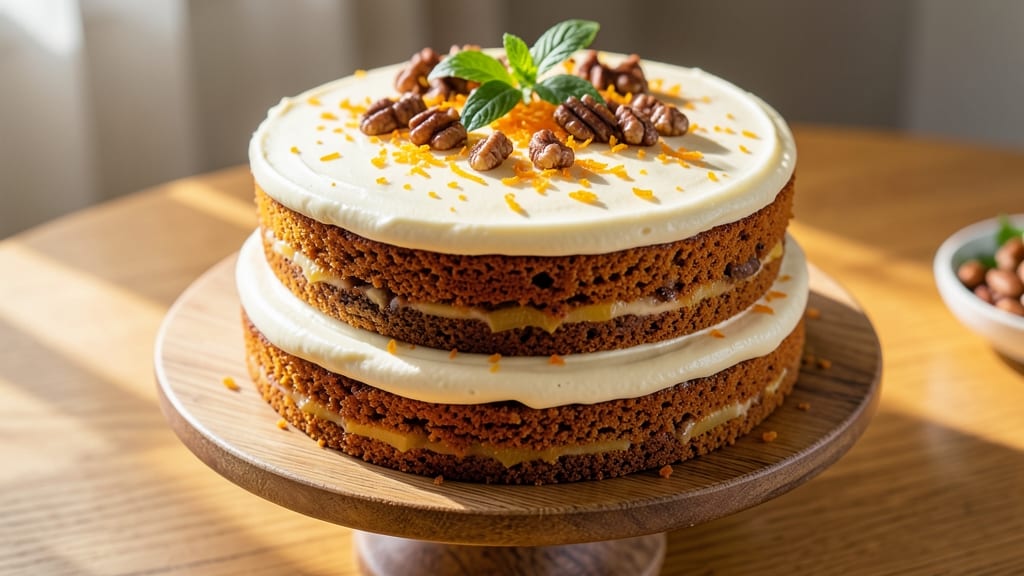
Anne Byrn’s carrot cake recipe delivers the perfect balance of moist, spiced cake and velvety cream cheese frosting that’s become a baking legend. 🌟 What sets this version apart is her signature technique of using finely grated carrots and warm spices like cinnamon and nutmeg, creating layers of flavor that feel both comforting and sophisticated.
The texture is what truly impresses—tender yet sturdy enough to hold up to generous slices of frosting without falling apart.
This recipe stays true to Anne Byrn’s approach by keeping the ingredients simple yet deliberate: all-purpose flour, brown sugar, eggs, and vegetable oil work together to create a cake that’s rich but not heavy.
The secret lies in the mixing method—creaming the butter and sugar properly ensures a light crumb, while the carrots add natural moisture without making the cake dense. Every bite combines the carrot’s natural sweetness with the warmth of the spice blend, making it irresistible.
The cream cheese glaze is where the magic happens, transforming this cake from delicious to extraordinary. Anne Byrn’s method for the frosting—combining cream cheese, butter, powdered sugar, and a touch of vanilla—creates a smooth, tangy-sweet topping that complements the cake’s spiced notes perfectly.
The glaze isn’t just sweet; it’s balanced, with just enough acidity to keep the flavors from becoming overwhelming.
Once baked and frosted, this carrot cake becomes a showstopper—ideal for celebrations, holiday gatherings, or simply treating yourself to a slice of homemade perfection. The combination of textures and flavors makes it a crowd-pleaser, and the recipe’s straightforward steps ensure even home bakers can achieve professional results.
Let’s get started on creating this timeless classic.
Ingredients for anne byrn carrot cake
Twelve simple ingredients transform into Anne Byrn’s legendary carrot cake with velvety cream cheese glaze.
| Ingredient | Amount | Notes |
|---|---|---|
| All-Purpose Flour 🌾 | 2 ½ cups | Sifted for light texture |
| Granulated Sugar 🍚 | 1 cup | For balanced sweetness |
| Light Brown Sugar 🍚 | ½ cup | Packed, for moisture |
| Vegetable Oil 🫒 | 1 cup | Light, neutral flavor |
| Large Eggs 🥚 | 4 whole | Room temperature preferred |
| Unsalted Butter 🧈 | 1 cup | Softened, not melted |
| Orange Juice 🍊 | ½ cup | Freshly squeezed |
| Ground Cinnamon 🌿 | 2 tsp | Freshly ground preferred |
| Ground Nutmeg 🌿 | ½ tsp | Freshly grated |
| Ground Ginger 🌿 | 1 tsp | For warmth |
| Salt 🧂 | ½ tsp | Kosher or sea salt |
| Baking Soda 🧪 | 1 tsp | For lift |
| Baking Powder 🧪 | 1 tsp | Double-acting preferred |
| Fresh Carrots 🥕 | 3 cups | Finely grated, no pulp |
| Walnuts 🥜 | 1 cup | Chopped, optional |
| Cream Cheese 🧀 | 8 oz | Room temperature, full-fat |
| Powdered Sugar 🍚 | 3 cups | Sifted for smooth glaze |
| Pure Vanilla Extract 🍯 | 1 tbsp | High-quality preferred |
| Heavy Cream 🥛 | ¼ cup | Optional for glaze |
The carrots are non-negotiable here—organic from the grocery store's produce section or your garden work best. Look for vibrant orange ones, not those wilted at the bottom. The spices? Penzeys or Spicewalla for the freshest ground cinnamon and nutmeg—those pre-ground spices in your cabinet have been sitting too long. Walnuts are optional but add texture; Trader Joe's sells them pre-chopped for convenience. For the cream cheese, Philadelphia brand is a safe bet, but any full-fat block works if you grate it yourself—pre-whipped tubs get grainy in the glaze.
No orange juice? Apple cider or pineapple juice works in a pinch, but the acidity matters for tenderizing the flour. Substituting vegetable oil? Coconut oil is solid at room temperature, so warm it slightly first. The baking powder and soda are critical—double-check they're not expired, or your cake will be dense. For the glaze, powdered sugar substitutes? Confectioners' sugar from a box is fine, but sift it yourself to avoid lumps. Heavy cream in the glaze? Skip it if you prefer a thicker frosting—just add a splash of milk instead.
Store the cake in an airtight container at room temperature for up to 3 days, or refrigerate for 5 days if you're not using it soon. The glaze hardens when chilled, so bring it to room temperature before serving. Freeze the unfrosted cake for 3 months—thaw overnight in the fridge, then add fresh glaze. I always make a double batch; the extra slices disappear fast. For serving, a dusting of powdered sugar or a sprinkle of cinnamon adds that restaurant-quality touch.
Why You'll Love This Recipe
- No Mixer Needed: I swear by this recipe when I’m too lazy to pull out the stand mixer. The wet ingredients—oil, eggs, and sugars—blend together so smoothly by hand, and the flour just folds right in. No lumps, no fuss, just a tender crumb that feels like a hug.
- Caramel-Kissed Magic: That combo of granulated and light brown sugar? It’s what makes this cake ridiculously good. The brown sugar gives it this deep, buttery sweetness that lingers, while the granulated keeps it from being too heavy. Honestly, I’ve tried other carrot cakes, but this one’s the only one that makes me actually savor each bite.
- Bake-Once, Enjoy Twice: This cake stays moist for days—like, seriously. I’ve had slices that were three days old, and they were still perfect. Here’s the trick: wrap it tightly in plastic and store it at room temp. Perfect for when you bake for a crowd but know you’ll want leftovers.
- Budget-Friendly Luxury: Between us, this recipe is my go-to when I want something special without breaking the bank. The ingredients are all pantry staples, and the oil keeps it rich without needing fancy butter. Plus, the cake’s so good that a single batch feels like a treat, not a splurge.
Step-by-step instructions for Anne Byrn's carrot cake
Follow this method for a moist, spice-forward carrot cake with a velvety cream cheese glaze.
👨🍳 Step 1: Prepare the Carrot Cake Batter
Preheat your oven to 350°F and grease two 9-inch round pans or line them with parchment paper. In a large mixing bowl, whisk together the 2.5 cups all-purpose flour, 1 cup granulated sugar, 0.5 cup light brown sugar, 2 tsp ground cinnamon, 0.5 tsp ground nutmeg, 1 tsp ground ginger, 0.5 tsp salt, 1 tsp baking soda, and 1 tsp baking powder. Sift the dry ingredients to remove any lumps and ensure even distribution.
In a separate bowl, beat the 4 whole large eggs until they're light and frothy. Gradually whisk in the 1 cup vegetable oil and 1 cup softened unsalted butter until fully combined. Slowly add the dry ingredients to the wet mixture, alternating with the 0.5 cup freshly squeezed orange juice. Mix on low speed until just combined—overmixing develops gluten, which can make the cake dense.
Using a box grater or food processor, finely grate the 3 cups fresh carrots, removing any pulp. Fold the grated carrots and 1 cup chopped walnuts into the batter by hand. The batter should be thick but pourable. Divide the batter evenly between the prepared pans and smooth the tops with a spatula.
🔥 Step 2: Bake Until Golden and Springy
Bake the cakes for 25-30 minutes until a toothpick inserted in the center comes out clean. The edges should be golden brown, and the tops should spring back gently when pressed. Rotate the pans halfway through baking for even browning. I like to tent the pans loosely with foil after 15 minutes to prevent over-browning if your oven runs hot.
Don't overbake—the cake continues to set as it cools. If the tops brown too quickly, cover them with foil. The cake should be moist but not gummy. Let the cakes cool in the pans for 10 minutes before transferring them to a wire rack to cool completely. This resting period prevents cracking as they cool.
🥘 Step 3: Make the Cream Cheese Glaze
While the cakes cool, prepare the glaze by beating the 8 oz room-temperature cream cheese until smooth. Gradually add the 3 cups sifted powdered sugar and 1 tbsp pure vanilla extract, mixing on low speed until fully incorporated. The glaze should be thick but spreadable. If it's too thick, add 1-2 tablespoons of the 0.25 cup heavy cream to reach your desired consistency.
For extra richness, you can add the entire 0.25 cup heavy cream at this stage. Taste the glaze and adjust the sweetness if needed—sometimes powdered sugar can vary in sweetness. The glaze should be sweet but not cloying, with a hint of vanilla. Let the glaze sit at room temperature for 10 minutes to thicken slightly before using.
🍽️ Step 4: Assemble and Serve
Once the cakes are completely cool, spread a generous layer of the cream cheese glaze over the top of one cake. Place the second cake on top and gently press down to create a smooth surface. Spread the remaining glaze over the entire top and sides of the cake. For extra presentation, pipe additional glaze around the edges using a star tip.
Let the glaze set for at least 30 minutes before slicing. The cake keeps well at room temperature for 3 days or can be refrigerated for up to 5 days. If storing, cover loosely with plastic wrap to prevent the glaze from absorbing moisture. Serve slices at room temperature for the best texture and flavor balance between the moist cake and sweet glaze.
Pro Tips For Making Anne Byrn Carrot Cake
- Mix Dry Ingredients First: Dump the flour, baking soda, salt, and spices into your bowl before adding wet ingredients—this keeps the batter light and prevents lumps. I used to toss them in mid-mix, and the texture always came out denser than it should.
- Measure Sugar Accurately: Pack the light brown sugar into your measuring cup firmly—no tapping, just press it down with a spoon until it’s level. Too loose, and your cake turns out dry; too packed, and it’s sticky. My first batch was a science experiment because I skipped this.
- Don’t Overmix the Batter: Stop folding in grated carrots and nuts as soon as they’re distributed—overmixing makes the cake tough. Use a spatula to gently combine, and resist the urge to stir like you’re making pancakes. I’ve ruined more cakes this way than I’d admit.
- Bake at 325°F, Not Hotter: This recipe demands 325°F—any higher, and the outside burns before the center sets. Use an oven thermometer to confirm your oven’s actual temp; mine runs 25°F hot, and I learned that the hard way with a charred top.
Make-ahead tips for this anne byrn carrot cake
Batter Prep Ahead
Mix the dry ingredients and wet ingredients separately in airtight containers up to 24 hours ahead. Store the dry mix in one container and the wet mix (eggs, oil, butter, orange juice) in another.
When ready to bake, combine them gently by hand—this prevents overmixing. I always label containers with the date to avoid confusion. 📅
Glaze Prep
Make the cream cheese glaze 1 day ahead and store it in an airtight container in the refrigerator. The glaze thickens when chilled, so let it sit at room temperature for 10 minutes before using.
I’ve found that pre-made glaze actually tastes richer after resting overnight. For extra convenience, pipe it into a pastry bag before refrigerating—just squeeze directly onto the cake when ready. ✨
Cake Layering
Bake the cake layers 1 day ahead and store them in airtight containers at room temperature. Once cooled completely, wrap each layer individually in plastic wrap. Assemble and frost the cake 4 hours before serving to allow the glaze to set properly.
This method ensures the cake holds its shape beautifully for gatherings. 💫
Freezing Tips
For long-term storage, freeze the unfrosted cake layers in airtight containers for up to 3 months. Thaw overnight in the fridge, then add fresh glaze. I recommend freezing layers separately to prevent sogginess.
If freezing the entire cake, wrap it tightly in plastic wrap and foil. Let it thaw completely before serving for the best texture. ❄️
Make-Ahead Serving
Transport the fully assembled cake in a cool, insulated cake carrier for events. Keep it refrigerated until 1 hour before serving to prevent the glaze from melting. For a restaurant-style presentation, dust with powdered sugar or sprinkle with cinnamon just before serving.
This carrot cake tastes even better the next day—perfect for make-ahead desserts! 🍰
Nutrition facts
Frequently asked questions
Why does Anne Byrn's recipe use orange juice instead of water?
Fresh orange juice tenderizes the flour proteins while adding bright acidity that balances the sweetness. The acidity also helps activate the baking soda for better rise. For best results, use freshly squeezed juice—bottled versions lack the same freshness and acidity impact.
Can I substitute walnuts with another nut or seed?
Yes! Pecans, almonds, or even sunflower seeds work well for texture. Chop them finely to match walnut size. For a nut-free version, omit them entirely—the cake will still be delicious, just with a slightly different texture. Toast the nuts/seeds first to enhance flavor.
What's the secret to preventing a dry carrot cake?
Don't overbake—remove from oven when a toothpick comes out with moist crumbs, not dry. The cake continues setting as it cools. Also, use finely grated carrots (no pulp) and avoid overmixing the batter. For extra moisture, brush warm layers with simple syrup after baking.
How do I make this recipe gluten-free?
Replace the all-purpose flour with a 1:1 gluten-free baking blend (like Bob's Red Mill). Add an extra 1 tsp xanthan gum to improve texture. For the glaze, use gluten-free powdered sugar. Note the cake may be slightly denser but still delicious. Test your blend first in small batches.
Can I use this recipe for a bundt cake instead of layers?
Pour the batter into a greased 10-cup bundt pan and bake for 50-60 minutes at 350°F. The baking time will be longer, and you'll need to check for doneness earlier since bundt cakes bake faster in the center. Frost with the cream cheese glaze as directed.