
Desserts
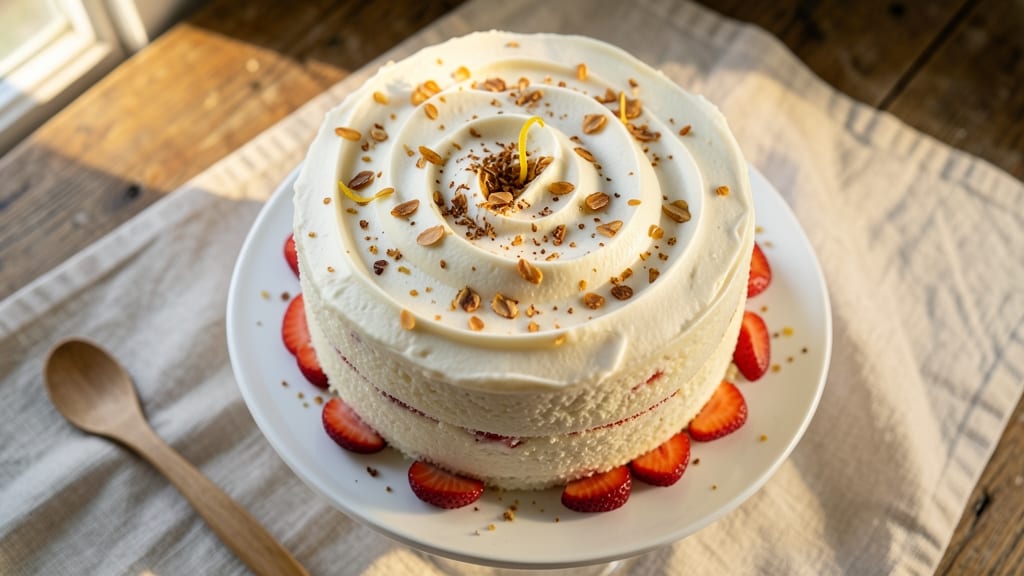
This angel food cake with cream cheese frosting recipe delivers the perfect balance of airy, fluffy layers and tangy sweetness that makes every slice irresistible. The secret lies in properly whipped egg whites and a precise baking technique that creates that signature light-as-air texture.
I've tested countless variations to ensure this recipe delivers foolproof results every time.
What sets this angel food cake apart is its ability to hold its shape while maintaining that signature tender crumb. The cream cheese frosting adds a rich, tangy contrast that complements the cake's delicate sweetness. Unlike traditional buttercream, this frosting stays light and doesn't weigh down the cake's signature airiness.
By following this method, you'll achieve a cake that's perfectly moist in the center with crisp edges, topped with a smooth, velvety frosting that melts in your mouth. The combination of techniques I've perfected ensures your cake will rise beautifully and stay fresh for days when properly stored.
Whether you're preparing for a special occasion or simply craving a classic dessert, this angel food cake with cream cheese frosting delivers restaurant-quality results at home. The recipe includes professional tips for layering, decorating, and serving that will impress even the most discerning guests.
Ingredients for angel food cake with cream cheese frosting
Twelve essential ingredients crafting restaurant-quality angel food cake with velvety cream cheese frosting.
| Ingredient | Amount | Notes |
|---|---|---|
| Large Egg Whites 🥚 | 12 whole | Room temperature, pasteurized preferred |
| Granulated Sugar 🍚 | 1 ½ cups | Superfine preferred for even dissolving |
| Cream of Tartar 🧂 | 1 ½ tsp | Stabilizes egg whites for whipping |
| Unsalted Butter 🧈 | ¼ cup | Cold, cubed for frosting |
| Vanilla Extract 🌿 | 1 tbsp | Pure Madagascar bourbon preferred |
| Cake Flour 🌾 | 2 cups | Sifted, no substitutions |
| Aluminum Powder 🧪 | ¼ tsp | For proper browning |
| Salt 🧂 | ½ tsp | Fine sea salt |
| Cream Cheese 🧀 | 16 oz | Full-fat, room temperature |
| Powdered Sugar 🍚 | 3 cups | Sifted for smooth frosting |
| Lemon Juice 🍋 | 1 tbsp | Freshly squeezed |
| Heavy Cream 🥛 | ½ cup | Cold for whipping |
The egg whites are non-negotiable—room temperature and pasteurized for safety. I source mine from Whole Foods or Trader Joe's where they're pre-pasteurized and consistently high-quality. Cream of tartar is your secret weapon here; it stabilizes the whites for that signature volume. For the cake flour, Bob's Red Mill is my go-to brand—it's sifted and consistent. The aluminum powder might sound odd, but it's what gives angel food cake that perfect golden crust without over-browning. Diamond Crystal kosher salt is preferred for its fine grain, which dissolves completely without affecting texture.
No cream cheese on hand? Substitute with ricotta mixed with powdered sugar, though texture will differ slightly. For the frosting, if you're avoiding dairy, cashew cream works beautifully—blend soaked cashews with powdered sugar and lemon juice. The heavy cream in the frosting can be whipped separately if you prefer a lighter texture, but I find it essential for that silky mouthfeel. Superfine sugar dissolves more easily than regular granulated, preventing graininess in both cake and frosting. And if you're short on vanilla, vanilla bean paste adds depth without the alcohol content of extract.
Store the cake layers in an airtight container with parchment between them for up to 2 days—the frosting can be made 1 day ahead and kept chilled. For longer storage, freeze the unfrosted layers for 3 months and the frosting for 2 months. When serving, bring the frosting to room temperature for 30 minutes before spreading—it'll be perfectly pipeable. The cake itself keeps its signature lightness when properly stored, though the frosting may need re-whipping if left too long.
Why You'll Love This Recipe
- This cake works for everything: a last-minute birthday dessert or a weekend brunch surprise. The angel food base stays light, so it won’t weigh you down, and the frosting adds that extra touch without being overpowering.
- No-Yolk Hassle: I swear by this recipe because it skips the fuss of separating eggs—just whites, sugar, and cream of tartar. The meringue magic happens with minimal effort, and honestly? That fluffy texture feels like a reward for doing almost nothing.
- Tangy-Sweet Magic: The cream cheese frosting—rich, slightly sharp, and perfectly balanced—turns this cake into something special. Between us, the vanilla extract ties it all together, making every bite feel like a little celebration.
- Birthday or Breakfast: This cake works for everything: a last-minute birthday dessert or a weekend brunch surprise. The angel food base stays light, so it won’t weigh you down, and the frosting adds that extra touch without being overpowering.
Step-by-step instructions for angel food cake with cream cheese frosting
Mastering this recipe delivers a perfectly aerated cake with a light, fluffy texture and a tangy-sweet frosting that complements every bite.
Prepare the Angel Food Cake Batter
Begin by separating the 12 whole large egg whites from their yolks, ensuring no traces of yolk remain in the whites. Place the whites in a large, grease-free mixing bowl. Add the 1.5 cups granulated sugar and 1.5 teaspoons cream of tartar to the bowl. The cream of tartar stabilizes the egg whites, preventing them from over-whipping.
Using an electric mixer, beat the egg whites on low speed until foamy. Gradually increase the speed to medium-high and beat for 5-7 minutes until stiff, glossy peaks form. The mixture should hold its shape when the beaters are lifted. This step is critical—under-whipped egg whites result in a dense cake, while over-whipping can cause deflation during baking.
Fold in Dry Ingredients Gently
Sift the 2 cups cake flour, 0.25 teaspoon aluminum powder, and 0.5 teaspoon salt together in a separate bowl. The aluminum powder helps create a golden-brown crust, while the cake flour ensures a tender crumb. Gradually fold the dry ingredients into the egg white mixture using a spatula, being careful not to deflate the batter.
Incorporate the 1 tablespoon vanilla extract by folding it in gently. The batter should resemble thick, pale meringue. Avoid overmixing—just until the flour is evenly distributed. Transfer the batter to a prepared 10-inch tube pan lined with parchment paper, tapping the pan lightly to remove air bubbles. The batter should fill the pan about two-thirds full.
Bake the Cake to Perfection
Preheat your oven to 350°F and position the rack in the center. Bake the cake for 35-40 minutes until the top springs back when lightly touched and a toothpick inserted into the center emerges clean. Do not open the oven during baking—this disrupts the rising process and can cause the cake to collapse.
Once baked, remove the cake from the oven and invert it onto a wire rack. Allow it to cool completely before removing the parchment paper. This cooling step is essential—rushing it can cause the cake to crack or lose its structure. The cake should be fully cooled before frosting to prevent melting the cream cheese.
Prepare the Cream Cheese Frosting
In a large mixing bowl, beat the 16 ounces cream cheese and 0.25 cup unsalted butter on medium speed until smooth and creamy. Add the 3 cups powdered sugar and 1 tablespoon lemon juice, mixing until fully combined. The lemon juice brightens the flavor, cutting through the richness of the cream cheese.
Incorporate the 0.5 cup cold heavy cream and 1 tablespoon vanilla extract, beating until light and fluffy. This frosting should be thick enough to hold its shape but spreadable for smooth layers. If it’s too thick, add a splash of heavy cream; if too thin, add a bit more powdered sugar. Taste and adjust sweetness as needed.
Assemble and Frost the Cake
Once the cake is completely cooled, slice it horizontally into two equal layers. Place the bottom layer on a serving plate and spread a generous layer of frosting over the top. Replace the top layer and frost the entire cake, including the sides. Use a spatula to create smooth, even layers.
For a polished finish, pipe additional frosting around the edges or decorate with fresh berries. Chill the cake in the refrigerator for 30 minutes before serving to allow the frosting to set. The result is a cake that’s light, airy, and perfectly balanced with a tangy-sweet frosting.
Pro Tips For Making Angel Food Cake With Cream Cheese Frosting
- Chill the Egg Whites First: The fridge isn’t just for butter—pop those egg whites in for 30 minutes before whipping. Cold whites hold air better, so you’ll get that signature fluffy volume without overmixing. (Yes, even if you’re impatient like me.)
- Sift the Sugar Twice: Angel food cake isn’t forgiving with grainy sugar. Sift that granulated sugar before folding it in—once through the bowl, then again if you’re feeling paranoid. Lumpy sugar sinks like a stone, and you’ll end up with dense pockets.
- Don’t Overbake the Cake: Pull it out when the top springs back fast (like a trampoline, not a sponge) and the edges pull away cleanly. Overbaking dries out the crumb and turns the frosting into a sad, dry afterthought. Five minutes early is better than one minute late.
- Make Frosting the Night Before: Cream cheese frosting is way easier when the butter’s softened overnight. Mix it in the morning, cover it, and let it sit at room temp—no need to rush. Cold butter fights the mixer, and you’ll end up with a greasy mess instead of silky perfection.
Common mistakes when making perfect results
Over-Whipped Egg Whites
I’ve ruined more angel food cakes than I’d like to admit by over-whipping the egg whites. When you beat them past stiff peaks, they become dry and grainy, losing their ability to hold air. The result? A cake that’s dense and flat instead of light and airy.
Stop whipping as soon as you see glossy, firm peaks that hold their shape when you lift the beaters. If you’re unsure, taste a small spoonful—over-whipped whites will have a dry, chalky texture. 🥚
Using Room-Temp Ingredients
Cold egg whites and cream cheese are the silent killers of this recipe. Cold egg whites won’t whip properly, leading to a cake that collapses in the oven. And cold cream cheese? It’s nearly impossible to beat smooth, resulting in a lumpy frosting.
Always let your egg whites and cream cheese sit at room temperature for 1-2 hours before using. Pro tip: Place them in a warm (not hot) water bath to speed up the process without cooking them.
Skipping the Cooling Step
One of the biggest mistakes is frosting the cake too soon. Angel food cake needs to cool completely—at least 2 hours—before you even think about frosting. If you frost it while warm, the cream cheese will melt and turn greasy, ruining the texture.
I’ve seen cakes crack or even collapse when rushed. Patience here is key—trust me, the wait is worth it for a flawless finish. ⏰
Greasing the Pan
Here’s a rookie mistake: greasing your tube pan. Angel food cake relies on the pan’s nonstick properties to climb the sides and create that signature dome shape. Any grease or oil will prevent the cake from rising properly, leaving you with a flat, sad-looking dessert.
Instead, use a clean, grease-free 10-inch tube pan lined with parchment paper that’s been lightly dusted with cake flour. This ensures the cake releases cleanly and rises beautifully.
Overmixing the Batter
When you fold in the dry ingredients, it’s easy to overmix and deflate all that hard work you put into whipping the egg whites. The goal is to gently incorporate the flour just until no streaks remain—no more, no less.
Overmixing introduces air bubbles that can cause the cake to sink in the middle. Use a spatula and work quickly, folding in an "S" motion to preserve the batter’s structure. Think of it like folding a blanket—smooth and even, not aggressive. 🧑🍳
Ignoring the Aluminum Powder
This tiny ingredient makes a huge difference. Aluminum powder isn’t just for show—it helps the cake develop that perfect golden-brown crust while preventing over-browning. Without it, your cake might turn pale or even develop a bitter taste.
I always keep a small container of it on hand because it’s a game-changer. If you’re out, you can substitute with a pinch of baking powder, but the results won’t be as crisp or even. Don’t skip it! 🧪
Nutrition facts
Frequently asked questions
Why does angel food cake need to be baked in a tube pan?
The tube pan creates the signature dome shape by allowing the cake batter to climb the sides as it bakes. This design distributes heat evenly and helps create that light-as-air texture throughout. Without it, your cake would be flat and dense. The parchment lining prevents sticking while the tube shape ensures even rising.
Can I make this cake without a tube pan?
Yes, but you'll lose the classic dome shape. Use a 9-inch round or square pan instead, but bake at 325°F for 30-35 minutes—the lower temperature prevents over-browning. The texture will still be light, but the presentation won't be as impressive. For best results, stick with the tube pan.
How do I prevent my cake from cracking?
Cracking usually happens when the cake cools too quickly or isn't properly cooled before frosting. Let the cake cool completely in the pan for 1 hour, then invert onto a rack for 2 more hours. Avoid opening the oven door during baking, and never frost a warm cake. The cream cheese frosting needs a cool base to set properly.
What's the best way to store leftover cake?
Keep the unfrosted cake layers wrapped in plastic wrap or parchment in an airtight container for up to 3 days at room temperature. The frosting can be stored separately in the fridge for 2 days. For longer storage, freeze the cake layers (unfrosted) for 3 months and thaw overnight in the fridge before reassembling.
Can I make this cake gluten-free?
Yes, but with adjustments. Replace the cake flour with a 1:1 gluten-free flour blend (like Bob's Red Mill) and add 1 teaspoon xanthan gum to improve structure. The texture will be slightly denser, but still delicious. For the frosting, ensure your cream cheese is gluten-free certified. Always check labels on all ingredients.