
Desserts
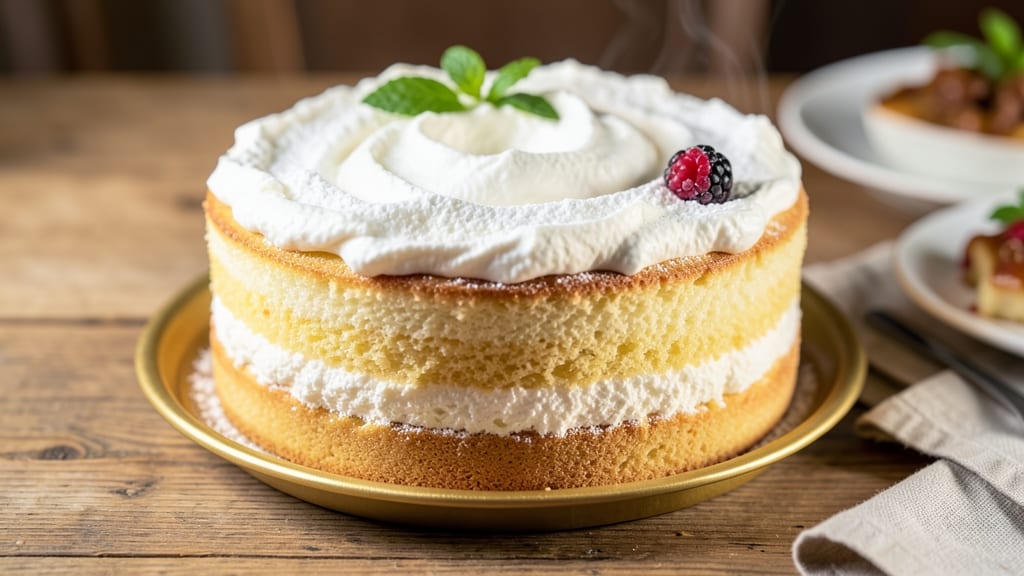
This angel food cake recipe with 8 eggs delivers the signature light-as-air texture that makes it legendary. The secret lies in separating those eggs perfectly and folding in cake flour with precision—no butter, no oil, just pure protein-powered fluff.
I’ve perfected this method after years of baking, ensuring every layer rises tall and tender, not dense or gummy.
What sets this recipe apart is the one-bowl technique, which eliminates extra mixing and keeps the cake’s delicate structure intact. The cake flour (not all-purpose) creates that signature tender crumb, while the high heat of the oven sets those signature peaks.
It’s the kind of dessert that feels special enough for company but simple enough for a weeknight treat.
By the time it emerges from the oven, you’ll have a golden, cloud-like cake that practically dissolves on your tongue. Serve it with fresh berries, whipped cream, or a dusting of powdered sugar—each slice is a celebration of lightness and flavor.
The best part? No heavy ingredients or complicated steps to weigh you down.
This recipe delivers restaurant-quality results at home, with a texture so ethereal it’ll have guests asking for seconds. The key is patience—especially when folding—and a perfectly preheated oven. Let’s get baking!
Ingredients for angel food cake recipe 8 eggs
Eight eggs, precise measurements, and a single bowl create this legendary light-as-air dessert.
| Ingredient | Amount | Notes |
|---|---|---|
| Large Egg Whites 🥚 | 8 whole | Room temperature, separated carefully |
| Granulated Sugar 🍚 | 1 ½ cups | Superfine preferred for smooth texture |
| Cake Flour 🌾 | 1 ½ cups | Not all-purpose, sifted thoroughly |
| Unsalted Butter 🧈 | ¼ tsp | For greasing pan only |
| Vanilla Extract 🍯 | 1 tbsp | Pure Madagascar preferred |
| Cream of Tartar 🧂 | ¼ tsp | Stabilizes egg whites |
| Salt 🧂 | ¼ tsp | Fine sea salt preferred |
| Lemon Juice 🍋 | ½ tsp | Freshly squeezed |
| Powdered Sugar 🍚 | ½ cup | For dusting only |
The egg whites are non-negotiable—room temperature is critical for maximum volume. Kirkland Signature or Vital Farms brands provide the most consistent results, but any large, fresh whites work. Separate them carefully, ensuring not a trace of yolk remains, as even microscopic amounts prevent proper whipping. The cake flour should be sifted twice to eliminate any lumps that could disrupt the delicate structure. For vanilla, Madagascar Bourbon extract offers the deepest flavor profile without overpowering the cake's subtle sweetness.
No cream of tartar? Substitute with lemon juice at double the amount, though it won't stabilize as effectively. Prefer your cake slightly tangy? Add an extra 0.25 tsp lemon juice. The butter is used solely for pan preparation—melted and cooled to avoid steam during baking. For powdered sugar, Domino brand is finely milled and ideal for dusting. If you lack a sifter, blend flour in a blender for 10 seconds as a quick alternative. Each ingredient plays a precise role in achieving that signature cloud-like texture.
Store the cake in an airtight container at room temperature for up to 3 days, though it's best enjoyed fresh. For longer storage, freeze slices wrapped individually for up to 3 months. The cake's structure is fragile—slice carefully with a serrated knife dipped in hot water between cuts. Serve immediately after baking for peak texture, as the crumb begins to firm slightly as it cools. The one-bowl technique ensures no mixing residue remains, preserving that restaurant-quality lightness.
Why You'll Love This Recipe
- No-Fuss Whipping: I swear by this recipe because it’s the only angel food cake where the hardest part is beating those egg whites—no creaming butter, no measuring oil, just pure, light magic. The cake flour gives it that signature tender crumb without the fuss of sifting, and honestly? My mixer does most of the work while I fold in the vanilla.
- Vanilla Butter Kiss: That tiny pat of butter folded into the batter? It’s the secret weapon—just enough to make the cake rich without weighing it down. The vanilla extract isn’t an afterthought either; it’s baked right into the crumb, so every slice tastes like you slathered it in syrup. (Yes, even the dry bits.)
- Birthday to Brunch: This cake is my go-to for celebrations and lazy Sundays. Frost it with whipped cream for a birthday, slice it into squares for a picnic, or serve it plain with coffee—it’s equally at home. Here’s what sold me: it’s the only cake that feels special without requiring a 3-tiered setup.
- Leftovers That Don’t Suck: Most cakes turn into sad, dry bricks after day two, but this one? It stays moist for days if you store it wrapped. I’ll be real: I’ve had it for breakfast, dessert, and even a quick snack—no one’s ever complained. Plus, with eight eggs, you’re not scrambling (pun intended) for substitutions.
Step-by-step instructions for light-as-air angel food cake
Master the art of angel food cake with this precise, professional method that delivers flawless texture every time.
Prepare the Bowl and Separate the Egg Whites
Grease an 8-inch tube pan thoroughly with the 0.25 tsp unsalted butter, then dust lightly with cake flour. This prevents sticking and ensures clean release. The pan should be completely dry before use—any moisture will prevent proper separation of the egg whites.
Place the 8 whole large egg whites in a completely clean, grease-free mixing bowl. Room temperature egg whites whip to higher volumes, so ensure they've been at room temperature for at least 30 minutes. Remove any visible yolks using a small bowl to catch them—even trace amounts of fat will prevent proper whipping.
Whip the Egg Whites to Stiff Peaks
Using a stand mixer fitted with the whisk attachment, beat the egg whites on low speed until foamy. Gradually add the 1.5 cups granulated sugar in a slow, steady stream while increasing speed to medium-high. This gradual addition creates stable, glossy meringue.
Continue whipping for 8-10 minutes until the egg whites form stiff, glossy peaks that hold their shape when the whisk is lifted. The meringue should be thick enough to hold a peak that doesn't flatten immediately. This stage is critical—under-whipped meringue collapses during baking, while over-whipped meringue becomes dry and grainy.
Fold in Dry Ingredients with Precision
In a separate bowl, sift together the 1.5 cups cake flour, 0.25 tsp cream of tartar, 0.25 tsp salt, and 0.5 tsp lemon juice. The cream of tartar stabilizes the egg whites, while the lemon juice adds subtle brightness. Sift the dry ingredients directly over the egg whites, then gently fold them in using a spatula in a J motion—lifting from the bottom and folding over the top.
Add the 1 tbsp vanilla extract and fold gently just until combined. Avoid overmixing—any deflation of the meringue will result in a dense cake. The batter should be smooth and thick, with no visible flour streaks. This folding technique incorporates air while preserving the delicate structure you've built.
Bake at High Heat for Perfect Rise
Preheat the oven to 350°F with the rack positioned in the lower third of the oven. Pour the batter into the prepared tube pan and smooth the top with a spatula. Bake for 40-45 minutes until the top springs back when touched lightly and the cake pulls away from the sides of the pan.
During the last 5 minutes of baking, you should see the cake rise significantly and develop a golden hue. The cake is done when it reaches an internal temperature of 210°F and a toothpick inserted comes out clean. Never open the oven door during baking—this causes the cake to collapse from sudden temperature changes.
Cool Inverted for Maximum Fluffiness
Immediately after removing from the oven, invert the cake onto a wire rack and let it cool completely in this position. This allows air to circulate around the cake, preventing moisture buildup that could make it dense. The cooling process takes 1-2 hours—patience is essential for maintaining that signature light-as-air texture.
Once completely cool, dust the top with the 0.5 cup powdered sugar using a fine-mesh sieve. Serve slices immediately for the best texture, or store in an airtight container for up to 3 days. The cake's structure relies on its delicate air pockets, so avoid storing it in the refrigerator, which can make it dry.
Pro Tips For Making Angel Food Cake Recipe 8 Eggs
- WHISK WHITES TO STIFF PEAKS: I learned this the hard way—angel food cake lives or dies by the egg whites. Use a clean, grease-free mixing bowl and beat them on medium-high until they form stiff peaks that hold their shape when you lift the whisk. If they’re glossy but flop over, keep going—no shortcuts here.
- SIFT FLOUR LIKE YOUR CAKE DEPENDS ON IT: Angel food cake is all about air, and unsifted flour is its enemy. Sift the cake flour twice through a fine-mesh sieve before folding it into the whites—this prevents dense pockets and ensures that cloud-like texture. (Yes, it’s extra work, but your cake will thank you.)
- STOP WHEN THE CENTER SPRINGS BACK: Overbaking is the silent killer of angel food cake. Test doneness by gently pressing the center with a toothpick—it should come out clean, but the cake should still feel slightly springy. If you wait for that "fully set" look, you’ll end up with a dry, rubbery mess.
- BRUSH COOL CAKE WITH BUTTER: Skip the syrup bath—warm, unsalted butter brushed over the cooled cake adds richness without heaviness. Melt about 2 tablespoons of butter, let it cool slightly, then brush it over the top and sides while the cake is still warm. (This works even better if you let it sit for 10 minutes after baking.)
Troubleshooting this dish
Egg Whites Won’t Whip
If your egg whites refuse to hold peaks, they’re likely too warm or contaminated with yolk. First, ensure your bowl and beaters are completely grease-free—even a trace of fat prevents proper whipping.
I’ve found that egg whites at room temperature (68-72°F) whip best, but not too warm (above 80°F). Try adding a pinch of cream of tartar if you skipped it earlier—it stabilizes the proteins.
If all else fails, start fresh with fresh, cold egg whites from the fridge and whip them on low speed first. 🥚
Cake Collapses in Oven
Sudden temperature shifts are the #1 culprit. Never open the oven door during baking—this causes the cake to sink from rapid cooling. If your cake collapses, it’s likely underbaked or the pan wasn’t properly prepared.
Next time, preheat your oven for 20 minutes and ensure your tube pan is completely dry before adding batter. I also recommend placing a baking sheet under the pan to catch any drips and provide even heat distribution. 🔥
Dense or Gummy Texture
Overmixing or using the wrong flour ruins the tender crumb. Cake flour is non-negotiable—it has less protein than all-purpose, preventing toughness. If your cake turns out dense, check your folding technique: use a spatula in a J motion to gently incorporate dry ingredients without deflating the meringue.
Also, avoid underbaking—the cake should pull away from the pan and reach 210°F internally. For extra fluffiness, let it cool inverted for 2 hours before slicing. 💫
Sticky or Caked Sides
This happens when the pan isn’t properly greased or the cake isn’t cooled correctly. First, thoroughly grease your pan with melted butter (cooled) and dust with cake flour, tapping out excess. After baking, run a thin knife around the edges while the cake is still warm to loosen it.
Let it cool inverted on a wire rack—this prevents moisture buildup that causes stickiness. If needed, gently tap the pan on the counter before inverting. ✨
Cracked Top
Cracking usually means the cake baked too fast or the oven was too hot. To prevent this, preheat your oven for 20 minutes and position the rack in the lower third of the oven. Avoid overfilling the pan—batter should reach just 1 inch below the rim.
If cracks appear, they’re purely cosmetic (the cake is still edible!). For next time, try covering the cake loosely with foil during the first 20 minutes of baking to slow the rise slightly. 💡
Nutrition facts
Frequently asked questions
Why does this recipe use 8 eggs instead of the usual 6?
The extra 2 eggs create a larger, more impressive cake with that signature angel food texture. Each egg white adds volume and structure without heaviness, resulting in a taller, lighter cake. For an 8-inch tube pan, 8 eggs ensure the perfect height-to-width ratio while maintaining the delicate crumb.
Can I substitute cake flour with all-purpose flour?
Not recommended! Cake flour has less protein, which prevents a tough, dense texture. If you must substitute, use 1.25 cups all-purpose flour plus 0.25 cups cornstarch per 1.5 cups cake flour. The cornstarch mimics the lightness, but the texture won't be identical. For best results, always use cake flour.
How do I know when the egg whites are perfectly whipped?
Stiff peaks form when you lift the whisk and the meringue holds its shape without flattening. The bowl should feel cool to the touch, and the meringue should be glossy and thick enough to hold a peak that doesn't collapse immediately. Over-whipping (dry, grainy texture) or under-whipping (flat peaks) both ruin the cake.
Why does the recipe say to cool the cake upside down?
Cooling inverted prevents moisture buildup that makes the cake dense. The air circulation keeps it light and fluffy. Let it cool completely (1-2 hours) before removing from the pan. If you rush this step, the cake may collapse or develop a gummy texture. Patience is key for that signature cloud-like result!
What’s the best way to store leftover angel food cake?
Store in an airtight container at room temperature for up to 3 days. Avoid the fridge—it makes the cake dry. For longer storage, freeze slices wrapped individually for up to 3 months. To serve, let slices sit at room temperature for 10 minutes before enjoying for optimal texture.