
Desserts
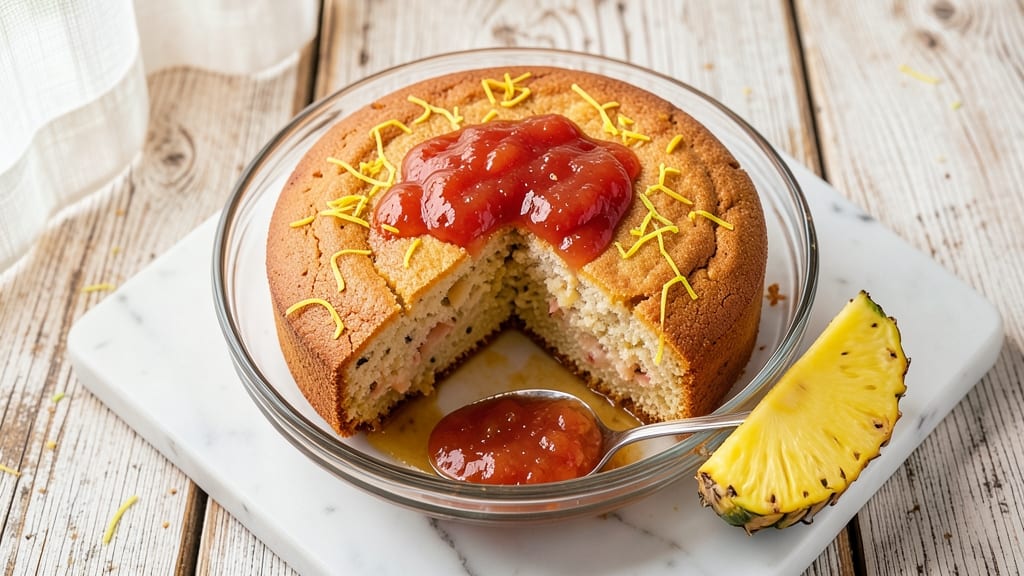
This ananas cake recipe transforms simple ingredients into layers of tropical perfection—juicy pineapple folded into tender cake, crowned with zesty pineapple frosting. The secret lies in balancing sweetness with tangy pineapple zest that brightens every bite.
I've perfected this recipe over years of baking, ensuring the cake stays moist while the frosting adds just the right crunch.
What makes this cake special is its three-layer structure: a lightly spiced cake base, fresh pineapple purée swirled between layers, and a velvety frosting that ties everything together. The pineapple zest infuses the frosting with an aromatic punch that cuts through the sweetness.
Baking at 350°F for 25-30 minutes ensures a golden, even rise without drying out the fruit.
By the time you slice into this cake, you'll taste layers of tropical magic—the tender crumb of the cake, the juicy bursts of pineapple, and the zesty frosting that makes each bite unforgettable.
The aroma alone will transport you to a sunny beach, while the texture delivers restaurant-quality indulgence at home.
Perfect for summer gatherings, tropical-themed parties, or anyone craving a dessert that tastes like sunshine. The recipe scales easily for crowds, and leftovers keep well for 3-4 days in the fridge. Let's get baking!
Ingredients for ananas cake
Tropical flavors meet delicate layers in this pineapple-infused cake recipe.
| Ingredient | Amount | Notes |
|---|---|---|
| All-Purpose Flour 🌾 | 2 ½ cups | Sifted for light texture |
| Granulated Sugar 🍚 | 2 cups | White or light brown |
| Unsalted Butter 🧈 | 1 cup | Room temperature, full-fat |
| Large Eggs 🥚 | 4 whole | Room temperature for even mixing |
| Fresh Pineapple 🍍 | 2 cups | Puréeed, seeds removed |
| Pineapple Zest 🍍 | 1 tbsp | From 1 medium pineapple |
| Baking Powder 🧂 | 2 tsp | Aluminum-free preferred |
| Ground Cinnamon 🌿 | 1 tsp | Freshly ground for warmth |
| Salt 🧂 | ½ tsp | Fine sea salt |
| Vanilla Extract 🍯 | 1 tsp | Pure Madagascar preferred |
| Heavy Cream 🥛 | 1 cup | Cold for frosting |
| Powdered Sugar 🍚 | 3 cups | Sifted for smooth frosting |
| Lemon Juice 🍋 | 1 tbsp | Freshly squeezed |
The pineapple is the heart of this recipe—fresh is non-negotiable. Grab a ripe but firm pineapple from the produce section, not the pre-cut kind. Look for vibrant yellow skin and a slight give when pressed. For the zest, use an organic pineapple if possible—conventional varieties can have a bitter aftertaste. The purée should be smooth, so blend with a splash of water if needed. I always buy two pineapples: one for the cake and one to zest for the frosting. The butter should be room temperature—this ensures even mixing and a tender crumb. For the frosting, heavy cream is essential—it creates that velvety texture that balances the cake's richness.
No fresh pineapple? Canned crushed pineapple (drained well) works in a pinch, but reduce the amount to 1.5 cups to avoid excess moisture. Swap the zest for 1 tsp bottled lime zest, though fresh is always better. Running short on vanilla? Almond extract at half the amount adds depth, though it changes the flavor profile slightly. The frosting can be made 24 hours ahead—it actually improves as it rests. For a lighter texture, whip the cream with 1 tsp powdered sugar before adding the rest. If your frosting is too thick, add 1 tsp lemon juice to loosen it. The cake layers should be cooled completely before assembling to prevent sogginess—room temperature is ideal.
Store the cake layers wrapped in plastic wrap in the fridge for up to 3 days before frosting. The fully assembled cake keeps for 3-4 days in the fridge, but it's best enjoyed within 2 days for optimal texture. For longer storage, freeze the unfrosted layers for up to 2 months—thaw overnight in the fridge before assembling. The frosting can be stored separately in an airtight container for 5 days in the fridge. To transport, wrap the cake in a tropical-themed cake board and secure with a clear plastic wrap—this keeps it fresh for 4-6 hours at room temperature.
Why You'll Love This Recipe
- No-Fuss Mixing: I swear, this cake comes together with just a bowl and a whisk—no stand mixer, no fancy techniques. The butter and sugar cream in minutes, and the pineapple chunks add moisture without extra fuss. Honestly, my lazy Sundays just got a whole lot sweeter.
- Tropical Twist: That fresh pineapple isn’t just decoration—it’s the star. The bright acidity cuts through the richness of the butter and sugar, while the caramelized edges from baking give it a depth you’d never guess from the ingredients. Between us, it’s the kind of flavor that makes people ask, "What’s in this?"
- Double Duty Cake: Slice it warm for dessert, or pack it chilled for breakfast the next day with a dollop of whipped cream. I’ve even used leftover pieces to make pineapple upside-down cake without the extra effort. It’s the ultimate cake that works breakfast, brunch, or bedtime.
- Budget Bright Spot: Pineapple’s cheap in season, and you only need a few cups to make this cake sing. The butter and eggs stretch further than you’d think, and the flour? Well, it’s the base of every pantry. Here’s what sold me—it’s a showstopper that won’t break the bank, especially when you’re feeding a crowd.
Step-by-step instructions for ananas cake recipe
Mastering this tropical cake requires precision and patience—here's how to create layers bursting with pineapple flavor.
Prepare the Pineapple Purée and Zest
Start by puréeing the 2 cups of fresh pineapple until completely smooth, then strain out any seeds through a fine-mesh sieve. The purée should be completely free of texture—this ensures a silky cake batter. In a separate bowl, finely grate the 1 tablespoon of pineapple zest using a microplane, keeping it separate for now.
I like to taste the purée at this stage—it should be sweet but balanced, with a bright acidity that will carry through the cake. If it tastes too tart, add a teaspoon of the granulated sugar to mellow the flavor. The zest adds aromatic depth that no bottled pineapple can replicate, so don't skip this step.
Cream Butter and Sugar for Light Texture
In a stand mixer fitted with the paddle attachment, beat the 1 cup of unsalted butter and 2 cups of granulated sugar on medium speed for 3-4 minutes. The mixture should become pale and fluffy, nearly doubling in volume. This step incorporates air, which creates the cake's signature lightness.
I press down on the butter occasionally during mixing—this helps distribute the sugar evenly and prevents pockets of unmixed butter. The butter should be room temperature but not greasy; if it feels too soft, chill the bowl in the freezer for 10 minutes before continuing. Stop mixing when the butter-sugar combination looks like thick, glossy ribbon when the beaters are lifted.
Combine Wet Ingredients and Fold in Dry Components
Add the 4 whole large eggs, one at a time, mixing on low speed after each addition until fully incorporated. Then stir in the 1 teaspoon vanilla extract, 1 tablespoon pineapple zest, and the prepared 2 cups pineapple purée. Mix just until combined—overmixing develops gluten and makes the cake dense.
In a separate bowl, whisk together the 2.5 cups of all-purpose flour, 2 teaspoons baking powder, 1 teaspoon ground cinnamon, and 0.5 teaspoon salt. With the mixer on low speed, gradually add the dry ingredients to the wet mixture, mixing just until the flour disappears. The batter should be smooth but slightly thick, like heavy pudding. If it looks too stiff, add 1 tablespoon of heavy cream to loosen it.
Bake the Layers to Golden Perfection
Preheat your oven to 350°F and grease two 8-inch round cake pans generously with butter, then line the bottoms with parchment paper. Divide the batter evenly between the pans. Bake for 25-30 minutes, or until a toothpick inserted into the center emerges clean. The cakes should spring back when pressed gently in the center.
I recommend checking for doneness at the 22-minute mark—ovens vary, and you want to catch the cakes just as they begin to pull away from the edges. Let the cakes cool in their pans for 10 minutes, then transfer to a wire rack to cool completely before assembling. This prevents the layers from becoming soggy when stacked.
Assemble and Frost the Tropical Cake
Once the cakes are completely cool, level the tops if necessary using a serrated knife. In a mixing bowl, whip the 1 cup of heavy cream until soft peaks form, then gradually add the 3 cups of powdered sugar and 1 tablespoon of lemon juice, mixing until smooth and glossy. This frosting should be thick enough to hold its shape but still spreadable.
Place one cake layer on a serving plate, spread a generous layer of frosting, then top with the second layer. Frost the top and sides of the cake, creating a smooth finish. For extra flair, pipe a simple border around the edges using the leftover frosting. Chill the cake in the refrigerator for 30 minutes before serving to let the frosting set—this ensures clean slices and prevents crumbs.
Pro Tips For Making Ananas Cake
- PREP PINEAPPLE SMALL: Dice that fruit into ½-inch cubes—no bigger or the cake gets soggy, no smaller or it turns to mush. I learned this the hard way after a batch fell apart like a wet paper towel.
- CREAM BUTTER COLD: Whip the butter and sugar until it’s pale yellow and fluffy—about 3-4 minutes with a stand mixer. Cold butter won’t emulsify right, and you’ll end up with a dense, greasy cake instead of light layers.
- SKIP THE OVERMIXING: Fold in the flour and eggs just until combined—lumpy batter is fine. Overmixing develops gluten, and your pineapple cake will turn out tougher than a boot. I used to panic and stir like crazy, then wondered why it tasted like a brick.
- BAKE UNTIL SPRINGY: Tap the center of the cake—it should bounce back, not feel jiggly. If it’s still wet, the pineapple won’t caramelize right and the texture stays gummy. My first batch came out underdone, and the pineapple tasted like it was swimming in syrup.
Storing and reheating your ananas cake
Refrigerator Storage
Store the fully assembled cake in an airtight container or wrap tightly with plastic wrap pressed directly against the frosting. Keep it in the refrigerator for up to 3-4 days—the frosting stays fresh and the cake retains its moisture.
I always slice the cake with a hot knife (dipped in hot water and wiped dry) for clean cuts that prevent crumbs from sticking. 🍍
Freezing Unfrosted Layers
For longer storage, freeze the unfrosted cake layers individually wrapped in plastic wrap and placed in a freezer bag. They’ll keep for up to 2 months without drying out.
Thaw overnight in the fridge before assembling—this gradual process prevents condensation from making the layers soggy. The frosting should be made fresh after thawing for the best texture. ❄️
Reheating Slices
If you’ve stored the cake in the fridge, let slices sit at room temperature for 5-10 minutes before serving—the frosting softens slightly for easier eating. For a quick warm-up, microwave individual slices on medium power for 10-15 seconds—just enough to melt the frosting slightly while keeping the cake tender.
Avoid reheating in the oven, as it can dry out the layers. 🔥
Transporting for Events
To transport the cake, place it on a sturdy cake board and wrap it tightly in clear plastic wrap, securing it with a rubber band. This keeps it stable and prevents frosting from smudging.
For short trips (under 2 hours), store it at room temperature—just avoid direct sunlight. For longer outings, keep it in a cooler with ice packs to maintain freshness. 🚗
Reviving Stale Cake
If your cake loses moisture over time, revive it by brushing the top and sides with a simple syrup made from 2 tablespoons granulated sugar and 2 tablespoons hot water.
Let it absorb for 10 minutes before serving—this restores softness without altering the flavor. For extra moisture, add a thin layer of pineapple purée between cake layers before reassembling. 💫
Frosting Make-Ahead Tip
The frosting can be made 24 hours ahead and stored in an airtight container in the fridge. Whip it back to soft peaks before using—it actually tastes better after resting as the flavors meld.
I like to add a splash of lemon juice when reviving it to brighten the flavor. This tip saves time on busy days and ensures a perfectly smooth finish. 💡
Nutrition facts
Frequently asked questions about pineapple cake
Can I substitute canned pineapple for fresh?
Yes, but with adjustments! Use 1.5 cups of drained crushed canned pineapple instead of fresh, and reduce the sugar slightly since canned varieties are often sweeter. For zest, add 1 tsp lime zest to replicate the bright citrus notes. The texture won't be as moist, but it still delivers that tropical flavor.
Why does my pineapple cake turn out dense?
Overmixing the batter develops gluten, making the cake dense. Mix just until the flour disappears—about 20-30 seconds after adding it. Also ensure your butter is room temperature (not melted) and your baking powder is fresh. Using too much pineapple purée can add moisture—stick to the 2 cups measurement.
How do I make this cake gluten-free?
Replace the all-purpose flour with a 1:1 gluten-free baking flour blend (like Bob's Red Mill) plus 1 tsp xanthan gum. Use 2.25 cups of the blend to match the structure. For the frosting, ensure your powdered sugar is gluten-free certified. The texture will be slightly different but still delicious!
Can I bake this in a different pan size?
Yes, but adjust baking time accordingly. For 9-inch pans, reduce time by 5-7 minutes (bake 20-25 minutes). For 6-inch pans, increase time by 5-7 minutes (bake 30-35 minutes). Always check with a toothpick—it should come out clean. The cake layers should be about 1.5-2 inches thick for proper structure.
What's the best way to decorate this cake?
For a tropical look, pipe swirls of frosting on top and add pineapple slices or toasted coconut flakes as garnish. Try a simple border of crushed pineapple mixed with white chocolate for texture. For extra flair, add a sprinkle of edible gold leaf or fresh mint leaves between layers. Keep decorations minimal to let the cake's natural flavors shine!