
Desserts
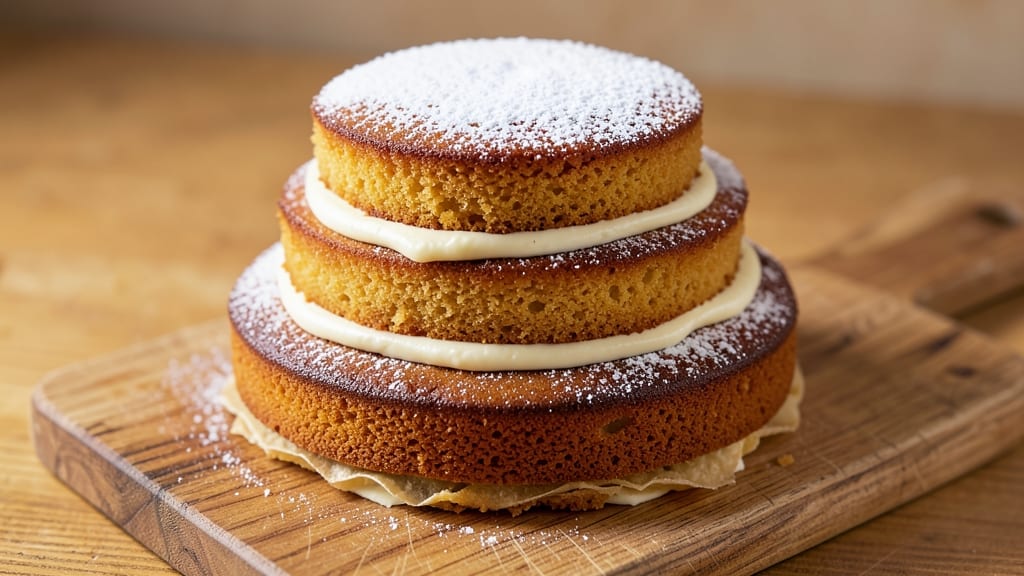
This American butter cake recipe delivers the timeless layers of vanilla cake and rich butter frosting that made it a Southern classic. The secret lies in the perfect balance of tender crumb and velvety frosting—achieved through precise measurements and proper technique.
I've baked countless versions, and this one consistently delivers that signature moist texture and buttery sweetness that stands apart from boxed mixes.
The foundation begins with high-ratio butter and all-purpose flour, creating a cake that's tender yet sturdy enough to hold its shape. Baked at 350°F for 25-30 minutes, the layers emerge golden and perfectly set, ready for the signature buttercream.
This isn't just any vanilla cake—it's the kind that earns second helpings and becomes a family tradition.
What sets this recipe apart is the frosting—a simple yet luxurious blend of butter, powdered sugar, and vanilla that transforms the cake into a showstopper. The layers are filled and frosted while still warm, ensuring that creamy filling and frosting meld together beautifully.
Each slice reveals that perfect contrast between tender cake and smooth, buttery frosting.
While this recipe delivers the classic vanilla version, the technique works equally well for chocolate or spice-infused variations. The key is maintaining the balance of butter and proper baking times. Whether you're baking for a celebration or simply craving comfort, this butter cake delivers restaurant-quality results at home.
Ingredients for american butter cake
High-ratio butter and precise measurements create the signature tender crumb and velvety frosting of this classic Southern butter cake.
| Ingredient | Amount | Notes |
|---|---|---|
| Unsalted Butter 🧈 | 1 cup | Room temperature, high-ratio preferred |
| Granulated Sugar 🍚 | 2 cups | White or light brown preferred |
| All-Purpose Flour 🌾 | 2 ½ cups | Sifted, spooned and leveled |
| Large Eggs 🥚 | 4 whole | Room temperature, separated |
| Pure Vanilla Extract 🍃 | 2 tsp | Bourbon or Madagascar preferred |
| Baking Powder 🧂 | 2 tsp | Diamond Crystal brand preferred |
| Salt 🧂 | ½ tsp | Fine sea salt preferred |
| Milk 🥛 | 1 cup | Whole milk preferred |
| Powdered Sugar 🍚 | 4 cups | Sifted for smooth frosting |
| Heavy Whipping Cream 🥛 | 1 cup | Full-fat for stability |
| Vanilla Bean Paste 🍃 | 1 tbsp | For enhanced vanilla flavor |
The butter is non-negotiable here—high-ratio unsalted butter from Plugrá or Land O'Lakes ensures that signature tender yet sturdy crumb. Room temperature butter incorporates smoothly, so take it out of the fridge 1 hour before baking. For the flour, King Arthur or Gold Medal brands yield the best texture when sifted and spooned—don't scoop. The vanilla extract matters too: Bourbon or Madagascar varieties add depth that artificial extracts can't match. If you're using a vanilla bean, scrape the seeds for maximum flavor.
No vanilla bean paste? Double the vanilla extract works in a pinch, though the seeds add that signature speckled look. For the frosting, full-fat heavy whipping cream is essential—light cream won't whip as stiff or hold its shape. Substituting powdered sugar? Confectioners' sugar is non-negotiable; regular sugar won't dissolve properly. The milk can be swapped for buttermilk or half-and-half, but whole milk keeps the cake moist without adding richness. For a richer frosting, add 1 tbsp lemon juice to stabilize the whipped cream.
Store the cake layers airtight at room temperature for up to 3 days—they'll actually improve as they sit. The frosting keeps best when refrigerated between layers, but bring it to room temperature before final assembly. For long-term storage, freeze the fully frosted cake up to 3 months. Thaw at room temperature, then gently reheat the frosting in 10-second bursts in the microwave to restore its smooth texture. Always frost the cake while it's still slightly warm for that signature restaurant-quality finish.
Why You'll Love This Recipe
- No Mixer Needed: I swear by this—just cream butter and sugar by hand until it’s light and fluffy. No fancy equipment, no stress. That vanilla? It’s the secret that turns "good" into "oh my god."
- Pure Vanilla Magic: The moment you taste that first bite—warm, buttery, with vanilla singing in every layer—you’ll understand. It’s rich but not heavy, sweet without being cloying. My kids argue over slices.
- Birthday or Breakfast: Slice it for a crowd or enjoy a thick wedge with coffee. Frost it for a celebration or eat it plain with jam. Honestly, I’ve served it at brunch, potlucks, and even as a "forgot to plan dessert" lifesaver.
- Budget-Friendly Staples: Butter, sugar, flour, eggs—these are ingredients you already own. No specialty items, no wasted money. And leftovers? They last days if you can resist them that long. (Spoiler: you won’t.)
Step-by-step instructions for classic vanilla layers with buttery frosting
Master this timeless technique for tender layers and velvety frosting every time.
Prepare the Cake Batter for Perfect Texture
Preheat your oven to 350°F and grease three 8-inch round cake pans with nonstick spray, then line the bottoms with parchment paper. In a stand mixer fitted with the paddle attachment, cream together the 1 cup unsalted butter and 2 cups granulated sugar on medium speed for 3-4 minutes until light and fluffy. The mixture should nearly double in volume and become pale.
Add the 4 whole large eggs, one at a time, mixing well after each addition until fully incorporated. This gradual addition prevents curdling. Scrape down the sides of the bowl to ensure even mixing, then stir in the 2 teaspoons pure vanilla extract and 1 tablespoon vanilla bean paste until combined. The vanilla bean paste adds depth that pure extract can't match.
In a separate bowl, whisk together the 2.5 cups all-purpose flour, 2 teaspoons baking powder, and 0.5 teaspoon salt. With the mixer on low speed, gradually add the dry ingredients to the wet mixture, alternating with the 1 cup milk in 3 additions. Begin and end with flour to prevent a dry batter. Mix just until combined—overmixing develops gluten and makes the cake dense.
Bake Even Layers for Consistent Height
Divide the batter evenly among the prepared pans. Tap each pan gently on the counter to remove any air bubbles, then smooth the tops with a spatula. Bake for 25-30 minutes or until a toothpick inserted into the center comes out clean. Rotate the pans halfway through baking for even browning.
I check for doneness at the 25-minute mark—the cake should spring back when gently pressed in the center. Overbaking dries out the layers, so remove them promptly. Let the cakes cool in their pans for 10 minutes, then transfer to a wire rack to cool completely. This gradual cooling prevents cracking when layering.
Create the Signature Buttery Frosting
In a separate bowl, whip the 1 cup heavy whipping cream to soft peaks using a stand mixer. In another bowl, sift together the 4 cups powdered sugar to remove lumps. Gradually add the powdered sugar to the whipped cream while mixing on low speed, then increase to medium and whip for 2-3 minutes until smooth and glossy.
Add the 1 cup unsalted butter (softened) and mix until fully incorporated. The frosting should be thick enough to hold its shape but still spreadable. For extra richness, I like to add 1 teaspoon vanilla extract and a pinch of salt to balance the sweetness. The frosting should coat the back of a spoon smoothly.
Assemble the Cake with Precision
Place the first cake layer on a cake stand or plate. Spread a thin layer of frosting (about ¼ inch thick) over the top, then repeat with the second layer. This "crumb coat" prevents filling from seeping through. Chill the assembled cake in the refrigerator for 15 minutes to firm up the frosting.
Once chilled, apply the remaining frosting evenly, creating a smooth finish. Use an offset spatula to smooth the sides, then pipe decorative borders or rosettes if desired. For a classic look, I like to add a simple swirl pattern with a piping bag fitted with a star tip. Let the cake sit at room temperature for 30 minutes before slicing to allow the frosting to set.
Pro Tips For Making American Butter Cake
- CREAM BUTTER FIRST: I learned this the hard way—mixing room-temperature butter and sugar until light and fluffy (3-5 minutes) is non-negotiable. Cold butter pockets lead to dense cake, and no one wants that. Use a stand mixer with the paddle attachment, and resist the urge to rush it.
- WEIGH YOUR FLOUR: Scooping flour from the bag packs it down, adding extra moisture and throwing off the ratio. Spoon it into a measuring cup, then level it off with a knife—this keeps your cake tender, not gummy. (Yes, even if you’re impatient like me.)
- BAKE UNTIL 190°F: The cake pulls away from the pan edges and springs back slowly when pressed—that’s the test. My first few attempts ended up underbaked (soggy) or overbaked (dry), but hitting 190°F internal temp guarantees a moist crumb every time. No guesswork.
- ADD VANILLA LAST: Mixing vanilla into the wet ingredients early can mute its flavor. Instead, fold it in with the flour at the end—this locks in that bright, buttery aroma. (Pro move: Use 1 tablespoon of pure extract, not imitation.)
Wine and beer pairings for this american butter cake
Sweet White Wine
For this rich butter cake, a crisp Sauvignon Blanc from New Zealand or a light Chardonnay from California is ideal. The bright acidity cuts through the butterfat, cleansing your palate between bites.
I love Cloudy Bay Sauvignon Blanc—its citrus and herbal notes complement the vanilla beautifully. Serve slightly chilled (45-50°F) to enhance the wine's refreshing qualities. 🍷
Dessert Red Options
A Pinot Noir or Zinfandel works surprisingly well with butter cake, especially if you've added chocolate or spice variations. The Pinot Noir from Oregon's Willamette Valley offers red fruit notes that harmonize with the cake's sweetness, while a Zinfandel from California adds a touch of spice.
Keep the wine at 60-65°F to preserve its fruit-forward character.
Creamy Beer Pairings
For beer lovers, a Belgian-style witbier like Hoegaarden or a creamy stout such as Guinness pairs wonderfully. The witbier's citrus and coriander notes contrast the cake's richness, while the stout's roasted maltiness adds depth.
Serve both at 45-50°F for the best balance. A half-and-half of the two—witbier in the glass and stout as a chaser—creates an unforgettable experience. 🍺
Sweet Sparkling Contrast
If you prefer something bubbly, a Moscato d'Asti or Prosecco adds a festive touch. The light sweetness and effervescence balance the cake's density, making each bite feel like a celebration.
I recommend La Marca Prosecco—its floral notes elevate the vanilla flavors. Serve well-chilled (40-45°F) to maintain its crispness and bubbles.
Coffee or Tea Pairings
For a non-alcoholic option, a strong brewed coffee or Earl Grey tea enhances the cake's flavors. The bitterness of coffee complements the sweetness, while the bergamot in Earl Grey adds an aromatic contrast.
Brew coffee at 195-205°F for optimal flavor, and steep tea for 3-5 minutes for a balanced cup. Both pairings work best at room temperature. ☕
Nutrition facts
Frequently asked questions
Why does this butter cake need high-ratio butter?
High-ratio butter contains more fat content (typically 80-82%) which creates that signature tender yet sturdy crumb. Regular butter (80% fat) works in a pinch, but high-ratio butter produces a cake that's moist for 3-4 days without drying out. The extra fat also helps emulsify the batter better, preventing cracks during baking.
Can I make this cake in a different pan size?
Yes! For a 9-inch round pan, reduce baking time to 20-25 minutes and use 2/3 of the batter per pan. For 6-inch pans, increase baking time to 30-35 minutes and use 1/3 of the batter per pan. Always adjust for oven temperature variations—check doneness with a toothpick at the earlier end of the time range.
What's the secret to preventing cake layers from cracking?
Let the cakes cool in their pans for 10 minutes before removing, then cool completely on a wire rack. Never stack hot layers—the temperature difference causes cracks. Also, don't overmix the batter (just until combined) and avoid opening the oven door during the first 20 minutes of baking. A sudden temperature drop creates cracks too.
Can I substitute buttercream for another frosting?
Try a cream cheese frosting (mix 8 oz cream cheese with 1 cup butter and 3 cups powdered sugar) or a ganache (melt 1 cup chocolate with 1/2 cup heavy cream). For a lighter option, whipped cream frosting works well—just add 1 tsp vanilla and 1/4 tsp salt. Adjust sweetness to taste.
How do I store leftovers without drying out the cake?
Wrap individual slices tightly in plastic wrap, then place in an airtight container with a slice of bread to absorb moisture. Store at room temperature for up to 3 days or freeze for 3 months. To reheat, microwave for 10-15 seconds to restore moisture—just enough to warm the frosting without melting it completely.