
Desserts
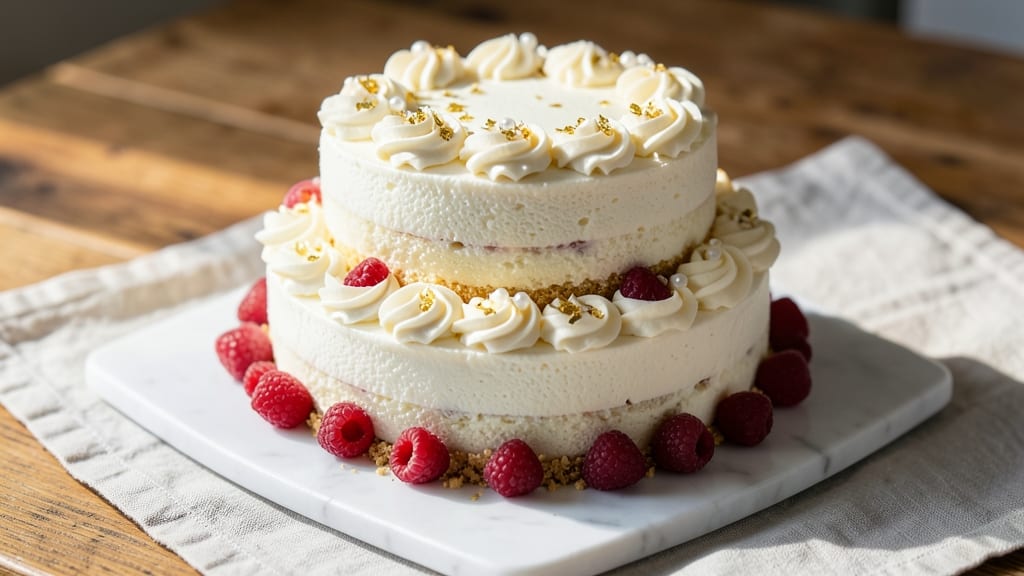
This amazing white cake recipe delivers layers so moist they practically melt in your mouth—no dry crumbs in sight. 💛 The secret? A perfect balance of butter and eggs that keeps it tender while baking powder gives just enough lift.
I've been perfecting this recipe for years, and it never fails to impress, whether it's for birthdays, weddings, or just because you deserve something special.
What makes this cake truly stand out is the ultra-moist texture that stays soft for days, not just hours. The buttery vanilla frosting isn't just sweet—it's rich and velvety, with a hint of vanilla that ties everything together.
No fancy equipment needed; just a few simple ingredients and a little patience for the best results you've ever tasted.
By the time you're done, you'll have a cake that's light, fluffy, and perfectly balanced—not too sweet, not too rich, just right. The frosting spreads smoothly, creating those elegant swirls that look as good as they taste.
This is the kind of cake that makes people ask for seconds (and thirds).
Whether you're a beginner or a seasoned baker, this recipe is foolproof and delivers restaurant-quality results every time. Ready to bake something amazing? Let's get started!
Ingredients for amazing white cake
Simple ingredients that transform into restaurant-quality layers with velvety frosting.
| Ingredient | Amount | Notes |
|---|---|---|
| All-Purpose Flour 🌾 | 2 ½ cups | Sifted for lightness |
| Unsalted Butter 🧈 | 1 cup | Room temperature, full-fat |
| Granulated Sugar 🍚 | 2 cups | Superfine preferred |
| Large Eggs 🥚 | 4 whole | Room temperature |
| Pure Vanilla Extract 🌿 | 2 tsp | High-quality, not imitation |
| Baking Powder 🧂 | 2 tsp | Check freshness |
| Salt 🧂 | ½ tsp | Fine sea salt |
| Milk 🥛 | ½ cup | Whole milk preferred |
| Powdered Sugar 🍚 | 3 cups | For frosting |
| Heavy Whipping Cream 🥛 | 1 cup | Cold for frosting |
| Vanilla Bean Paste 🌿 | 1 tbsp | For frosting richness |
| Vanilla Extract 🌿 | 1 tsp | Extra vanilla for frosting |
The butter is non-negotiable here—full-fat, room temperature makes all the difference. Land O'Lakes or Plugrá are my go-tos, but any good-quality brand works. If your butter has weird white spots, it's been melted and re-solidified—toss it. The eggs? Room temperature is key for that ultra-moist texture. I crack them into a separate bowl first to check for any surprises (no one likes egg shells in their cake). The vanilla extract should smell strong and pure—no imitation stuff. If you're using vanilla bean paste, grab the real deal from Trader Joe's—it's worth the extra cost for that deep vanilla flavor.
No powdered sugar? Blend granulated sugar in a food processor for a quick substitute. Short on heavy cream? Whipped topping works in a pinch, though it won't be as rich. The frosting is where the magic happens—cold cream whips up faster, so chill your bowl before starting. Want extra flavor? Add a pinch of salt to the frosting—trust me, it balances the sweetness perfectly. If you're making this ahead, the cake layers actually taste better the next day once the flavors meld. The frosting can be made a day ahead too—just whip it up right before assembling.
Store the cake layers in an airtight container with parchment between them for up to 3 days. The frosting? Keep it refrigerated and bring to room temperature before spreading—it's much easier to work with. If you're freezing, wrap the whole cake tightly in plastic wrap and foil, then thaw overnight in the fridge. The frosting can be frozen for up to 3 months too—just thaw it in the fridge before using. Pro tip: Make extra frosting—it disappears fast!
Why You'll Love This Recipe
- I’ll be real: this recipe uses things I already have. Butter, sugar, eggs—no weird imports or hard-to-find ingredients. And because it’s not overly sweet or heavy, a single cake feeds a crowd without breaking the bank. Plus, the batter keeps well, so I can double it and freeze half for lazy days.
- No Fuss, Big Payoff: I swear by this recipe because it’s the kind of cake where you just mix, bake, and admire. No sifting, no weird ratios—just cream butter and sugar until it’s light, toss in the eggs one at a time, and let the vanilla do its magic. The flour gets folded in just enough to keep it tender, so no dry crumbs here.
- Butter-Sugar Bliss: That creamed butter and sugar combo? It’s where the magic happens—rich, smooth, and just sweet enough to let the vanilla shine. The eggs add that signature fluffiness, and honestly? The first bite is always a little sigh of satisfaction. It’s the kind of cake that tastes like a hug from your favorite baker.
- Birthday to Brunch: This cake is my secret weapon for any reason. Frost it with buttercream for a birthday, slice it thin for a fancy brunch, or even serve it plain with tea—it’s that versatile. And between us? The leftovers are just as good the next day, wrapped in plastic or not.
Step-by-step instructions for ultra-moist white cake with vanilla frosting
Here's how to bake a cloud-light cake with tender layers and silky frosting—every bite will be perfect.
🍳 Step 1: Cream Butter and Sugar Until Fluffy
In a stand mixer fitted with the paddle attachment, beat the 1 cup unsalted butter and 2 cups granulated sugar on medium speed for 3-4 minutes. You're looking for a light, pale, and fluffy mixture that nearly doubles in volume—this incorporates air that creates that signature tender crumb. I press my finger into the butter occasionally to make sure it's fully creamed but not melted.
Here's the thing—if your butter is too cold, it won't blend smoothly. If it's too soft, you'll get greasy cake. Room temperature butter (about 68°F) is your golden ticket. Scrape down the sides of the bowl every 30 seconds to ensure even mixing. The mixture should look like pale, fluffy whipped cream when done.
👨🍳 Step 2: Add Eggs and Vanilla for Richness
Add the 4 whole large eggs, one at a time, mixing on low speed after each addition until fully incorporated. Then add the 2 teaspoons pure vanilla extract and mix for 10 seconds. The eggs should blend completely into the butter-sugar mixture without any streaks. I like to let the eggs warm slightly in the mixture before adding the next one—this prevents curdling.
Don't rush this step. The eggs need time to fully emulsify with the butter. You'll know it's right when the mixture is smooth and slightly thickened. If you see any curdled bits, don't worry—we'll fix that in the next step when we add the dry ingredients.
🥘 Step 3: Combine Dry Ingredients Gently
In a separate bowl, whisk together the 2.5 cups all-purpose flour, 2 teaspoons baking powder, and ½ teaspoon salt. Sift the dry ingredients directly into the wet mixture while mixing on low speed. This prevents gluten development that would make your cake tough. Mix just until combined—you should still see some flour streaks.
Here's where it gets fun—alternate adding the ½ cup milk, 1 tablespoon at a time, with the dry ingredients. Start and end with the flour mixture. Mix just until the batter is smooth and no dry spots remain. Overmixing develops gluten, which makes cake dense instead of light and fluffy. The batter should be thick but pourable.
⏰ Step 4: Bake in Prepared Pans for Even Rising
Preheat your oven to 350°F. Grease two 8-inch round cake pans with butter and line the bottoms with parchment paper. Divide the batter evenly between the pans. Tap each pan gently on the counter to remove any air bubbles. Bake for 25-30 minutes, or until a toothpick inserted in the center comes out clean.
I check for doneness at the 25-minute mark—every oven runs hot or cold. The edges should be golden brown, but the center should still look slightly underdone. If the top browns too quickly, tent the pans with foil. Let the cakes cool in the pans for 10 minutes, then transfer to a wire rack to cool completely before frosting.
🍰 Step 5: Whip Frosting to Perfect Piping Consistency
In a chilled mixing bowl, beat the 1 cup cold heavy whipping cream on high speed until soft peaks form. Gradually add the 3 cups powdered sugar, 1 tablespoon vanilla bean paste, and 1 teaspoon vanilla extract, mixing on low speed until combined. Increase speed to medium-high and whip for 2-3 minutes until the frosting is thick, smooth, and holds stiff peaks.
This is the moment that matters: the frosting should be thick enough to pipe but still spreadable. If it's too thin, chill the bowl for 10 minutes and whip again. If it's too thick, add 1 teaspoon milk at a time until it reaches the right consistency. The frosting should be cool and creamy—never warm, or it won't whip properly.
🎂 Step 6: Assemble and Frost Like a Pro
Level the cooled cake layers if needed, then place one layer on a cake board or plate. Spread a generous layer of frosting on top, then place the second layer on top. Frost the top and sides of the cake with the remaining frosting, using a spatula to create smooth sides. Chill the cake for 30 minutes before serving to let the frosting set.
Here's the secret to professional-looking frosting: use the back of a spoon to smooth the sides. Work quickly but carefully to avoid melting the frosting. For extra flair, pipe decorative swirls on top or around the edges. Serve immediately—this cake is best enjoyed fresh when the layers are perfectly moist and the frosting is silky smooth.
Pro Tips For Making Amazing White Cake
- WEIGH YOUR BUTTER: I learned this the hard way—packing butter into measuring cups leaves air pockets, and your cake will turn out denser than a brick. Use a kitchen scale for 225g (1 cup) and press it straight into the bowl. No guesswork, no disappointment.
- WHISK EGGS ROOM TEMP: Cold eggs from the fridge won’t blend smoothly, and you’ll end up with lumps that ruin the texture. Pop them in warm water for 5 minutes or let them sit out for 30 minutes. Trust me, your cake’s crumb will thank you—it’s noticeably lighter when done right.
- STOP WHEN TESTER COMES OUT CLEAN: Overbaking is the silent killer of white cake. Pull it out when the tester emerges with just a few moist crumbs—don’t wait for it to be completely dry. The cake keeps cooking for 10 minutes after you take it out, and you’ll end up with a sad, dry sponge.
- SIFT THE FLOUR FIRST: I used to just dump it in, and my cakes always had a slightly grainy texture. Sifting the flour removes lumps and aerates it, giving you a smoother batter and a finer crumb. Do it right into the bowl—no extra cleanup, just better results.
Troubleshooting great amazing white cake
Dense or Gummy Cake
Overmixing the batter is the #1 culprit for dense cake. Once you add the dry ingredients, mix only until just combined—about 20-30 seconds—to prevent gluten development. Also, ensure your butter is truly room temperature (it should dent when pressed but not be greasy).
If your cake still turns out dense, try adding 1 extra tablespoon of milk to the batter for moisture. 💡
Flat or Sunken Layers
This usually means your oven was too hot or the batter wasn't properly leveled. Always preheat your oven for 15-20 minutes before baking, and use an oven thermometer to confirm it's at 350°F.
Tap the pans gently on the counter after filling to remove air bubbles, and don't overfill them—fill to just ⅔ full. If your cake sinks, try baking at 325°F for 35-40 minutes next time. 🌡️
Cracked Top or Sides
Rapid temperature changes cause cracking. Avoid opening the oven door during the first 20 minutes of baking. If your cake cracks, try these fixes: brush the tops with 1 tablespoon of milk before baking, or reduce the baking powder by ½ teaspoon for a gentler rise.
For a rustic look, embrace the cracks—they're a sign of even baking! 🥧
Dry or Crumbly Texture
This happens when the cake overbakes or the butter wasn't creamed properly. Pull the cake out when a toothpick comes out with moist crumbs (not completely clean). For extra moisture, add 1 tablespoon of sour cream or yogurt to the batter.
Also, never bake in glass pans without adjusting the temperature—reduce it by 25°F if using glass. 💧
Frosting Too Thin or Runny
Cold cream is key! Chill your mixing bowl and beaters for 10 minutes before whipping. If your frosting still separates, try adding 1 teaspoon of cornstarch mixed with 1 teaspoon milk to stabilize it.
For extra richness, replace ¼ cup of powdered sugar with ¼ cup of confectioners' sugar mixed with 1 tablespoon of melted butter. ✨
Frosting Not Holding Shape
Warm frosting collapses—always chill your cake for 30 minutes before decorating. If it's too warm, pop it in the fridge for 10 minutes. For stiff peaks, whip the frosting for 1-2 extra minutes.
Pro tip: Add ½ teaspoon of unflavored gelatin dissolved in 1 tablespoon cold water*, then whipped in for extra stability. 🎂
Nutrition facts
Frequently asked questions
Why does your white cake stay moist longer than others?
The secret lies in the butter-to-flour ratio and room temperature eggs. Using 1 cup butter for 2.5 cups flour creates a rich, tender crumb, while the eggs add moisture that keeps it fresh for days. The milk in the batter also helps maintain that ultra-moist texture—no dry crumbs here!
Can I make this cake without a stand mixer?
Use a hand mixer for the butter and sugar (about 5-6 minutes on medium-high), then switch to a whisk for the eggs and vanilla. For the dry ingredients, fold them in gently with a spatula. The key is patience—keep mixing until fully combined but avoid overworking the batter.
How do I make this cake extra flavorful without adding frosting?
Swap 1 teaspoon vanilla extract for 1 teaspoon vanilla bean paste or add ½ teaspoon almond extract for depth. For a citrus twist, zest 1 lemon or lime into the batter. The frosting isn't mandatory—just brush the warm layers with simple syrup (½ cup sugar + ¼ cup water) for extra moisture and sweetness.
What’s the best way to store leftovers?
Wrap each layer tightly in plastic wrap, then place in an airtight container with parchment between them. The cake stays fresh for 3 days at room temperature. For longer storage, freeze the unfrosted layers for up to 3 months. Thaw overnight in the fridge before frosting. The frosting keeps for 2 weeks refrigerated—just rewhip before using.
Can I substitute butter for oil in this recipe?
Not recommended! Butter creates the signature flavor and texture. If you must substitute, use ⅔ cup melted butter + ⅓ cup vegetable oil, but the cake won’t be as rich or tender. For a lighter version, try Greek yogurt or sour cream (replace ½ cup butter with ½ cup yogurt)—just reduce the milk by 2 tablespoons to balance moisture.