
Desserts
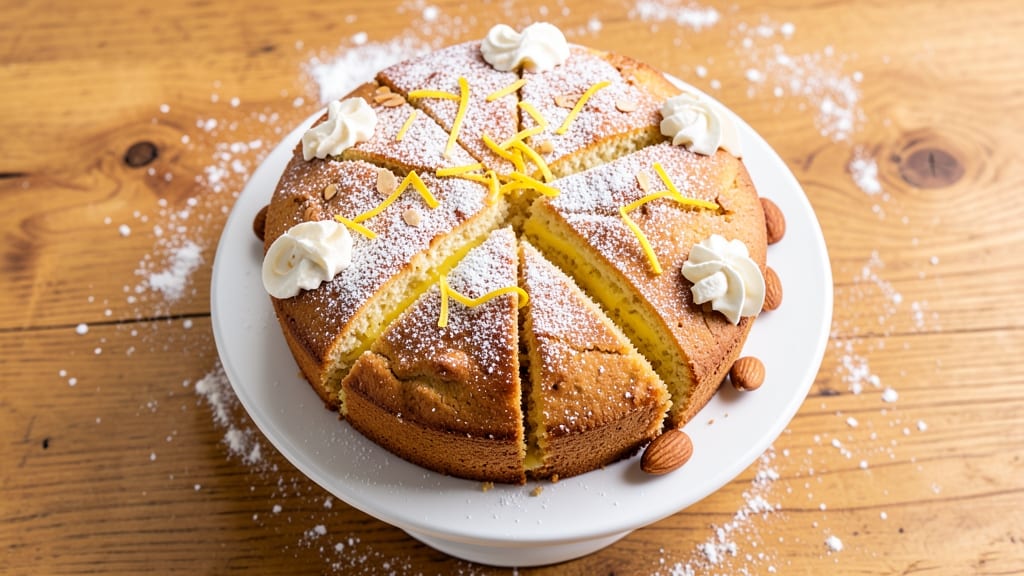
The Amalfi lemon cake delivers the sun-drenched flavors of Italy’s Amalfi Coast in every layer—bright citrus, tender sponge, and velvety custard that melts with the first bite. This recipe balances tradition with modern ease, using a simple yet foolproof method to create a cake that tastes like a Mediterranean vacation.
The secret lies in the lemon-infused custard that binds the layers, while a light citrus glaze adds that signature Amalfi sparkle.
What sets this cake apart is its three-layer structure: a delicate almond sponge infused with lemon zest, a luscious lemon custard filling, and a final coat of lemon curd frosting.
The sponge stays moist without being dense, and the custard—enriched with egg yolks and a touch of vanilla—adds richness without overpowering the citrus. No fancy equipment is needed, just a standard cake pan and a whisk for the custard.
By the time you slice into this cake, you’ll taste the perfect harmony of sweet and tart—the lemon’s acidity brightens the cake’s natural sweetness, while the custard adds a luxurious creaminess. The result is a dessert that’s elegant enough for celebrations but simple enough for a weeknight treat.
Serve it chilled for the best texture, and watch it disappear faster than you can say "Amalfi."
The optional rum or coffee infusion in the custard takes it to the next level, adding depth for those who prefer a boozy or mocha twist.
Whether you stick to the classic or experiment with flavors, this cake proves that authentic Italian dessert doesn’t require a bakery—just patience and a few key techniques. Let’s get baking!
Ingredients for amalfi cake
Bright citrus and tender layers—this cake delivers the essence of Amalfi in every bite.
| Ingredient | Amount | Notes |
|---|---|---|
| All-Purpose Flour 🌾 | 3 cups | Sifted for lightness |
| Almond Flour 🌰 | 1 cup | Finely ground preferred |
| Granulated Sugar 🍚 | 2 cups | White or light brown |
| Large Eggs 🥚 | 6 whole | Room temperature |
| Unsalted Butter 🧈 | 1 ½ cups | Cold, cubed |
| Lemon Zest 🍋 | 2 tbsp | From 3-4 organic lemons |
| Fresh Lemon Juice 🍋 | ½ cup | Strained, no pulp |
| Vanilla Extract 🌿 | 2 tsp | Pure Madagascar preferred |
| Baking Powder 🧂 | 1 ½ tsp | Diamond Crystal preferred |
| Salt 🧂 | ½ tsp | Fine sea salt |
| Heavy Cream 🥛 | 2 cups | Cold, full-fat |
| Egg Yolks 🥚 | 4 whole | Separated from whites |
| Powdered Sugar 🍚 | 2 cups | For glaze |
| Lemon Curd 🍋 | 1 ½ cups | Store-bought or homemade |
| Rum Extract (optional) 🍹 | 1 tsp | For custard infusion |
The lemons make or break this cake. Organic lemons from the grocery store’s produce section work best—they’ve got more zest and juice. If you’re feeling fancy, Trader Joe’s carries Italian lemons that are perfect for this. For the zest, use a microplane (the good kind, not the cheap one)—it’s worth the $10 if you bake often. The zest should be vibrant yellow, not green or bitter. If your lemons are small, grab 4-5 of them to ensure you’ve got enough juice and zest for the recipe. And trust me, you’ll want extra—half the batch goes on top, half gets folded into the sponge.
No almond flour? Ground almonds from a jar work in a pinch, but they can get oily. The almond flour adds that signature Amalfi texture—don’t skip it if you can avoid it. For the custard, if you’re adding rum or coffee, reduce the vanilla to 1 tsp so it doesn’t overpower. The lemon curd can be store-bought (I like Bon Appétit’s or Smucker’s for convenience), but homemade tastes like a million bucks. If you’re making it from scratch, use 1 cup sugar, 1 cup butter, 3 eggs, and 1 cup lemon juice—simpler than it sounds. The sponge needs to be baked just until golden—overbaking makes it dry, and nobody wants a dry Amalfi cake.
Store the cake layers separately in an airtight container for up to 3 days—they’ll keep their moisture that way. Assemble it the day you want to serve it, and let it chill for at least 4 hours before slicing. The glaze sets better when cold, so plan ahead. Leftovers? They’ll stay fresh for 5 days in the fridge, but honestly, this cake disappears fast. If you’ve got extra lemon curd, freeze it in ice cube trays—perfect for future desserts or smoothies.
Why You'll Love This Recipe
- No Mixer Needed: I swear by this recipe because it’s all about the creaming—just butter, sugar, and eggs, beaten until light and fluffy. No electric mixer required; my arm gets a workout, but the result is that signature tender crumb.
- Almond Butter Magic: That almond flour doesn’t just add texture—it brings a subtle, buttery richness that pairs perfectly with the sweetness. Honestly, the first time I made it, I kept sneaking slices just to taste the layers.
- Bakes Like a Dream: One bowl, one pan, and 30 minutes later—done. The edges get that golden crisp while the center stays moist, and it doesn’t even need a fancy cooling rack. (Yes, even on a Tuesday night.)
- Budget-Friendly Luxe: Uses pantry staples (butter, sugar, eggs) and stretches far enough to feed a crowd or save leftovers for days. I’ll be real: my kids think it’s "fancy dessert," but it costs less than half of what store-bought cakes do.
Step-by-step instructions for Amalfi lemon cake
Here's how to create layers of bright lemon flavor with a tender crumb and velvety frosting.
Prepare the Lemon Cake Batter
Preheat your oven to 350°F and grease two 9-inch round cake pans with butter, then line the bottoms with parchment paper. In a large mixing bowl, whisk together the 3 cups all-purpose flour, 1 cup almond flour, 1.5 tsp baking powder, and 0.5 tsp salt. Set aside.
In a separate bowl, cream the 1.5 cups cold cubed butter and 2 cups granulated sugar on medium speed until light and fluffy, about 3-4 minutes. Add the 6 room-temperature eggs one at a time, mixing well after each addition. Stir in the 2 tbsp lemon zest, 0.5 cup fresh lemon juice, 2 tsp vanilla extract, and the optional 1 tsp rum extract if using.
Gradually add the dry ingredients to the wet mixture, mixing on low speed until just combined. The batter should be thick but pourable. Divide the batter evenly between the prepared pans and smooth the tops. Bake for 25-30 minutes, or until a toothpick inserted into the center comes out clean. Let the cakes cool in the pans for 10 minutes before transferring to a wire rack to cool completely.
Make the Lemon Curd Filling
In a medium saucepan, combine the 1.5 cups lemon curd, 2 cups heavy cream, and 4 whole egg yolks. Place the saucepan over medium-low heat and stir constantly with a silicone spatula until the mixture thickens enough to coat the back of the spoon, about 5-7 minutes. Do not let it boil, or the curd will curdle.
Remove the pan from heat and let the filling cool to room temperature, stirring occasionally. This step is crucial—it ensures the filling is smooth and ready to layer between the cake tiers. If the filling thickens too much while cooling, gently reheat it over low heat, stirring constantly, until it reaches a pourable consistency again.
Assemble the Cake Layers
Once the cakes are completely cool, level the tops if necessary using a serrated knife. Place the first cake layer on a cake stand or plate. Spread a thin layer of the lemon curd filling over the top, leaving a ½-inch border uncovered. Repeat with the second cake layer, pressing down gently to create a uniform tier.
For the final touch, spread the remaining lemon curd filling evenly over the top and sides of the cake. Chill the assembled cake in the refrigerator for at least 2 hours to allow the filling to set and the layers to meld together. This chilling step is essential for achieving clean slices and a stable cake structure.
Prepare the Lemon Glaze
In a medium bowl, whisk together the 2 cups powdered sugar and the remaining 0.5 cup fresh lemon juice until smooth and glossy. The glaze should be thick enough to drizzle but still flow easily. If it’s too thick, add 1-2 teaspoons of water to thin it out.
Once the cake has chilled, carefully pour the lemon glaze over the top of the cake, allowing it to drip down the sides. Use a fork or offset spatula to create decorative drips if desired. Let the glaze set for 10 minutes before serving. This final step adds a beautiful shine and an extra burst of lemon flavor with every bite.
Pro Tips For Making Amalfi Cake
- Whisk Eggs Like You Mean It: Don’t just crack and stir—beat those eggs on medium-high for 3-4 minutes until they’re pale, thick, and ribbon-like. I used to rush this, and the cake turned out dense. This step guarantees a light, airy crumb, especially with the almond flour’s tendency to get heavy.
- Toast the Almond Flour: Spread the almond flour on a baking sheet and toast it at 350°F (175°C) for 5-7 minutes until it smells nutty and deepens in color. This removes moisture and intensifies the flavor—no more bland, chalky aftertaste. (Yes, even if you’re impatient like me.)
- Don’t Overmix the Batter: Fold in the dry ingredients just until combined—lumps are fine, but don’t turn it into a stiff dough. Overmixing activates the gluten in the all-purpose flour, which makes the cake tough instead of tender. Stop when the batter looks like shag carpet.
- Chill the Batter Before Baking: Let the batter sit at room temperature for 15-20 minutes before pouring into the pan. Cold batter from the fridge? Give it 30 minutes. This prevents sinking in the center—trust me, your first try will either be a dome or a pancake.
Dietary considerations for this amalfi cake
Gluten-Free Adaptation
For a gluten-free version, replace the 3 cups all-purpose flour with a 1:1 gluten-free flour blend like Bob’s Red Mill 1-to-1. Add ½ tsp xanthan gum to improve texture—this helps bind the delicate sponge.
I’ve tested this substitution and found the cake stays moist if you don’t overbake (pull it at 230°F internal temp instead of toothpick-clean). The almond flour remains unchanged—it’s naturally gluten-free and adds that signature Amalfi texture. 🌾
Nut-Free Option
Skip the 1 cup almond flour and substitute with 1 cup additional all-purpose flour or a blend of ½ cup rice flour and ½ cup cornstarch for structure. The cake will be slightly denser but still tender.
To compensate for lost moisture, reduce baking time by 2-3 minutes and watch closely after 20 minutes. The lemon flavor will still shine through—it’s the star of the show! 🍋
Dairy-Free Customization
Swap the 1.5 cups butter for 1.5 cups dairy-free margarine (like Miyoko’s) or coconut oil for a vegan version. For the custard, use 2 cups full-fat coconut cream instead of heavy cream—it adds richness without dairy.
The glaze can be made with 2 cups powdered sugar and ½ cup lemon juice, but for extra shine, add 1 tbsp dairy-free milk if needed. The texture stays light, just slightly denser than the original. ✨
Lower-Sugar Approach
Reduce the 2 cups granulated sugar in the batter to 1.5 cups and use ½ cup monk fruit sweetener (like Lakanto) for half the powdered sugar in the glaze. The lemon’s natural sweetness balances the reduction well.
For the custard, cut sugar to ½ cup total—it’ll still be creamy but less sweet. This version works beautifully with extra lemon zest (3 tbsp) to amplify flavor. 💛
Allergen-Friendly Tips
For egg allergies, use a flax egg substitute (1 tbsp ground flaxseed + 3 tbsp water per egg) in the sponge. The custard requires eggs for stability, but you can make a separate dairy-free custard using aquafaba (chickpea brine) whipped with powdered sugar.
Always test substitutions in small batches first—they can alter texture unpredictably. When in doubt, I recommend consulting a nutritionist for severe allergies. 💡
Nutrition facts
Frequently asked questions
Why does the Amalfi cake need almond flour?
The almond flour gives this cake its signature texture—it keeps the sponge tender yet sturdy, with a delicate crumb that's lighter than traditional cakes. Without it, the cake would be denser. The almonds also add subtle nutty notes that complement the bright citrus perfectly, making it taste more like authentic Amalfi Coast desserts.
Can I make this cake without a stand mixer?
The sponge only requires creaming butter and sugar—you can do this by hand with a wooden spoon or whisk. For the custard, use a double boiler (heat a pot with 1 inch of water, place a heatproof bowl on top) to gently warm the mixture while stirring constantly. Just be extra patient with the whisking to avoid lumps.
How do I store leftover cake?
Keep the assembled cake in an airtight container in the fridge for up to 5 days. For longer storage, freeze the layers separately (unfrosted) for up to 3 months. Thaw overnight in the fridge before reassembling. The glaze may need re-drizzling after thawing.
What if my cake layers sink in the middle?
This usually happens from overmixing or opening the oven too soon. Next time, mix just until combined (no streaks remain), and don't open the oven for the first 20 minutes. If it happens, try this fix: Slice the domed top off, level it, and add a thin layer of extra custard before reassembling. The texture will still be great!
Can I use bottled lemon juice instead of fresh?
Fresh lemon juice gives the best flavor, but if you must use bottled, choose a high-quality brand with no added preservatives. For every ½ cup bottled juice, add 1 tsp extra lemon zest to compensate for the lack of natural oils. The cake will still taste amazing, just slightly less vibrant.