
Desserts
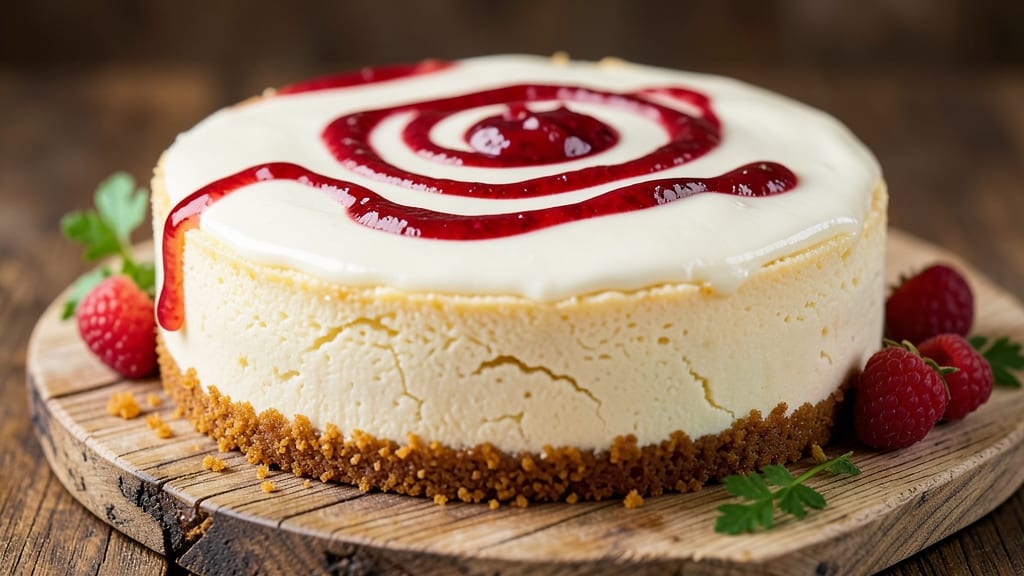
Alton Brown's sour cream cheesecake recipe delivers the perfect balance of buttery crust and silky, tangy filling that never cracks. This classic dessert combines Alton's signature precision with a foolproof technique that ensures a smooth, creamy texture every time.
The secret lies in the sour cream—it creates that signature tender yet dense crumb that sets this cheesecake apart from the rest.
What makes this recipe truly special is the attention to detail that transforms a simple dessert into a showstopper. The crust is made with graham crackers and melted butter for that signature crunch, while the filling incorporates cream cheese, sour cream, and a touch of vanilla for depth.
Alton's method ensures the cheesecake bakes evenly in a water bath, preventing any cracks or uneven cooking.
By the time you're done, you'll have a cheesecake with a golden, buttery crust and a velvety filling that's rich yet light. The tangy flavor from the sour cream balances the sweetness perfectly, creating a dessert that's elegant enough for special occasions but simple enough for a weeknight treat.
Serve it chilled with fresh berries or a drizzle of caramel for the ultimate presentation.
This recipe includes tips for avoiding common cheesecake pitfalls, like cracks and sinking centers, so you can achieve professional results in your own kitchen. Whether you're a seasoned baker or just starting out, this foolproof method will give you a cheesecake that tastes like it came from a high-end bakery.
Ingredients for alton brown sour cream cheesecake
Alton Brown's signature ingredients create a foolproof cheesecake with a buttery crust and velvety filling.
| Ingredient | Amount | Notes |
|---|---|---|
| Graham Crackers 🍪 | 2 ½ cups | Crushed into fine crumbs |
| Unsalted Butter 🧈 | 1 cup | Melted, cooled slightly |
| Granulated Sugar 🍚 | 1 ½ cups | For crust and filling |
| Large Eggs 🥚 | 4 whole | Room temperature |
| Cream Cheese 🧀 | 32 oz | Room temperature, full-fat |
| Sour Cream 🥛 | 1 cup | Full-fat for best texture |
| Vanilla Extract 🌿 | 2 tsp | Pure, high-quality |
| Lemon Juice 🍋 | 2 tbsp | Freshly squeezed |
| Salt 🧂 | ½ tsp | Fine sea salt |
| All-Purpose Flour 🌾 | 1 tbsp | For filling stability |
| Heavy Cream 🥛 | 1 cup | For water bath |
The graham crackers should be Honey Maid or Keebler—anything with a good crunch. Costco sells them in bulk for better value, but the single-serving packs at Target work fine too. For the butter, Land O'Lakes or Plugrá are my go-tos, but any unsalted brand will do. The key is letting the melted butter cool slightly before mixing—room temperature butter prevents the crust from turning greasy. If you're short on time, microwave the butter in 20-second bursts until just melted, then let it sit for 5 minutes. The cream cheese? Philadelphia is the gold standard, but any full-fat brand works. Just make sure it's room temperature—cold cream cheese creates lumps that never disappear.
No sour cream? Full-fat Greek yogurt works in a pinch, though the texture will be slightly different. Fresh out of vanilla? Imitation vanilla is better than nothing, but high-quality extract makes all the difference. The lemon juice can be bottled, but freshly squeezed adds a brighter tang. For the water bath, heavy cream is ideal—it creates a steamy environment that prevents cracks. Short on cream? Whole milk works, but the cheesecake may not rise as evenly. The flour is non-negotiable here—it stabilizes the filling and prevents cracks. If you're worried about lumps, sift the flour before adding it to the wet ingredients. And for the love of cheesecake, don't skip the water bath—this is the secret to Alton's foolproof method.
Store the baked cheesecake in an airtight container in the fridge for up to 5 days, though it's best enjoyed within 3 days. The crust stays crisp for about 2 days, after which it softens slightly. For longer storage, wrap tightly in plastic wrap and freeze for up to 3 months. Thaw overnight in the fridge before serving. Room temperature cheesecake is a must—let it sit for 1-2 hours before slicing. If you're making this ahead for a party, assemble the crust and filling a day in advance, then bake just before serving. The filling will be slightly under-set, but it firms up beautifully in the oven.
Why You'll Love This Recipe
- No-Fail Crust: I swear by this graham cracker-butter mix—just pulse, press, bake. No crumbs flying everywhere, no overmixing. That buttery base stays sturdy, even when my dog "helps" lick the bowl.
- Sour Cream Magic: The secret’s in the sour cream. It keeps the filling ridiculously creamy without being dense, and the tang cuts through the sweetness. (Yes, even my picky teen eats seconds.)
- Weeknight to Party: Same recipe, different vibes. Serve it warm from the oven with berries for a lazy Sunday, or chill it for a crowd—no one guesses it’s the same dessert. Honestly, I’ve fooled my book club twice.
- Leftovers? Better: This thing holds up for days. Slice it thin for breakfast toast, or freeze slices for smoothie boosts. (Between us, I’ve eaten cold cheesecake sandwiches at 2 AM—no judgment.)
Step-by-step instructions for Alton Brown's sour cream cheesecake
This method delivers a perfectly smooth filling with a crisp buttery crust every time.
👨🍳 Step 1: Prepare the Crust Mixture
Preheat your oven to 325°F and place a baking sheet on the middle rack. In a food processor, pulse the 2.5 cups graham crackers until you achieve fine, sand-like crumbs. Avoid over-processing or the texture will become pasty.
Transfer the crumbs to a large bowl and add the 1 cup melted, slightly cooled unsalted butter and 1.5 cups granulated sugar. Mix until the crumbs are evenly moistened and the mixture holds together when pressed. This ensures a cohesive crust that won't crumble during baking.
Press the mixture firmly and evenly into a 9-inch springform pan, creating an even layer on the bottom and up the sides. Use the back of a measuring cup to compact it tightly. Bake for 10 minutes to set the crust, then remove from oven and let cool slightly while you prepare the filling.
🍳 Step 2: Blend the Filling Ingredients
While the crust bakes, beat the 32 oz room-temperature cream cheese in a stand mixer fitted with the paddle attachment until completely smooth. This step is crucial—any lumps will result in a grainy texture. Scrape down the sides as needed to ensure even mixing.
Add the 1 cup sour cream, 2 tsp vanilla extract, 2 tbsp lemon juice, and 0.5 tsp salt to the cream cheese mixture. Mix on low speed until fully combined, then increase to medium and beat for 2 minutes to fully incorporate all ingredients and create a homogeneous base.
In a separate bowl, whisk together the 4 room-temperature eggs and 1.5 cups granulated sugar until pale and slightly thickened. Gradually add this mixture to the cream cheese blend while mixing on low speed. This gradual incorporation prevents the eggs from curdling due to temperature shock.
🥘 Step 3: Assemble and Bake the Cheesecake
Pour the filling mixture over the cooled crust, spreading it evenly to the edges. Tap the pan gently on the counter to release any air bubbles that may have formed. Place the springform pan inside a larger roasting pan and carefully pour the 1 cup heavy cream into the bottom of the roasting pan.
This water bath creates a gentle steam environment that prevents cracking while allowing the cheesecake to bake evenly. Bake at 325°F for 50-55 minutes until the edges are set and the center still jiggles slightly when shaken. The internal temperature should reach 150°F.
Turn off the oven, crack the door open slightly, and let the cheesecake cool inside for 30 minutes. This gradual cooling helps prevent sudden temperature shifts that can cause cracking. Then remove from the water bath and cool completely at room temperature before refrigerating.
⏰ Step 4: Chill and Serve
Once completely cooled, cover the cheesecake with plastic wrap and refrigerate for at least 8 hours or overnight. This extended chilling time allows the flavors to fully meld and the texture to become perfectly smooth and creamy.
Before serving, run a thin knife around the edge of the pan to loosen the cheesecake. Release the springform clamp and slide the bottom out gently. The cheesecake should release cleanly with minimal effort. Serve chilled slices with fresh berries or a drizzle of caramel sauce for added elegance.
Pro Tips For Making Alton Brown Sour Cream Cheesecake
- CHILL THE CREAM CHEESE: I learned this the hard way—room-temperature cream cheese is a disaster. Pull it out of the fridge 30 minutes before mixing, or even better, microwave it in 10-second bursts until just soft enough to blend smoothly. Cold lumps ruin the texture, and nobody wants that grainy mess in their cheesecake.
- CRUSH GRAHAM CRUMBS FINE: Skip the lazy approach of just pulsing them in a food processor. For a buttery, crack-free crust, pulse the graham crackers until they’re almost like sand, then mix in the melted butter until the crumbs are fully coated. This isn’t the prettiest method, but it’s the tastiest—no one wants a mouthful of chewy bits.
- BAKE LOW AND SLOW: That water bath isn’t just for show—it’s non-negotiable. Fill a deep pan with hot water and place your cheesecake inside, then bake at 325°F (not higher) for the full time. Rushing it with a higher temp guarantees a cracked top, and nobody enjoys fixing that with a knife. Patience here makes all the difference.
- USE FULL-FAT SOUR CREAM: The recipe calls for sour cream, but don’t skimp on the fat content. Full-fat (20% or higher) gives that signature creamy, rich texture—low-fat versions make the cheesecake denser and less tender. I was skeptical until I tried it, and now I won’t go back. Your future self will thank you.
Troubleshooting your alton brown sour cream cheesecake
Cracked Top Fix
If your cheesecake develops cracks during baking, don't panic! The most common cause is uneven cooling. After removing from the oven, immediately place the cheesecake in the refrigerator for 1-2 hours instead of letting it cool at room temperature.
This rapid cooling helps set the surface before the center fully sets. For extra insurance, cover the cheesecake with a damp towel while it cools to maintain moisture. 💫
Soggy Crust Prevention
A soggy crust happens when too much moisture seeps through during baking. To prevent this, blind-bake your crust for 12-15 minutes before adding the filling. Also, ensure your graham cracker crumbs are fine enough to create a dense barrier.
If you notice the crust softening after baking, place the cheesecake on a wire rack over a baking sheet for 10 minutes to allow air circulation underneath.
Sunken Center Solution
A sunken center usually means the cheesecake didn't bake long enough or the oven temperature fluctuated. First, verify your oven temperature with an oven thermometer—many home ovens run 25°F hotter or cooler than set.
If your cheesecake is still underdone after 55 minutes, tent it with foil and bake for 5-10 more minutes. For a quick fix, place the cheesecake in a 350°F oven for 10 minutes to help it set properly.
Overmixed Filling
If your filling turns rubbery or grainy, you likely overmixed it. The eggs and cream cheese should be combined just until smooth—no longer than 2 minutes on medium speed. To salvage an overmixed batch, fold in 2 tbsp sour cream or whipped cream at the end to lighten the texture.
For future attempts, mix the eggs and sugar separately first, then combine gently with the cream cheese mixture to minimize air incorporation.
Sticky to Pan
When cheesecake sticks to the springform pan, it's usually due to insufficient greasing or non-stick spray. Before pressing the crust, coat the pan thoroughly with non-stick baking spray (like Pam) and dust with 1 tbsp flour.
For stubborn cases, run a thin knife around the edges after chilling, then place the pan in the freezer for 10 minutes to contract the cheesecake slightly before releasing the sides. A damp towel wrapped around the base can also help loosen it gently.
Grainy Texture
Graininess occurs when cream cheese isn't fully blended or cold lumps remain. Always use room-temperature cream cheese and beat it until completely smooth before adding other ingredients. If you notice lumps during mixing, strain the batter through a fine-mesh sieve into the crust to eliminate any remaining texture issues.
For extra smoothness, add 1 tbsp sour cream at the end to refine the crumb.
Nutrition facts
Frequently asked questions
Why does Alton Brown's recipe use sour cream instead of regular cream?
The sour cream creates a signature tender yet dense texture that regular cream can't match. The acidity in sour cream also helps balance the richness of the cream cheese, preventing a heavy or greasy finish. Plus, it adds subtle tanginess that makes every bite more complex.
Can I make this cheesecake without a water bath?
Technically yes, but you risk cracking or uneven baking. The water bath creates a gentle steam environment that prevents sudden temperature shifts. For best results, use the water bath method—it's what makes this recipe foolproof. If you must skip it, bake at 300°F instead of 325°F for 10-15 minutes longer.
How do I prevent the crust from getting soggy?
First, blind-bake the crust for 12-15 minutes before adding filling. Also, chill the assembled cheesecake in the fridge for 15 minutes before baking to help the crust firm up. After baking, let it cool completely on a wire rack rather than on the pan to prevent moisture buildup.
What's the best way to serve this cheesecake?
Alton Brown's version pairs beautifully with fresh berries, caramel sauce, or a dusting of powdered sugar. For a restaurant-style presentation, arrange slices on a platter with a dollop of whipped cream and a few raspberries. Serve chilled—it's best enjoyed straight from the fridge for that perfect creamy texture.
Can I substitute Greek yogurt for sour cream?
Yes, but the texture will be slightly lighter. Use 1 cup full-fat Greek yogurt and add 1 tbsp lemon juice to mimic the tang. For best results, strain the yogurt through a cheesecloth for 10 minutes first to remove excess liquid. The cheesecake will still be delicious, just with a slightly different mouthfeel.