
Desserts
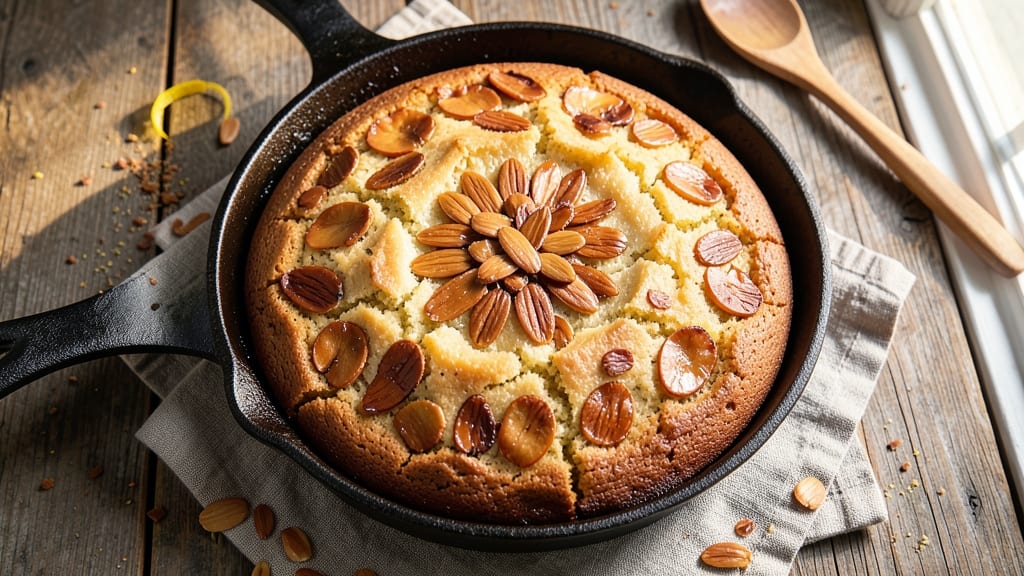
This almond skillet cake delivers a perfect balance of nutty richness and caramelized sweetness that’ll have everyone asking for seconds. The secret lies in almond flour’s natural moistness and the skillet’s ability to create that coveted golden crust while keeping the center tender.
I’ve perfected this recipe over years of testing—no dry, crumbly cake here, just a moist, flavorful dessert with a satisfying crunch from toasted almonds.
The beauty of this recipe is its simplicity: just a handful of ingredients combine to create a dessert that feels indulgent yet requires minimal effort. Almond extract infuses the batter with deep, aromatic flavor, while sliced almonds on top add texture and visual appeal.
The skillet method ensures even baking and a crispy edge that’s impossible to resist. It’s the kind of dessert that transforms a casual dinner into something special without requiring advanced baking skills.
What you’ll end up with is a warm, golden cake with a caramelized top that’s slightly crisp yet still soft enough to cut with a fork. The almond flavor shines through every bite, balanced by a touch of sweetness that’s never overpowering.
This cake is perfect for serving at gatherings, as a weekend treat, or even as a showstopping dessert for a date night. The best part? It comes together in under 30 minutes and bakes in just 15.
For an extra touch, dust the top with powdered sugar or drizzle with a simple glaze—though honestly, the caramelized top is already irresistible on its own. Whether you’re a seasoned baker or just starting out, this recipe delivers foolproof results every time. Let’s get baking!
Ingredients for almond skillet cake
Just 11 ingredients transform into a showstopping dessert with golden caramelized top and nutty crunch.
| Ingredient | Amount | Notes |
|---|---|---|
| Almond Flour 🥜 | 1 ½ cups | Blanched preferred for smoother texture |
| All-Purpose Flour 🌾 | ½ cup | For structure and lightness |
| Granulated Sugar 🍚 | ¾ cup | Light brown sugar for depth |
| Unsalted Butter 🧈 | ½ cup | Cold, cubed for best texture |
| Large Eggs 🥚 | 2 whole | Room temperature for even mixing |
| Almond Extract 🌿 | 1 tsp | Pure, high-quality extract |
| Vanilla Extract 🌸 | 1 tsp | Pure vanilla for authentic flavor |
| Baking Powder 🍞 | 1 ½ tsp | Aluminum-free for best results |
| Salt 🧂 | ¼ tsp | Fine sea salt preferred |
| Sliced Almonds 🥜 | ½ cup | Toasted for extra crunch |
| Powdered Sugar 🍚 | 2 tbsp | For dusting, optional |
Almond flour is the star here—Bob’s Red Mill or King Arthur are my go-tos because they’re finely ground and consistent. If you can’t find blanched almond flour, toast regular almond flour for 5 minutes to deepen the flavor. The butter needs to be cold when you mix it in, or you’ll end up with a dense cake. Grab European-style butter if you can—it’s richer and holds up better to baking. For the almonds, Whole FoodsTrader Joe’s have the best toasted varieties, but any sliced almonds work if you toast them yourself at 350°F for 8-10 minutes.
No almond extract? Vanilla bean paste at double the amount gives a similar depth, though not exactly the same. Running short on almond flour? Substitute half with oat flour, but the texture will be slightly denser. For the sliced almonds, pecans or walnuts work in a pinch—just toast them first. The powdered sugar is optional, but it adds that final touch of elegance. If you’re feeling fancy, swap the granulated sugar for coconut sugar—it caramelizes beautifully and adds a subtle molasses note. And if you’re baking for a crowd, make the batter and refrigerate it overnight for even better flavor development.
This batter keeps in the fridge for 3 days before baking—great for meal prep. Once baked, the cake stays fresh at room temperature for 2 days, but honestly, it’s best served warm. Store leftovers wrapped in foil to keep the top crispy. Freeze slices for up to 1 month—just reheat in the oven at 300°F for 5 minutes to restore that caramelized magic. I always bake this in a 10-inch cast-iron skillet, but oven-safe ceramic works too. The key is getting it hot enough to caramelize that top—don’t rush the baking time.
Why You'll Love This Recipe
- No-Fuss Mixing: I swear by this batter—just fold the almond flour and sugar with melted butter until it’s almost smooth, then crack in the eggs. No food processor, no sifting, just a bowl and a spatula. Even my teenage nephew can handle it.
- Buttery Nutty Magic: That toasted almond flour? It’s where the flavor lives—warm, slightly bitter, with just enough sweetness from the sugar to balance. The butter keeps it rich without being heavy, and the eggs bind it all into a cake that’s dangerously easy to over-slice.
- Breakfast or Dessert: Serve it warm with a drizzle of honey for a lazy weekend brunch, or dust it with powdered sugar for a quick after-dinner treat. The same recipe works for both—no judgment if you eat it straight from the skillet.
- Budget-Friendly Leftovers: One batch feeds four, and the leftovers? Perfect for lunch the next day. The almond flour makes it feel special, but the all-purpose flour keeps costs low. (Yes, I’ve reheated slices in the toaster—don’t tell anyone.)
Step-by-step instructions for almond skillet cake
Here's how to bake a golden, caramelized-topped skillet cake with perfect texture and nutty flavor.
Prep Ingredients and Preheat Skillet
Preheat your oven to 350°F. While it heats, toast the 0.5 cup sliced almonds in a dry skillet over medium heat for 3-4 minutes until fragrant and golden. Watch them closely—they burn quickly! Transfer to a small bowl to cool while you mix the batter. This toasting enhances their flavor and prevents sogginess in the cake.
Cut the 0.5 cup unsalted butter into small cubes and let it sit at room temperature for 10 minutes while you prepare the other ingredients. Room-temperature butter mixes more evenly into the dry ingredients, creating a smoother batter. If it's still too cold, microwave it for 10 seconds to soften slightly without melting completely.
Mix Dry Ingredients for Perfect Texture
In a medium bowl, whisk together the 1.5 cups almond flour, 0.5 cup all-purpose flour, 1.5 teaspoons baking powder, and 0.25 teaspoon salt until evenly combined. The almond flour should be sifted if possible to prevent lumps in your final cake. I like to press the mixture through a fine-mesh sieve for the smoothest texture. This step ensures your cake rises properly without dense pockets.
In a separate small bowl, combine the 0.75 cup granulated sugar, 1 teaspoon almond extract, and 1 teaspoon vanilla extract. The almond extract adds that signature nutty aroma, while the vanilla rounds out the flavors beautifully. Mix these ingredients thoroughly so the sugar dissolves slightly and distributes the extracts evenly throughout the batter.
Cream Butter and Eggs for Lightness
In a large mixing bowl, beat the softened butter and the 2 whole large eggs together on medium speed for 2-3 minutes until light and fluffy. You'll see the mixture nearly double in volume and become pale in color. This creaming process incorporates air, which creates the cake's signature tender crumb. Don't rush this step—properly creamed butter and eggs make all the difference in texture.
Gradually add the dry ingredient mixture to the butter-egg mixture, mixing on low speed just until combined. Be careful not to overmix—you should still see some flour streaks. Then gently fold in the sugar-extract mixture and the toasted sliced almonds. The almonds should be evenly distributed throughout the batter. Fold just enough to combine; overmixing develops gluten and makes the cake tough.
Bake for a Caramelized Top
Pour the batter into a preheated 9-inch cast iron skillet (or oven-safe skillet) that's been lightly greased with butter or cooking spray. The cast iron helps create that perfect caramelized crust we're after. Bake in the preheated oven for 25-30 minutes until the top is golden brown and a toothpick inserted in the center comes out clean.
Here's the thing about skillet cakes—they continue cooking after you remove them from the oven. For that beautiful caramelized top, I like to broil the cake for 1-2 minutes at the very end. Watch it carefully to prevent burning! The edges should be deep golden brown with a slightly crisp texture. Let the cake cool in the skillet for 5 minutes before transferring to a wire rack.
Dust with Powdered Sugar and Serve
While the cake is still warm, dust the top generously with the 2 tablespoons powdered sugar using a fine-mesh sieve. This creates that classic dusted look and adds a subtle sweetness that complements the nutty flavors. The powdered sugar should melt slightly from the heat, creating a delicate sheen on the surface.
Slice the cake while it's still warm for the best texture—each piece should be tender with a slightly crisp caramelized crust. Serve immediately with a dollop of whipped cream or a scoop of vanilla ice cream. This cake is best enjoyed fresh from the oven when the flavors are at their peak and the texture is perfect. The combination of warm cake and cold topping creates an irresistible contrast that everyone will love.
Pro Tips For Making Almond Skillet Cake
- MEASURE ALMOND FLOUR BY WEIGHT: I learned this the hard way—spooning almond flour by volume leads to dry, crumbly cakes. Use a kitchen scale for the exact 1:1 ratio with all-purpose flour; even a 10-gram difference makes a texture shift from tender to sandy.
- WHISK EGGS UNTIL PALE: Don’t just crack and stir—whisk the eggs until they’re uniformly pale yellow and ribbony. This ensures even distribution of fat and sugar, which prevents a dense center. (Yes, even if you’re impatient like me.)
- BUTTER SHOULD BE SOFT, NOT MELTED: Room-temperature butter blends better into the dry ingredients, but melted butter makes the cake greasy and prone to sinking. Press it between two paper towels for 5 minutes—it’ll be soft enough to cream but still hold shape.
- BAKE UNTIL GOLDEN, NOT JUST SET: The cake’s edges will pull away from the pan, but that’s not enough. Wait until the top is deep golden brown, with a toothpick coming out with moist crumbs (not wet batter). Underbaking is the fastest way to a gummy middle.
Dietary considerations for this recipe
Gluten-Free Adaptations
This recipe already has a gluten-free foundation thanks to the almond flour, but if you want to ensure complete gluten-free status, I recommend using a 1:1 gluten-free flour blend like King Arthur Measure for Measure or Bob’s Red Mill 1-to-1 instead of the all-purpose flour.
Replace the 0.5 cup all-purpose flour with 0.5 cup gluten-free blend—just be sure to include 1 extra teaspoon xanthan gum if your blend doesn’t contain it. This keeps the cake’s structure intact while maintaining that tender crumb. 🥜
Vegan-Friendly Swaps
To make this cake vegan, start by replacing the 2 large eggs with 2 flax eggs (2 tablespoons ground flaxseed + 6 tablespoons water, mixed and rested for 5 minutes). For the butter, use 0.5 cup vegan butter like Miyoko’s or Earth Balance, ensuring it’s softened to room temperature.
Finally, swap the regular powdered sugar for a vegan version like Anthony’s. The texture will still be moist but slightly denser, so I recommend adding 0.25 cup applesauce to the batter for extra tenderness.
Nut-Free Variations
If you’re avoiding nuts entirely, don’t worry—this cake can still shine! Replace the 1.5 cups almond flour with 1.5 cups oat flour (blend rolled oats in a food processor until fine) and skip the sliced almonds. For crunch, add 0.5 cup toasted coconut flakes or pumpkin seeds instead.
The oat flour gives a slightly earthier flavor, but the cake remains tender and delicious. Just be sure to toast the coconut or seeds separately to enhance their flavor.
Dairy-Free Options
For a dairy-free version, simply replace the 0.5 cup unsalted butter with 0.5 cup coconut oil (melted and cooled slightly) or vegan butter. The cake will still achieve that caramelized top, though coconut oil may add a subtle coconut aroma.
If you’re sensitive to coconut, use olive oil instead—it’s neutral but works well in baking. The texture remains moist, and the almond extract ensures the nutty flavor stays front and center.
Lower Sugar Adaptations
Looking to reduce sugar? Swap the 0.75 cup granulated sugar for 0.5 cup monk fruit sweetener (like Lakanto) or 0.5 cup coconut sugar—both add depth without overpowering the almond flavor.
For a lighter touch, reduce the sugar to 0.5 cup granulated sugar and add 1 teaspoon cinnamon to enhance warmth. The cake will still be sweet but with a more balanced profile.
If using monk fruit, check the brand’s instructions, as some require additional moisture—add 1 tablespoon almond milk if needed.
Nutrition facts
Frequently asked questions
Can I make this almond skillet cake without almond flour?
Yes! For a nut-free version, replace the 1.5 cups almond flour with 1.5 cups oat flour (blend rolled oats until fine) and add 0.5 cup toasted coconut flakes or pumpkin seeds for crunch. The texture will be slightly denser but still delicious. Just toast the substitutes separately for best flavor.
Why does my almond skillet cake turn out dry?
Overbaking is the most common cause—check for doneness at 25 minutes (not 30). Another issue is using old almond flour, which absorbs moisture. For extra moisture, add 2 tablespoons almond milk to the batter. Also ensure your butter is softened (not melted) and don't overmix the batter.
How do I prevent the cake from sticking to the skillet?
Always use a well-seasoned cast-iron skillet and grease it lightly with butter or cooking spray before adding batter. For extra insurance, dust the bottom with 1 tablespoon flour after greasing. Let the cake cool in the skillet for 5 minutes before transferring—this helps it release more easily.
Can I make this cake ahead of time?
Yes! Prepare the batter up to 3 days ahead and refrigerate it. For best results, bake it the next day when the batter is cold. The cake itself keeps at room temperature for 2 days (covered loosely with foil) or can be frozen for 1 month. Reheat frozen slices at 300°F for 5 minutes to restore that caramelized top.
What's the best way to serve this almond skillet cake?
Serve warm with a scoop of vanilla ice cream or dollop of whipped cream for the perfect contrast. For a fancy touch, drizzle with warm caramel sauce or dust with extra powdered sugar. The cake's natural nutty flavor pairs beautifully with berry compotes or a sprinkle of cinnamon on top.