
Desserts
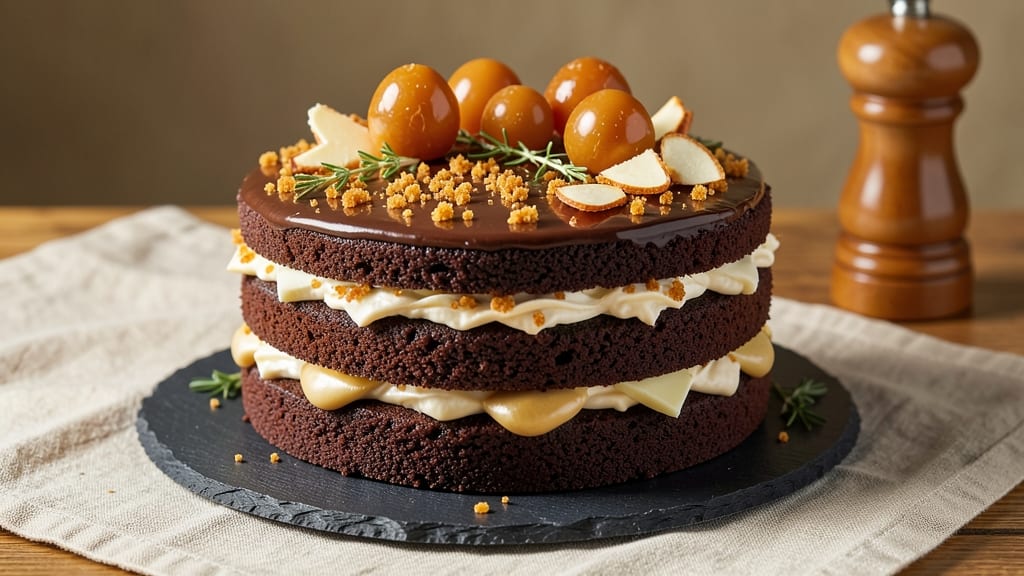
This almond roca chocolate cake recipe delivers decadent layers of fudgy chocolate cake studded with crunchy almond Roca clusters in every bite. ✨ The secret lies in folding the candies into the batter at just the right moment, ensuring they stay intact while creating pockets of buttery, nutty surprise.
I've perfected this technique over years of baking—no one will guess it's easier than it looks.
The cake itself is rich yet tender, with a moist crumb that holds up perfectly to generous layers of chocolate ganache or buttercream.
What sets this apart is the texture contrast: the dense, fudgy cake against the crisp, crunchy almond Roca pieces creates a satisfying bite that keeps you reaching for seconds. The recipe balances indulgence with precision, ensuring each slice looks as impressive as it tastes.
By the time you're done assembling, you'll have a showstopping dessert with clean layers, smooth frosting, and those signature almond Roca clusters peeking through. The chilling process between layers guarantees clean cuts and professional presentation—no one will believe it's homemade.
This cake is perfect for celebrations, date nights, or when you simply need a dessert that feels like a hug.
Ready in about 2 hours (including chilling), this recipe delivers restaurant-quality results with simple techniques. The key is patience—letting the cake cool completely before frosting ensures clean layers, and folding the candies gently preserves their crunch.
Every bite is a perfect balance of chocolate, almond, and creamy frosting, making it a crowd-pleaser that disappears fast.
Ingredients for almond roca chocolate cake
Twelve ingredients to create a showstopping cake with crunchy almond Roca surprises in every bite.
| Ingredient | Amount | Notes |
|---|---|---|
| Almond Roca Candies 🍫 | 1 ½ cups | Unwrapped, roughly chopped |
| All-Purpose Flour 🌾 | 2 ¼ cups | Sifted for light texture |
| Unsalted Butter 🧈 | 1 ½ cups | Room temperature, full-fat |
| Granulated Sugar 🍚 | 2 ¼ cups | Superfine preferred for smoothness |
| Dark Brown Sugar 🍚 | 1 cup | Packed, light molasses flavor |
| Large Eggs 🥚 | 4 whole | Room temperature, separated |
| Unsweetened Cocoa Powder 🍫 | ¾ cup | Dutch-processed for smoothness |
| Baking Powder 🧂 | 1 ½ tsp | Aluminum-free preferred |
| Salt 🧂 | ½ tsp | Diamond Crystal kosher |
| Vanilla Extract 🌿 | 2 tsp | Pure Madagascar bourbon |
| Whole Milk 🥛 | 1 cup | Room temperature |
| Chocolate Ganache 🍫 | 2 cups | Homemade or quality store-bought |
| Powdered Sugar 🍚 | 1 ½ cups | For dusting layers |
The almond Roca candies are the star—grab the 12-ounce bag from Trader Joe's or Costco for the best quality. Chop them roughly so they stay intact while baking (think uneven chunks, not powder). Use full-fat butter for maximum richness—none of that low-fat nonsense here. For the cocoa powder, Valrhona or Hershey's Special Dark are my go-tos, but any Dutch-processed brand works. The secret to tender layers is sifting the flour and using room-temperature eggs. Pro tip: check your baking powder date—old leavening makes for a dense cake.
No almond Roca? Substitute chopped marzipan or extra almond slices for a similar texture, though the flavor won't be identical. Running low on vanilla? Vanilla bean paste works too, just use half the amount. For the ganache, Ghirardelli chocolate chips and heavy cream make a foolproof version—simmer for 2 minutes after mixing to get that silky texture. The powdered sugar? Confectioners' sugar from the bulk bins stays fresh longer than the pre-packaged kind. And if you're worried about the cake being too rich? Add 1/4 cup sour cream to the batter—it keeps the moisture without adding sweetness.
This cake needs patience—chill the layers for at least 1 hour between assembly to prevent melting. Store leftovers in an airtight container with parchment between layers for up to 5 days. For parties, assemble a day ahead and refrigerate—the flavors meld beautifully. Freeze unfrosted layers for up to 3 months (wrap tightly!). The ganache keeps 2 weeks refrigerated, but I always make extra—it's perfect for dipping fruit or topping ice cream.
Why You'll Love This Recipe
- No Mixer Needed: The batter comes together with just a whisk—no stand mixer, no electric beaters, just you and a bowl. Honestly, I’ve made this while my kids begged for cookies, and the cake still turned out rich and fudgy.
- Crunchy Magic: Those crushed Almond Roca candies? They’re the star—crunchy, nutty, and just sweet enough to cut through the deep chocolate. Between us, I’ve been known to eat the batter straight from the bowl (don’t tell).
- Party in a Box: This cake feels fancy but doesn’t require a Pinterest-perfect setup. Serve it at a last-minute birthday, a book club gathering, or even a solo dessert night—it’s always a hit. My sister once brought a slice to a potluck and got asked for the recipe three times.
- Budget-Friendly Luxury: You’re getting gourmet-level flavor without splurging—dark brown sugar adds depth, butter keeps it moist, and Almond Roca gives that high-end candy bar vibe. I’ll be real: I’ve made this for under $10 and still felt like I’d won the dessert lottery.
Step-by-step instructions for almond Roca chocolate cake
Here's how to build this decadent cake layer by layer—crunchy candies, rich chocolate, and velvety ganache.
👨🍳 Step 1: Chop and Prepare the Almond Roca Candies
Unwrap the 1.5 cups Almond Roca Candies and roughly chop them into uneven clusters—think bite-sized chunks with some whole candies left intact. I like to use a sharp chef's knife for this because it gives me better control over the size variation. The texture contrast is what makes this cake special, so aim for pieces ranging from ½-inch to 1-inch in diameter.
Set the chopped candies aside in a bowl. Don't worry if they look messy—they'll distribute beautifully through the batter. Here's the thing—if you chop them too finely, you lose that satisfying crunch in every bite. Save any leftover whole candies for garnishing the top later.
🍳 Step 2: Cream Butter and Sugars for Maximum Fluffiness
In a stand mixer fitted with the paddle attachment, beat the 1.5 cups Unsalted Butter (room temperature) with the 2.25 cups Granulated Sugar and 1 cup Dark Brown Sugar on medium speed for 3-4 minutes. You're looking for a light, airy texture that nearly doubles in volume and becomes pale in color. This creaming process incorporates air, which creates that perfect tender crumb we're after.
I always check the butter first—it should be soft enough to leave a slight indent when pressed but not melted. If it's too cold, the mixture won't cream properly. Scrape down the sides of the bowl every 30 seconds to ensure even mixing. The reason we use both granulated and brown sugar is that the brown sugar adds moisture and depth of flavor while the granulated sugar helps create structure.
👨🍳 Step 3: Incorporate Eggs and Dry Ingredients
Add the 4 whole Large Eggs (room temperature) one at a time, mixing on low speed for 30 seconds after each addition until fully incorporated. Then add the 2 tsp Vanilla Extract and mix for another 10 seconds. The mixture might look slightly curdled, but that's normal—it will smooth out when we add the dry ingredients.
In a separate bowl, whisk together the 2.25 cups All-Purpose Flour, 0.75 cup Unsweetened Cocoa Powder, 1.5 tsp Baking Powder, and 0.5 tsp Salt. Sift the flour mixture directly into the wet ingredients and mix on low speed just until combined—you should still see a few flour streaks. Overmixing develops gluten, which can make the cake dense. Here's where it gets fun—fold in the chopped Almond Roca Candies by hand using a silicone spatula until evenly distributed.
🥘 Step 4: Add Milk and Divide the Batter
Pour in the 1 cup Whole Milk and mix on low speed just until smooth. The batter should be thick but pourable. Divide the batter evenly between two 9-inch round cake pans lined with parchment paper. I use a kitchen scale for this to ensure perfect even layers—each pan should get about 1½ cups of batter.
Smooth the tops with a spatula and tap the pans gently on the counter to remove any air bubbles. Here's the pro tip: don't overfill the pans. The batter will rise, and you want room for expansion. Bake at 350°F for 30-35 minutes, until a toothpick inserted in the center comes out clean. The edges should be golden brown, but the tops might still look slightly underdone—that's okay, they'll firm up as they cool.
⏰ Step 5: Cool, Layer, and Assemble the Ganache
Remove the cakes from the oven and let them cool in the pans for 10 minutes, then transfer to a wire rack to cool completely. While they cool, prepare the 2 cups Chocolate Ganache according to package instructions—it should be smooth and pourable but not too runny. I like to temper it slightly by letting it sit at room temperature for 10 minutes before using.
Once the cakes are completely cool, level the tops if needed. Place the first cake layer on a serving plate, then spread about 1 cup of the ganache evenly over the top. Here's the moment that matters: sprinkle about ½ cup of the 1.5 cups Powdered Sugar over the ganache to create a dusting effect. Place the second cake layer on top and spread the remaining ganache over the top and sides, creating a smooth chocolate shell.
🍽️ Step 6: Garnish and Serve
Chill the assembled cake in the refrigerator for at least 2 hours (or up to overnight) to allow the ganache to set. Before serving, dust the top generously with the remaining 1 cup Powdered Sugar and garnish with any reserved whole Almond Roca Candies. The contrast of the crunchy candies against the velvety ganache and tender cake is what makes this dessert truly special.
Slice with a warm knife for clean cuts and serve at room temperature. Each bite should deliver rich chocolate flavor, the satisfying crunch of almond clusters, and a perfect balance of sweetness. Real talk: this cake tastes even better the next day when the flavors have fully melded together. Store leftovers covered at room temperature for up to 3 days or refrigerated for up to 5 days.
Pro Tips For Making Almond Roca Chocolate Cake
- CHOP ALMOND ROCAS SMALL: Crush the candies into uneven chunks—about ¼-inch pieces—so they melt into the batter without sinking to the bottom like rocks. I used to pulverize them into dust, but this gives you those gooey pockets of caramelized almond goodness.
- CREAM BUTTER AND SUGARS FIRST: Mix the softened butter with both sugars until it’s pale and fluffy—about 3-4 minutes—before adding eggs. Skipping this step means your cake will be dense instead of light, and the almond roca flavor won’t integrate as smoothly.
- DON’T OVERMIX THE BATTER: Stop folding in the flour as soon as it’s just combined—lumpy is fine. I learned this the hard way when my cake turned tough and dry. Overmixing develops gluten, and this cake needs tender crumb, not bread-like texture.
- BAKE UNTIL TOOTHPICK COMES OUT CLEAN: Check doneness at 325°F (160°C) with a toothpick—it should come out with moist crumbs, not wet batter. Overbaking dries out the cake, and underbaking leaves it gummy. Trust the toothpick, not the recipe’s suggested time.
Troubleshooting perfect results
Cake Too Dense?
If your cake turns out dense instead of tender, you likely overmixed the batter or used cold eggs. The secret is mixing the dry ingredients just until combined—stop when you still see flour streaks.
Also, ensure your eggs are truly room temperature (about 70°F) before adding. I've found that using a stand mixer on low speed for the dry ingredients prevents overdevelopment of gluten. 💡
Almond Roca Melting?
When the almond Roca candies melt or dissolve in the batter, it's usually from baking at too high a temperature or overbaking. Stick to 350°F and bake for no more than 35 minutes.
For extra insurance, chop the candies just before mixing them into the batter—this keeps them firmer. I also recommend using a toothpick test rather than relying on time alone. 🌡️
Ganache Too Thin?
If your ganache is too runny to hold the cake layers together, you likely used too much cream or didn't chill the chocolate properly. For homemade ganache, use a 2:1 ratio of chocolate to cream (by weight) and heat the cream just until steaming before pouring over chopped chocolate.
Let the mixture sit for 2 minutes before stirring, then chill for 10 minutes to thicken. Store-bought ganache? Check the package—some brands require refrigeration before use. ✨
Crumbling Layers?
Crumbling often happens when the cake isn't fully cooled before frosting or when the ganache isn't set properly. Always let the cakes cool completely in the pans for 10 minutes, then transfer to a wire rack for another 1-2 hours before assembling.
For extra stability, chill the assembled cake in the fridge for at least 2 hours before slicing. I've also found that brushing the cake layers with a thin layer of warmed apricot jam (about 1 tbsp) before adding ganache creates a glue-like bond. 💪
Uneven Rise?
Uneven rise typically means your oven isn't calibrated or the pans weren't preheated. Always preheat your oven for 15-20 minutes before baking and place the cake pans on the middle rack.
For even more consistency, I recommend using two identical 9-inch pans (I love the Wilton Perfect Results line) and rotating them halfway through baking. If your oven runs hot, reduce the temperature by 25°F and add 5 minutes to the bake time. 🔥
Ganache Not Setting?
If your ganache stays too soft even after chilling, it's likely too warm or contains too much fat. For a firmer finish, add 1 tsp cornstarch to the chocolate before making the ganache. Another trick is to chill the ganache for 30 minutes before spreading it between layers.
If you're using store-bought ganache, check the ingredients—some contain stabilizers that prevent proper setting. For extra insurance, I like to dust each layer with powdered sugar before adding ganache, which helps create a barrier for cleaner cuts. 💫
Nutrition facts
Frequently asked questions
Can I make this cake without almond Roca candies?
The candies are what give this dessert its signature crunch and flavor, but you can substitute! Try chopped marzipan, toasted almond slices, or even white chocolate chunks for a similar texture. For best results, use 1.5 cups of substitute and chop them to similar sizes. The flavor won't be identical, but you'll still get that satisfying texture contrast.
How do I store leftovers to keep them fresh?
Store your cake in an airtight container at room temperature for up to 3 days, or refrigerate for 5 days for maximum freshness. Place parchment paper between layers to prevent sogginess. For longer storage, freeze unfrosted layers (wrapped tightly) for 3 months. Thaw overnight in the fridge before reassembling with fresh ganache.
Why does the recipe call for room-temperature ingredients?
Room-temperature ingredients mix more evenly, creating a lighter, more tender cake. Butter should be soft but not melted, eggs should reach 70°F, and milk should be warm to the touch. Cold ingredients can cause uneven baking or dense texture. Pro tip: Let eggs sit in warm water for 5 minutes if your kitchen is chilly.
Can I use this recipe for a gluten-free version?
Yes! Replace the all-purpose flour with a 1:1 gluten-free baking flour blend (like Bob's Red Mill) and add ½ tsp xanthan gum to the dry ingredients. Use the same measurements, but don't overmix—gluten-free batters can be more delicate. For best results, bake at 325°F instead of 350°F to prevent over-browning.
How do I get clean cake layers when slicing?
Chill the assembled cake for at least 2 hours before slicing—this firms up the ganache. Dip your knife in hot water, wipe dry, and slice straight down without twisting. For extra clean cuts, use a long serrated knife. Serve immediately after slicing to prevent the layers from separating.