
Desserts
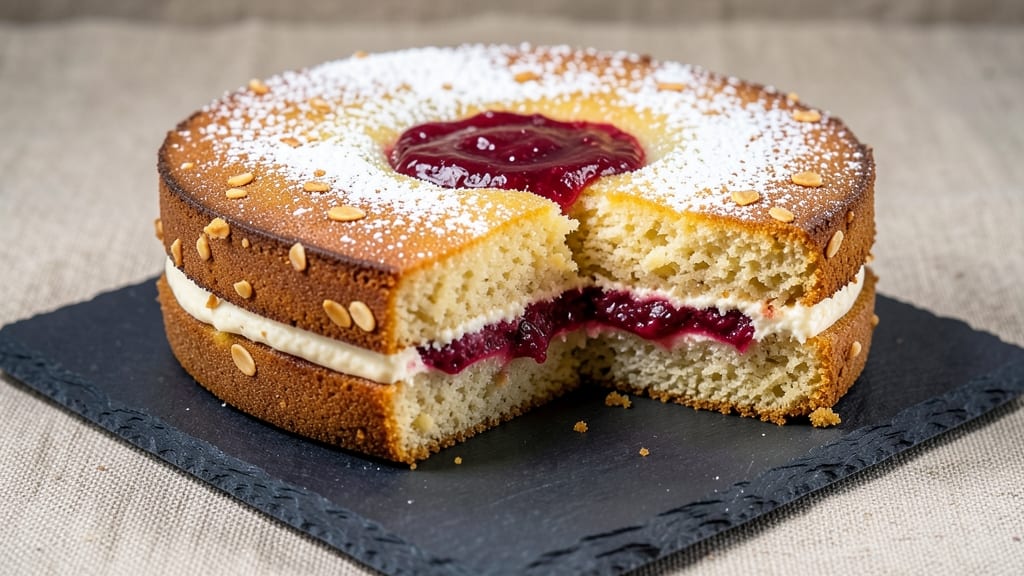
This almond paste pound cake recipe delivers unexpectedly moist layers with a delicate nutty flavor and buttery richness that keeps every slice irresistible. 💛 The secret lies in combining almond paste with classic pound cake proportions, creating a tender crumb that stays fresh for days.
I developed this recipe after years of testing variations, and it's now my go-to for special occasions or when I need a showstopping dessert that doesn't require fancy techniques.
The cake's magic comes from a precise balance of butter, sugar, and eggs that creates a tender yet sturdy crumb, while the almond paste adds natural moisture and a subtle almond aroma.
Unlike traditional pound cakes, this version incorporates the almond paste directly into the batter, ensuring even distribution throughout each slice. The result is a cake that's light enough to eat without feeling heavy but rich enough to satisfy any sweet tooth.
What sets this recipe apart is its foolproof method that yields consistent results every time—no special equipment required. The cake bakes up with a golden top and slightly domed shape, while the interior remains tender with just the right amount of almond flavor in each bite.
The buttery layers create a satisfying texture that makes it perfect for celebrations or as a luxurious treat for yourself.
Pair it with fresh berries, a dusting of powdered sugar, or a simple glaze for an elegant finish. The recipe scales beautifully for parties, and leftovers stay moist for days when stored properly. Here's how to make it perfect every time.
Ingredients for almond paste pound cake
Twelve simple ingredients transform into a luxurious almond paste pound cake with tender layers and nutty aroma.
| Ingredient | Amount | Notes |
|---|---|---|
| Unsalted Butter 🧈 | 1 ½ cups | Room temperature, full-fat preferred |
| Granulated Sugar 🍚 | 2 ½ cups | Superfine for smoother texture |
| Almond Paste 🥜 | 1 cup | High-quality, finely ground |
| Large Eggs 🥚 | 6 whole | Room temperature for even mixing |
| All-Purpose Flour 🌾 | 2 ½ cups | Sifted for lightness |
| Baking Powder 🍞 | ½ tsp | Aluminum-free preferred |
| Salt 🧂 | ½ tsp | Fine sea salt |
| Vanilla Extract 🌸 | 2 tsp | Pure Madagascar preferred |
| Milk 🥛 | ¾ cup | Whole milk for richness |
| Powdered Sugar 🍚 | 2 tbsp | For dusting (optional) |
| Fresh Almond Slices 🥜 | ¼ cup | For garnish (optional) |
The almond paste is non-negotiable here. Ghirardelli or Nutiva brands deliver the finest texture and flavor, but any high-quality paste works. Look for finely ground, not chunky—this ensures even distribution in every slice. Butter quality matters too: Plugrá or Land O'Lakes unsalted are my go-tos, but any full-fat butter will do. The eggs should be large and room temperature; cold eggs create dense cakes. For the flour, King Arthur brand is my preference, but any all-purpose works if sifted properly. The baking powder should be fresh—test by mixing with water; it should bubble immediately.
No almond paste? Almond flour blended with a bit of oil works in a pinch, but texture will differ. Short on vanilla? Almond extract at half the amount adds depth, though it's stronger. The milk can be swapped for heavy cream for extra richness or almond milk for a lighter option. Powdered sugar can be omitted if you prefer a less sweet finish, but the cake's natural almond flavor shines with it. For garnish, toast the almond slices lightly to enhance their flavor—just 2-3 minutes in a 350°F oven. The optional powdered sugar dusting adds a professional touch without extra effort.
Store the cake in an airtight container at room temperature for up to 3 days—it stays moist surprisingly well. For longer storage, wrap tightly in plastic and refrigerate for 1 week. The cake freezes beautifully for 3 months: slice before freezing, then thaw at room temperature. Reheat slices briefly in the oven to restore freshness. To keep it looking its best, cover with parchment paper when not serving. The flavor actually improves slightly over time, making it perfect for making ahead.
Why You'll Love This Recipe
- No Mixer Needed: I swear by this recipe when I’m in a hurry—just cream butter and sugar by hand (or with a fork, no shame), fold in the eggs, and let the almond paste do the heavy lifting. The texture stays light without overmixing, and honestly? My arms thank me.
- Rich Without Overpowering: That almond paste isn’t just flavor—it’s depth. One bite and you get buttery richness from the butter, a whisper of sweetness from the sugar, and a nutty, almost marzipan-like warmth that lingers. It’s not cloying; it’s elegant, like a dessert that knows its own worth.
- Brunch or Tea Time: This cake is my go-to for lazy Sundays or when friends drop by unannounced. Slice it warm with a dusting of powdered sugar, or serve it cold with tea—it’s that versatile. (Between us, I’ve even fed it to skeptical kids by calling it “cookie cake.” Spoiler: They ate it.)
- Leftovers That Last: Bake a full loaf, and you’ll have slices for days. The almond paste keeps it moist longer than your average pound cake, so it doesn’t dry out or taste stale. I’ve reheated cold cuts in the toaster, but this? It’s the only cake I actually pack for work. No one judges.
Step-by-step instructions for almond paste pound cake
Here's the method for a rich, moist pound cake with perfect almond flavor and tender crumb.
👨🍳 Step 1: Prepare the Almond Butter Mixture
In a stand mixer fitted with the paddle attachment, cream together the 1.5 cups unsalted butter and 2.5 cups granulated sugar on medium-high speed for 3-4 minutes. The mixture should become light and fluffy, nearly doubling in volume. Scrape down the sides of the bowl with a spatula to ensure even mixing.
Add the 1 cup almond paste and mix on low speed until completely combined, about 1-2 minutes. The almond paste should be fully incorporated with no visible streaks. This step develops the cake's signature nutty flavor and rich texture. If using room-temperature ingredients, the mixture will blend more smoothly.
🍳 Step 2: Add Eggs and Vanilla Gradually
Add the 6 whole large eggs, one at a time, mixing on low speed for 30 seconds after each addition. This gradual incorporation prevents the eggs from scrambling and ensures a smooth batter. After the final egg, add the 2 teaspoons vanilla extract and mix for another 30 seconds until fully combined.
I like to check the consistency at this point—the batter should be thick but pourable. If it looks too stiff, you can add 1-2 tablespoons of milk to loosen it slightly. The vanilla extract adds depth of flavor that complements the almond paste beautifully.
👨🍳 Step 3: Combine Dry Ingredients
In a separate bowl, whisk together the 2.5 cups all-purpose flour, 0.5 teaspoon baking powder, and 0.5 teaspoon salt until evenly distributed. Sift the mixture directly into the wet ingredients while mixing on low speed for 30-45 seconds until just combined. Overmixing at this stage can develop gluten and make the cake dense.
With the mixer still running on low speed, gradually add the 0.75 cup milk until the batter is smooth and fully incorporated. The batter should be thick but still able to coat the back of a spoon. At this point, you can fold in the 0.25 cup fresh almond slices if using them as a garnish—just be gentle to avoid deflating the batter.
🔥 Step 4: Bake to Perfect Moisture
Preheat your oven to 350°F and grease two 9-inch round cake pans (or one 9x13-inch pan) thoroughly with butter, then dust with flour. Divide the batter evenly between the pans. Bake for 45-50 minutes (or 35-40 minutes for the larger pan) until a toothpick inserted in the center comes out clean.
I recommend checking the cake at the 40-minute mark—the top should be golden brown, and the edges should pull away slightly from the pan. The cake will continue to set as it cools, so don't overbake. For even baking, rotate the pans halfway through the baking time if your oven has hot spots.
⏰ Step 5: Cool and Serve for Maximum Moisture
Remove the cakes from the oven and let them cool in the pans for 10 minutes. Then transfer them to a wire rack to cool completely. The cooling process is crucial—it allows the cake to set properly and develop its full moist texture. If you're in a hurry, you can serve it slightly warm, but it's best enjoyed at room temperature.
Once fully cooled, dust the tops with the 2 tablespoons powdered sugar for a delicate finish. This pound cake holds up well for 3-4 days when stored in an airtight container at room temperature, though I recommend serving it fresh for the best texture. The almond paste gives it a unique richness that pairs perfectly with tea or coffee.
Pro Tips For Making Almond Paste Pound Cake
- CREAM BUTTER AND SUGAR LONG: Mix the butter and sugar until it’s pale, not just smooth—about 5 minutes with a stand mixer. I learned this the hard way: rushing it leaves a dense, flat cake. (Yes, even if your arm starts to hate you.)
- SIFT THE FLOUR FIRST: Skip the clumps by sifting the flour and almond paste together before folding into the batter—this lightens the texture and cuts down on lumps. I used to just dump it in, and the cake always felt heavy.
- DON’T OVERMIX THE BATTER: Stop folding in the dry ingredients as soon as they’re just combined—overmixing develops gluten and turns your tender pound cake into a chewy brick. Two or three gentle turns is all you need.
- CHILL THE BATTER 30 MINUTES: Let the batter sit covered at room temp before baking—this helps the almond paste distribute evenly and prevents a domed top. I was skeptical until I tried it; now it’s non-negotiable.
Pro cooking tips for this dish
Butter Temperature Matters
The key to that signature tender crumb starts with your butter. Use room-temperature butter (about 68-70°F)—press your finger into it, and it should leave a slight indent but hold its shape.
Cold butter won't cream properly, leading to dense cake, while overly soft butter can cause the batter to separate. I recommend taking your butter out of the fridge 1-2 hours before mixing. For extra insurance, place the butter bowl in warm water for 10 minutes while your oven preheats. 🧈
Gradual Egg Addition
Adding eggs one at a time is non-negotiable for this recipe. Mix each egg on low speed for 30 seconds after adding—this prevents scrambling and ensures a silky texture. I've seen beginners add all eggs at once, which creates a dense, gummy cake.
Pro tip: Let your eggs sit at room temperature for 30 minutes before using. Cold eggs can cause the batter to curdle. If your batter looks curdled, strain it through a fine-mesh sieve before adding dry ingredients. 🥚
Almond Paste Consistency
Not all almond pastes are created equal—Ghirardelli or Nutiva brands are my go-to because they're finely ground and free of lumps. If your almond paste has visible chunks, pulse it in a food processor for 10-15 seconds before using.
The paste should be smooth like thick peanut butter. For extra flavor, I sometimes toast the almond paste in a 350°F oven for 5 minutes before mixing—this deepens the nutty aroma without drying it out. 🥜
Baking Powder Freshness Test
Your baking powder must be fresh—old baking powder loses its lift. Test it by mixing ½ teaspoon with ¼ cup hot water: it should bubble immediately. If it doesn't, replace it. I keep mine in the freezer to extend freshness.
The 0.5 teaspoon called for in this recipe is precise—don't double it thinking it will make the cake fluffier. Too much can cause the cake to collapse or develop a bitter taste. For extra insurance, sift the baking powder with your flour. 🍞
Oven Thermometer Check
Your oven's temperature gauge is likely inaccurate—most run 25-50°F hotter than set. Invest in an oven thermometer ($5 at any kitchen store) and adjust your oven accordingly. For this cake, aim for 325°F actual temperature (set to 350°F). If your oven runs hot, reduce the setting to 340°F.
I've had cakes come out dry when baked at the incorrect temperature. For even baking, place a tray of water in the oven during baking to maintain moisture. 🌡️
Cooling Technique
Never rush cooling—let the cake rest in the pan for 10 full minutes before transferring to a rack. This prevents cracking and helps the cake set properly. For extra moisture, tent the cake loosely with foil during the first 30 minutes of cooling.
If you're in a hurry, serve it slightly warm, but the texture won't be as tender. The cake continues to cook slightly after removal, so pull it when the center reads 205-210°F on an instant-read thermometer. 💛
Nutrition facts
Frequently asked questions
Can I substitute almond paste with almond flour?
You can try, but the texture will differ significantly. Almond flour is drier and less cohesive, so replace 1 cup almond paste with 1 cup almond flour plus 1 tablespoon neutral oil (like canola). The cake will have a slightly grainier texture but still delicious almond flavor. For best results, pulse the almond flour in a food processor first to remove any lumps.
Why did my cake turn out dense instead of tender?
Dense cake usually means overmixing or incorrect ingredient temperatures. Check these first:
- Cold butter won't cream properly—it should be soft but not melted.
- Overmixing after adding flour develops gluten.
- Old baking powder loses lift. Test your baking powder by mixing with hot water—it should bubble immediately. If all else fails, try adding 1 extra egg yolk next time for extra moisture.
How do I make this cake gluten-free?
Replace the 2.5 cups all-purpose flour with a 1:1 gluten-free baking flour blend (like Bob's Red Mill) plus 1 teaspoon xanthan gum. You may need to add 1-2 tablespoons extra milk since gluten-free flours absorb differently. For best results, use a gluten-free pound cake mix as a base and fold in the almond paste mixture separately to maintain texture.
Can I bake this in a bundt pan instead?
Yes, but reduce baking time by 5-10 minutes—bundt cakes typically bake faster due to their shape. Grease the pan thoroughly and dust with flour or gluten-free flour blend. The cake will have beautiful ridges but may require slightly longer cooling time (up to 15 minutes in the pan). For extra insurance, tent with foil if the edges brown too quickly.
What's the best way to store leftovers?
Wrap individual slices tightly in plastic wrap, then place in an airtight container. At room temperature, it stays moist for 3-4 days. For longer storage, refrigerate for up to 1 week or freeze for 3 months. To reheat, warm slices in a 300°F oven for 5-10 minutes or microwave for 10-15 seconds covered with a damp paper towel. The cake actually improves slightly over time!